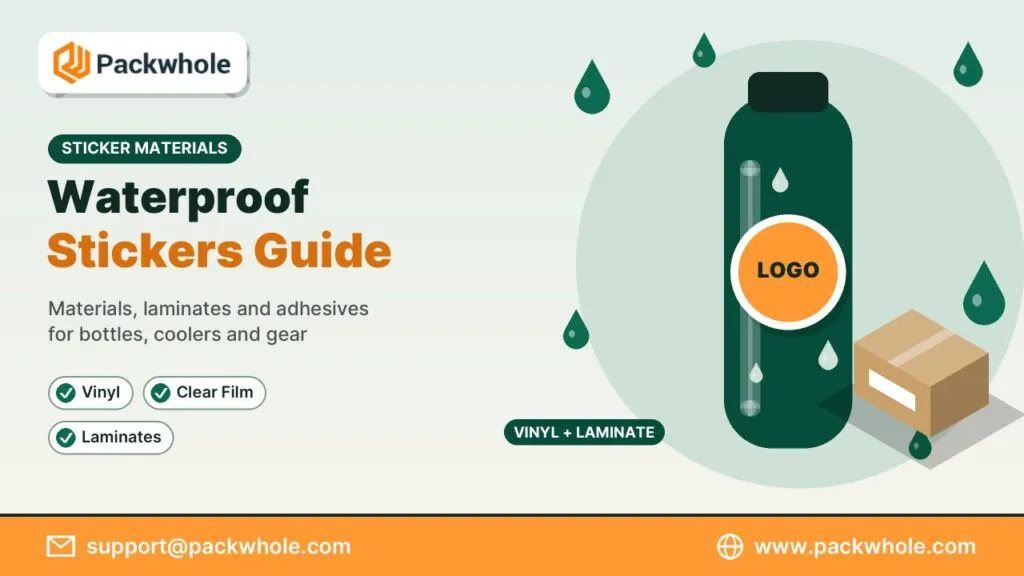
A sticker that peels, fades or smears after one trip through the dishwasher or one rainy day reflects badly on the brand printed on it. If your stickers will face water, condensation or the outdoors, the material and finish matter far more than the design. This guide to waterproof stickers explains which materials hold up, how laminates protect the print, which adhesives to choose and how to help customers make their stickers last as long as possible.
What Makes a Sticker Truly Waterproof?
Water resistance comes from three layers working together: the face material, the protective finish and the adhesive. Paper absorbs water, so it swells and tears, while plastic films such as vinyl do not. A laminate shields the ink from scratches and moisture, and a strong adhesive keeps the edges from lifting. When all three are right, a sticker can handle splashes, condensation and outdoor weather.
It helps to be precise with language. Most stickers sold as waterproof are better described as highly water-resistant: they handle rain, spills and hand washing, but constant soaking or harsh cleaning will eventually wear any sticker down.
Best Materials for Waterproof Stickers
The face material is the foundation of any waterproof sticker. Plastic films are the go-to choice because they do not absorb water and stay flexible on curved surfaces. Each film has a slightly different look and best use. Paper materials, even coated ones, are not suitable when water is involved.
Thickness plays a part as well. Thicker films resist tearing and scratches better on rugged gear, while thinner films conform more easily to tight curves on small bottles and tubes. If your product has a strong curve or a ridged surface, mention it when you request a quote so the right film thickness can be suggested.
| Material | Water resistance | Look | Best uses |
|---|---|---|---|
| White vinyl | Excellent | Bright, opaque colors | Water bottles, coolers, laptops, outdoor gear |
| Clear vinyl or film | Excellent | Transparent background | Glass jars, windows, bottles |
| Metallic film | Very good | Gold or silver shine | Premium bottles, cosmetics, candles |
| Coated paper | Low | Bright, semi-gloss | Dry indoor products only |
| Matte paper | Low | Natural and writable | Packaging seals, envelopes |
For most outdoor and drinkware uses, vinyl stickers are the safest choice. When you want the surface to show through, clear stickers give a no-label look on glass and bottles.
How Laminates Protect Waterproof Stickers
Even on vinyl, printed ink sits on the surface and can be scratched or faded over time. A laminate is a thin clear layer applied over the print to protect it. It adds resistance to water, scuffs and sunlight, and it also changes the finish, from shiny to soft and flat. For stickers that will be handled often or used outdoors, a laminate is well worth it.
- Gloss laminate: makes colors look rich and vibrant and wipes clean easily.
- Matte laminate: reduces glare and gives a modern, flat finish.
- UV-resistant laminate: helps slow fading in direct sunlight on cars, coolers and signs.
Still deciding on a sheen? Our matte vs gloss lamination breakdown shows how each coating looks and wears.
Choosing the Right Adhesive for Wet Conditions
A sticker is only as good as its bond to the surface. Water can creep under the edges and weaken the adhesive if it is not designed for wet use. Choosing the right adhesive depends on the surface and whether the sticker should be permanent or removable. Your printer can recommend the right option for your product.
- Permanent adhesive: the right pick for drinkware, coolers and gear where the label should never come off.
- Removable adhesive: useful for promotional stickers on laptops and phones that people may want to take off cleanly.
- Freezer-grade adhesive: designed for products stored in fridges and freezers, where condensation and cold weaken standard glue.
Always test a sticker on the real surface before a large order, especially for textured, curved or oily surfaces.
Where Waterproof Stickers Make the Most Difference
Some products and uses demand water resistance more than others. If your sticker will face any of the situations below, a vinyl or film sticker with a laminate is the right investment. Using paper in these situations usually leads to peeling, smudging or torn labels.
- Drinkware: water bottles, tumblers and mugs that are washed often.
- Beverage labels: bottles and cans that sit in ice buckets or coolers.
- Bath and beauty: soap, shampoo and lotion bottles used in showers.
- Candles and home goods: jars that are wiped clean or exposed to heat.
- Outdoor gear: coolers, bikes, helmets, kayaks and toolboxes.
- Food storage: containers that live in fridges and freezers.
For product labels with more text, rectangle stickers on vinyl give space for ingredients and directions.
Design Tips That Help Waterproof Stickers Last Longer on Everyday Products
Design choices also affect durability. Thin lines and tiny details are more likely to wear or lift at the edges, while simple shapes hold up better. A few small adjustments to your artwork can add months to the life of a sticker that gets handled every day.
- Avoid very sharp points and thin protrusions in die cut shapes.
- Use rounded corners on rectangles and squares to reduce edge lifting.
- Keep fine text larger than usual if the sticker will be scrubbed.
- Choose high-contrast colors so the design stays readable even after some wear.
Waterproof Stickers Care Tips to Share With Customers
How a sticker is applied and cared for matters as much as how it is made. Including a short care note with drinkware or merch helps customers get the most from their stickers and keeps your brand looking good for longer. These simple tips are easy to print on a small card or the sticker backing.
- Apply to a clean, dry surface at room temperature.
- Press firmly from the center to the edges, then wait a day before washing.
- Hand wash when possible instead of using a dishwasher.
- Avoid soaking for long periods or scrubbing directly over the sticker.
- Keep away from harsh solvents that can dissolve the adhesive.
How to Test Waterproof Stickers Before a Large Order
A quick test on a few samples is the most reliable way to know whether a sticker will survive real use. Lab terms and product descriptions only go so far; your own product, cleaning routine and climate are what matter. Testing waterproof stickers before committing to a large run protects your budget and your brand reputation.
- Wash test: apply a sticker to your bottle or jar and wash it by hand and in a dishwasher several times.
- Soak test: leave a labeled product in a bowl of water or an ice bucket for a few hours.
- Cold test: store a labeled container in the fridge or freezer, then let it sweat at room temperature.
- Sun test: place a sticker in a sunny window for a few weeks to check for fading.
- Scratch test: rub the sticker with a fingernail and a cloth to check the laminate.
Write down how each sticker performed and share the results with your printer. If edges lift or ink fades, a different adhesive or laminate usually fixes the problem. ## Common Mistakes When Ordering Waterproof Stickers Most sticker failures come from choosing the wrong material or skipping the protective finish to save money. These mistakes are easy to avoid once you know what to watch for, and they can save you from a full reprint. Review this list before ordering stickers that will face water.
- Ordering paper stickers for bottles, bath products or outdoor gear.
- Skipping a laminate on stickers that will be handled or washed often.
- Using standard adhesive on products stored in fridges or freezers.
- Applying stickers to a wet, cold or greasy surface.
- Promising customers dishwasher-safe stickers without testing.
Order Waterproof Stickers Built to Last
The right combination of material, laminate and adhesive makes all the difference for stickers that face water and weather. We match the film, finish and glue to the way your product is used, prepare the print file and cut path without charge, and wait for your sign-off on the preview before printing. A short trial run is welcome if you want to test a material first.
Tell us where your stickers will be used at support@packwhole.com or explore vinyl, clear and metallic options at www.packwhole.com, and we will recommend a sticker that keeps your brand looking fresh.
Weighing up cheaper paper labels against vinyl? Our paper vs vinyl stickers article lays out the trade-offs.