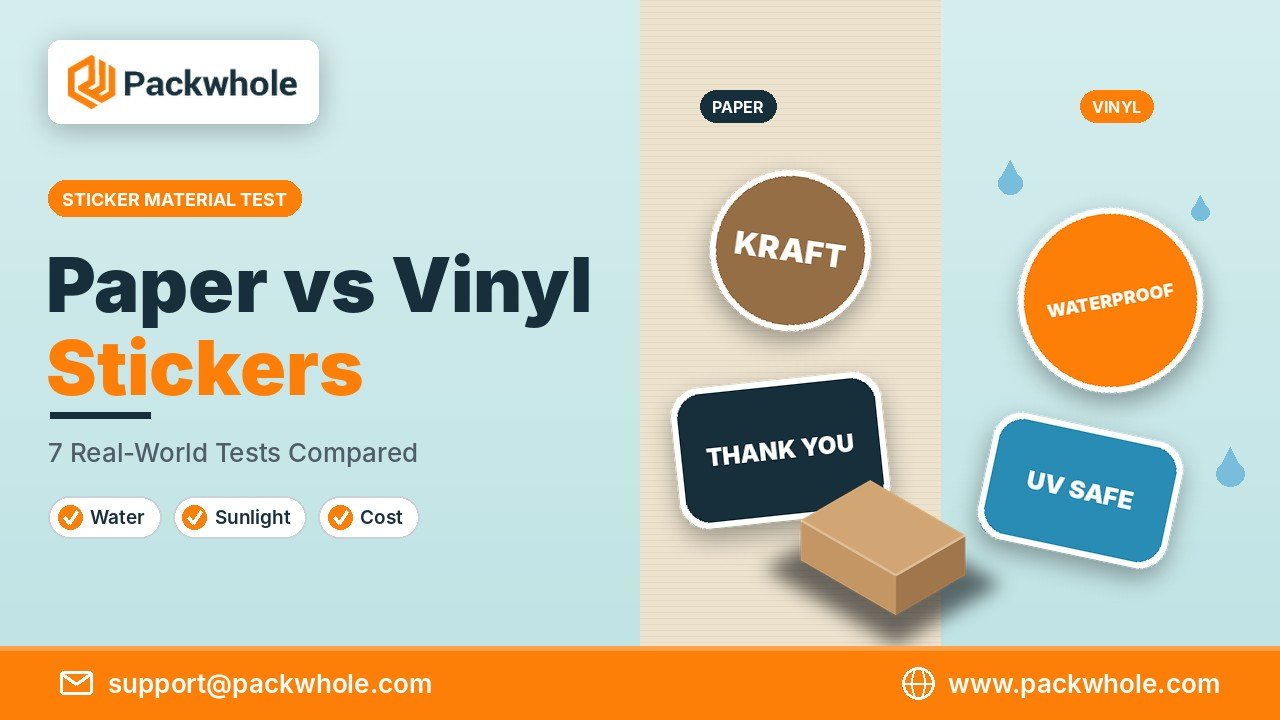
A sticker is often the cheapest branding tool a small business owns. A single roll can seal mailer boxes, brand coffee bags, label candle jars, and decorate tissue paper. But the material you choose decides whether that sticker looks crisp for months or peels, fades, and smudges within weeks. The paper vs vinyl stickers question comes up in almost every packaging order we see.
Rather than list generic pros and cons, this guide runs both materials through seven practical “tests” that mirror what happens to packaging in the real world, from rain on a porch to a hot delivery truck.
Understanding What Each Sticker Material Is Made Of
Before running the tests, it helps to know what you are comparing. Paper stickers use a paper face stock, coated or uncoated, with a pressure-sensitive adhesive on the back. “Vinyl” is used loosely in the packaging world: it can mean true PVC vinyl, but many label printers use BOPP (biaxially oriented polypropylene), a plastic film that performs similarly and is often what people mean by vinyl labels. Both kinds can be printed in full color and cut to any shape.
Test 1 and 2: Water and Sunlight Resistance
Moisture and UV light are the biggest enemies of any label. Packages sit on doorsteps, travel in humid trucks, and get stored near windows. Bottles and jars live in fridges, showers, and kitchens. These two tests usually decide the winner for anything that might get wet or spend time outdoors.
- Water: Paper absorbs moisture, so ink can bleed and edges can lift. Vinyl and BOPP repel water and keep their shape, especially with a laminate.
- Sunlight: Uncoated paper fades faster. Vinyl with a UV-resistant laminate holds color much longer, which matters for products sold in sunny stores or used outdoors.
Winner: vinyl for both.
Test 3 and 4: Scratch Resistance and Removability
Packaging gets handled at every step: packing, sorting, delivery, and unboxing. Stickers on bottles and tins get rubbed every day by customers. Removability matters too, especially for gift items, reusable containers, and laptops. Here is how the two materials compare in daily handling.
| Test | Paper Stickers | Vinyl Stickers |
|---|---|---|
| Scratching and scuffing | Scuffs easily unless laminated | Resists scratches well |
| Tearing | Tears when peeled | Stretches slightly, rarely tears |
| Clean removal | Often leaves paper residue | Removable adhesives peel cleanly |
| Repositioning | Difficult | Possible with the right adhesive |
Winner: vinyl, with a note that permanent-adhesive vinyl can also be hard to remove.
Test 5: Print Look and Brand Feel in Paper vs Vinyl Stickers
This is where paper fights back. Paper gives a soft, natural, tactile look that suits handmade, organic, and eco-focused brands. Kraft paper stickers in particular say “small batch” instantly. Vinyl looks sharper, glossier, and more modern, and it supports special effects like clear and holographic films. In the paper vs vinyl stickers comparison, look and feel is the one category where personal brand style matters more than performance.
- Paper: matte, warm, writable with a pen (great for dates or batch numbers).
- Vinyl: vivid color, glossy or matte laminate, clear and metallic options.
Winner: depends on your brand.
Test 6: Cost Per Sticker
Budget always matters, especially for brands that use stickers on every order. Paper stickers are usually the most affordable option, which makes them popular for sealing mailers and labeling dry goods. Vinyl costs more per unit because of the film and laminate, but it lasts longer in tough conditions, which may reduce reprints. Order quantity has a bigger effect on unit price than material does, so compare quotes at the quantity you will actually use.
Shape affects price too. Simple circles, squares, and rectangles are usually cheapest because they use standard cutting tools, while custom die-cut outlines may add a small setup charge.
Winner: paper.
Test 7: Recycling and Sustainability
Many customers now check whether packaging is recyclable. Paper stickers are generally the better fit for paper-based packaging, since paper labels on a cardboard box are commonly accepted in recycling streams. Plastic film labels on paper boxes can be a minor contaminant, though recycling systems handle small amounts. On plastic or glass containers, a film label may be the better match. Avoid broad claims like “eco-friendly sticker” unless you can back them up, as the FTC Green Guides recommend clear, qualified claims.
General information, not legal advice.
Winner: paper on boxes and bags.
The Scorecard: Paper vs Vinyl Stickers for Each Packaging Type
Now that both materials have been tested, here is a simple matching guide. It shows which sticker usually performs best on each type of packaging. Use it as a rule of thumb, and remember that a laminate can make paper tougher while a matte finish can make vinyl look softer.
- Mailer box seals: paper or kraft paper.
- Gift wrap and tissue seals: paper.
- Coffee bags and dry food pouches: paper or vinyl.
- Refrigerated food jars and bottles: vinyl.
- Bath, body, and shower products: vinyl.
- Candles: vinyl or clear BOPP.
- Water bottles, laptops, and merch giveaways: vinyl.
- Price tags and dated labels: uncoated paper (writable).
Finishes and Adhesives That Change Performance
Material is only half of a sticker’s personality. The finish and adhesive can change how it looks, feels, and behaves on your packaging. A laminated paper sticker can handle light moisture, while a matte vinyl sticker can look surprisingly soft and natural. Talk through these options with your printer, because the right combination often matters more than the face material itself.
Common finishes:
- Gloss laminate: bright colors and extra protection.
- Matte laminate: a soft, modern look with less glare.
- Foil accents: gold, silver, or holographic highlights for premium products.
- Uncoated: natural texture and writable surface on paper.
Common adhesives:
- Permanent: for box seals and product labels that must stay put.
- Removable: for gift items, glass, and reusable containers.
- Freezer grade: for frozen or refrigerated products.
- High tack: for textured surfaces such as kraft boxes and rough paper bags.
Common Mistakes When Ordering Stickers
Sticker orders go wrong in a few predictable ways. Often the material is right but the adhesive or finish is wrong for the surface. Or the sticker is too small to read on a large box. A short checklist before ordering will save you from reprinting. These are the mistakes we see most often.
- Choosing uncoated paper for products stored in the fridge.
- Using a removable adhesive on a box seal that needs to stay closed.
- Forgetting bleed in the artwork, which leaves white edges after cutting.
- Printing tiny text that becomes unreadable at sticker size.
- Applying stickers to dusty or cold surfaces.
Order Paper vs Vinyl Stickers in Any Shape From PackWhole
Still deciding? PackWhole can print both materials so you can test paper vs vinyl stickers side by side on your actual packaging. We offer circle stickers, oval stickers, rounded square stickers, and rounded rectangle stickers, with gloss, matte, and foil options. You can begin with a short run, and artwork help is included at no cost.
Request a sticker sample pack from support@packwhole.com or check shapes and sizes on www.packwhole.com.
Paper vs Vinyl Stickers: Frequently Asked Questions
Here are quick answers to the questions business owners ask most when they compare the two materials. If your product has unusual conditions, such as freezing, high heat, or oily surfaces, tell us before printing so we can suggest the right adhesive.
Can paper stickers be waterproof?
A laminate makes paper much more water resistant, but it will not match vinyl in very wet conditions.
Are vinyl stickers dishwasher safe?
Some laminated vinyl stickers survive hand washing well. Dishwasher durability varies, so test first.
Which is better for sealing mailer boxes?
Paper is usually enough and costs less. Choose vinyl only if boxes may sit outside in wet weather.
Can I write on vinyl stickers?
Only with permanent markers. Uncoated paper is easier to write on with a pen.