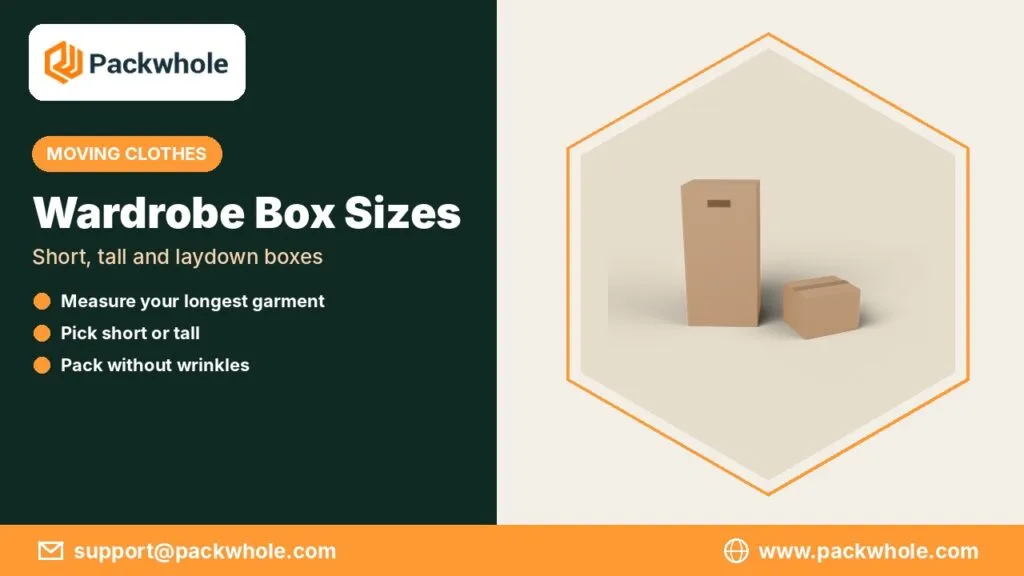
Hanging clothes are among the most annoying things to move. Folding them all takes hours, and unpacking means ironing or steaming everything again. Wardrobe boxes solve that problem by letting clothes stay on their hangers inside a tall carton with a built-in bar. The trick is choosing the right size, because a box that is too short will crumple long coats and dresses, while a box that is too big wastes space in the truck.
This guide compares common wardrobe box sizes in the United States, explains which clothes fit each one, estimates how much closet space each box holds and shares packing tips that keep clothes wrinkle-free.
Common Wardrobe Box Sizes
Wardrobe boxes are usually sold in a few standard sizes. Exact measurements vary by supplier, so treat the table as a reference and check the listing before you buy. Dimensions are given as width by depth by height in inches.
| Box type | Typical size (inches) | Best for |
|---|---|---|
| Short wardrobe box | 24 x 20 x 34 | Shirts, blouses, skirts, folded pants |
| Short wide box | 24 x 24 x 34 | Shirts and jackets, more hanging width |
| Medium or narrow tall box | 18 x 21 x 46 | Coats, pants, dresses in a small footprint |
| Tall wardrobe box | 24 x 20 x 46 to 48 | Long coats, dresses, suits |
| Large tall box | 24 x 24 x 48 | Bulky coats and long garments |
| Laydown box | about 36 x 21 x 10.5 | Folded clothes, linens, under-bed storage |
How Much Clothing Fits in Each Box?
The width of the hanging bar matters most. A box about 24 inches wide holds roughly two feet of closet rail, which is often around 15 to 25 garments depending on how thick they are. Shirts take less space than winter coats. The height decides whether long items hang freely or fold at the bottom.
- Short boxes suit shirts, blouses and jackets.
- Tall boxes are needed for dresses, coats and full-length pants.
- Narrow tall boxes fit in small closets and car trunks more easily.
- Laydown boxes hold folded items flat to prevent creasing.
To estimate how many boxes you need, measure the length of your closet rail in inches and divide by the width of the box you plan to use.
Choosing Between Wardrobe Box Sizes
The right size depends on your longest garment and your available space. Measure your longest coat or dress on its hanger from the hook to the hem, then add a few inches so the bottom does not touch the box floor. If most of your hanging clothes are shirts, short boxes are easier to lift and stack. If you own many coats or formal wear, tall boxes are worth it.
- Measure your longest hanging garment.
- Measure the length of your closet rail.
- Divide the rail length by the box width to estimate quantity.
- Mix short and tall boxes to match your clothes.
How Wardrobe Boxes Are Built
Most wardrobe boxes are made from double-wall corrugated board, which is stronger than standard single-wall moving cartons. A metal or cardboard bar rests in notches near the top, and some boxes have handholds. Because the boxes are tall and light, they stack best when loaded upright in the truck. Our post on corrugated flute types explains how wall construction affects strength.
| Feature | Why it matters |
|---|---|
| Double-wall board | Keeps tall sides from bowing |
| Hanging bar | Holds clothes on hangers |
| Handholds | Easier carrying for two people |
| Flat-packed shipping | Easy to store before the move |
Packing a Wardrobe Box Step by Step
A little care during packing keeps clothes neat. Build the box, tape the bottom firmly and set the bar in place before you start. Move clothes in small bundles straight from the closet rail to the box. Leave a little space between garments so they do not crush each other.
- Tape the bottom seams with extra strips.
- Place shoes or heavy folded items on the bottom.
- Hang clothes in small groups, facing the same way.
- Fill side gaps with scarves or soft items.
- Close the top and label the box with the room name.
Tips to Avoid Wrinkles and Damage
Even in a wardrobe box, clothes can shift or crease if the box is overpacked or tipped over. Keep boxes upright, avoid stacking heavy cartons on top and unpack wardrobe boxes soon after arrival.
- Use sturdy plastic or wooden hangers, not thin wire ones.
- Cover delicate garments with garment bags.
- Do not overfill the bar.
- Mark boxes “This Side Up” on all sides.
- Hang clothes immediately after the move.
Wardrobe Box Sizes vs. Other Options
Not every move needs wardrobe boxes. Some people use large standard boxes and fold clothes, or wrap bundles of hanging clothes in garbage bags. Those options are cheaper but often lead to wrinkles. Comparing wardrobe box sizes with alternatives helps you decide where to spend.
| Option | Pros | Cons |
|---|---|---|
| Wardrobe boxes | Clothes stay on hangers | Bulky, higher cost |
| Folded in large boxes | Cheap, stackable | Wrinkles, more unpacking time |
| Garment bags | Good for few items | Not protective in a full truck |
| Bagged bundles | Quick and cheap | Easy to tear, clothes can crease |
Carrying and Loading Tall Boxes
Tall boxes are light for their size, but they are awkward to carry because they catch the wind and block your view. Two people should carry the largest ones, holding the handholds or the bottom edge. In the truck, stand wardrobe boxes upright side by side against a wall and secure them with straps so they cannot tip during turns. Avoid stacking anything heavy on top, since the hanging bar and tall walls are not designed to hold weight. Keep a clear path through doorways and stairwells before you start moving them.
Reusing Wardrobe Boxes
Wardrobe boxes are sturdy enough to reuse. After the move, you can keep one or two for seasonal storage, use them as a temporary closet or pass them on to someone else. Store them flat in a dry place so the board stays strong. Some people turn a wardrobe box into a kids’ playhouse or costume closet.
Apparel Brands and Clothing Packaging
Clothing businesses face a related question: how to ship garments so they arrive looking good. Wardrobe boxes are rarely practical for online orders, but right-sized folded packaging works well. Our guide to shirt box sizes covers common sizes for folded apparel, and our custom mailer boxes are popular with fashion brands that want a branded unboxing. For hats, see our custom hat boxes.
Planning a Move With Wardrobe Boxes
Wardrobe boxes take up a lot of floor space, so plan where they will go in the truck. Load them together so they support one another, and keep them upright. If you are hiring movers, ask whether they supply wardrobe boxes for the day; some companies lend them and take them back. For DIY moves, buy wardrobe boxes early, because they can sell out during busy moving months.
Choosing among wardrobe box sizes is easier once you measure your closet. A small apartment might need only two or three short boxes, while a family home with several closets could need many more, including tall boxes for coats and formal wear. Exact counts depend on your wardrobe, so use your own measurements rather than general estimates.
Matching Wardrobe Box Sizes to Different Closets
Closets differ as much as the people who use them. A student with mostly T-shirts and jeans can fold nearly everything and may need just one short box for jackets. A professional with suits and long coats needs several tall boxes. Families often mix sizes: tall boxes for adult coats and dresses, short boxes for children’s clothes and laydown boxes for sweaters. Thinking about wardrobe box sizes room by room keeps the order realistic.
| Closet type | Suggested mix |
|---|---|
| Mostly casual clothes | One or two short boxes, folded items in standard cartons |
| Office and formal wear | Tall boxes for suits, dresses and coats |
| Family home | Tall boxes for adults, short boxes for kids, laydown boxes for knits |
| Seasonal storage | Laydown boxes that slide under beds |
Using Wardrobe Boxes for Storage
Some people keep clothes in wardrobe boxes for weeks or months, for example during a renovation or while living in temporary housing. For longer storage, keep the boxes in a dry, climate-controlled space off the floor. Cardboard absorbs moisture, which can lead to musty smells or mold on fabrics. Place a garment bag over delicate items and check the boxes occasionally. For long-term storage, closed plastic bins or a proper closet are usually better.
Branded Boxes for Clothing Businesses
If you run a clothing or accessories brand, we can create boxes that fit your garments and show off your logo. Our team handles the dieline setup at no extra cost, sends a digital proof for you to approve, keeps minimum quantities low for growing labels and delivers on a fast schedule. Send your folded garment sizes to support@packwhole.com, or explore apparel packaging styles at www.packwhole.com.