Clothing is one of the most popular gifts in America, and the classic flat shirt box is how most of it gets wrapped. Picking the right shirt box sizes keeps garments neatly folded, prevents creases and makes gifts look tidy under the tree. Whether you run an apparel brand, a boutique, a department store gift counter or an online clothing shop, this guide explains common sizes, depths, materials and printing ideas so every shirt arrives looking sharp.
Why Shirt Box Sizes Matter for Retail and Gifting
A shirt box that is too small crushes the fabric and leaves deep fold lines, while a box that is too big lets the garment slide into a heap. The right size holds the folded shirt flat, leaves room for tissue paper and closes without bulging. For retailers, consistent box sizes speed up the wrapping counter during the holidays and keep storage organized. For online brands, the box shape also affects shipping costs and how well the package fits inside a mailer.
Common Shirt Box Sizes Chart
Shirt box sizes are usually described by length, width and depth in inches. Most retailers stock a small range of sizes that covers everything from kids’ tees to bulky sweaters. The table below shows typical sizes used across the gift and apparel industry. Treat them as a starting point and check your own folded garments before ordering.
| Box type | Typical size (L x W x D) | Best for |
|---|---|---|
| Small shirt box | 11 x 8.5 x 1.625 in | Kids’ clothing, scarves, ties |
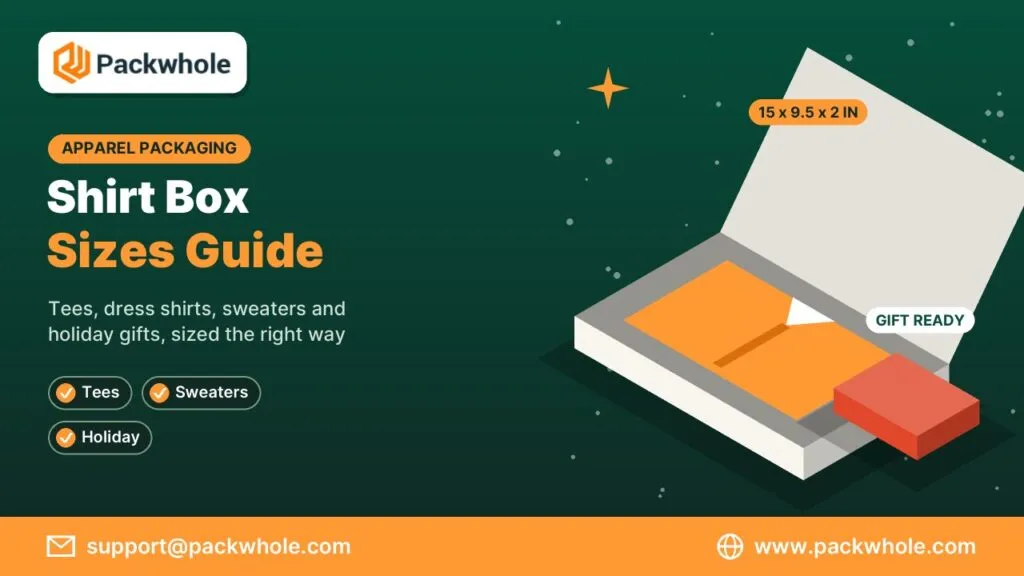
| Standard shirt box | 15 x 9.5 x 2 in | T-shirts, blouses, polos |
| Large shirt box | 17 x 11 x 2.5 in | Dress shirts, light sweaters |
| Robe or sweater box | 19 x 12 x 3 in | Sweaters, hoodies, robes |
| Extra-large box | 24 x 14 x 4 in | Coats, blankets, pajama sets |
How to Fold Shirts to Fit Standard Box Sizes
Folding technique has a big effect on which of the shirt box sizes you need. A neatly folded shirt with sleeves tucked behind the body takes up much less space than a quick fold. Dress shirts are often folded around a cardboard insert to keep the collar crisp. Sweaters and hoodies are thicker, so they need deeper boxes even when the folded length and width look similar to a T-shirt.
- Lay the shirt face down and smooth out wrinkles.
- Fold each side and sleeve toward the center.
- Fold the bottom up to meet the shoulders, or in thirds for longer shirts.
- Measure the folded length, width and height.
- Add a little space for tissue paper and a card.
Shirt Boxes for Holiday Gifts
The holiday season is when shirt box sizes matter most. Shoppers want gifts that are easy to wrap or, even better, already gift-ready. Printed Christmas shirt boxes with festive patterns can go straight under the tree without wrapping paper. Stores that offer gift boxes at the register often see shoppers add a box to every clothing purchase, which keeps the wrapping line moving.
Our Christmas shirt boxes are made for exactly this season, and our post on Christmas packaging ideas shares more ways to dress up holiday orders.
Two-Piece Boxes, Mailers and Sleeves Compared
Not every shirt box looks the same. The classic two-piece box with a separate lid is lightweight and folds flat for storage. Printed mailer boxes combine shipping strength with a gift-ready look for online stores. Sleeve boxes slide over a tray for a premium reveal that suits boutique and luxury apparel.
| Style | Strength | Gift look | Best use |
|---|---|---|---|
| Two-piece paperboard | Light | Classic | Store wrapping counters |
| Rigid lid and base | High | Premium | Luxury knitwear and gifts |
| Corrugated mailer | High | Modern | Online clothing orders |
| Sleeve and tray | Medium | Elegant | Boutique and limited editions |
For premium apparel, apparel sleeve boxes give a smooth slide-out reveal, while custom mailer boxes suit brands that ship directly to customers.
Materials and Thickness for Shirt Boxes
Most shirt boxes are made from folding paperboard because it is light, smooth and easy to print. It works well for shirts sold in stores, where the box is carried in a shopping bag. Rigid chipboard gives a heavier, keepsake feel for premium garments, and many customers reuse these boxes for storage. Corrugated board is the right choice when the box itself will travel through the mail.
White boxes show printed colors brightly, kraft boxes create a natural look, and colored stocks make an easy seasonal statement. Thicker board resists bending when shoppers stack boxes in their arms or bags.
Printing and Branding Ideas for Shirt Boxes
A shirt box is a quiet but effective brand ambassador. Every time it is opened at a party or family gathering, your logo is seen by several people. Simple branding often works best: a centered logo on the lid, a pattern that matches your clothing line, or a holiday design that changes each season. Inside printing and branded tissue add a finishing touch.
- Foil logos on matte lids for upscale boutiques.
- Plaid, snowflake or pine patterns for holiday collections.
- Minimal one-color prints on kraft for eco-minded brands.
- Inside-lid messages such as care tips or a thank-you note.
- Branded stickers to seal tissue paper neatly.
Choosing Shirt Box Sizes for Online Clothing Brands
Online apparel brands have extra considerations. Carriers charge by size and weight, so a box that is larger than needed raises shipping costs and adds filler. Right-sized mailers keep the garment from shifting and reduce damage. Many brands choose one or two standard mailer sizes that fit most of their range, with a larger option for hoodies and bundles.
Our shipping box sizes guide explains how carriers treat box dimensions and why right-sizing helps.
Shirt Box Sizes for Kids, Plus Sizes and Bundles
A single standard box rarely covers an entire clothing range. Children’s clothing folds into much smaller rectangles, so a small box keeps the gift from rattling around. Plus-size garments and tall fits fold into longer, thicker shapes that may need the large or sweater box. Bundles such as a shirt and matching tie, or a pajama set with socks, need extra depth or a slightly longer box.
Mapping your products to three or four shirt box sizes keeps ordering simple. List each garment type, fold a sample, and note which box it fits best. This quick exercise often shows that two sizes handle most sales, while a larger size covers sweaters and gift sets.
Inserts and Tissue That Keep Shirts Crisp
The inside of a shirt box matters as much as the outside. A sheet of tissue paper wrapped around the folded garment protects it from dust and adds a gift-like feel when the lid comes off. Cardboard inserts behind dress shirts hold the collar and placket straight. For premium boxes, a printed card with care instructions or a short brand story turns a simple purchase into a memorable moment.
Plan these extras when choosing shirt box sizes, because tissue, inserts and cards all take a little space. Adding a small allowance to the depth keeps the lid from bulging and the box looking neat.
Storing and Stocking Shirt Boxes for the Holiday Rush
Shirt boxes ship flat, which saves space, but busy seasons still demand planning. Retailers often pre-fold a supply of the most popular size before Black Friday so staff can box purchases quickly. Organizing boxes by size near the register and labeling shelves clearly prevents mix-ups when the line gets long. Ordering early also leaves time for a proof and any design changes before the season starts.
Mistakes to Avoid When Ordering Shirt Boxes
Shirt box orders often go wrong when buyers assume one size fits every garment. A bulky sweater and a thin tee may need very different depths. Stocking too many sizes can also clutter storage and slow down wrapping. Avoid these common mistakes to keep your packaging simple and effective.
- Measuring the garment flat instead of folded.
- Ignoring depth for sweaters, hoodies and pajama sets.
- Choosing thin board that bends under heavier clothing.
- Ordering holiday boxes too late in the season.
- Forgetting space for tissue paper, inserts or gift cards.
Order Custom Shirt Boxes in the Sizes You Need
Packwhole produces printed shirt boxes, mailers and sleeve boxes sized to your clothing line. Our designers prepare the dieline and artwork for free, you sign off on a digital proof, and short runs ship quickly enough to get ready for the holiday rush. Email support@packwhole.com with your garment types and quantities, or start a quote at www.packwhole.com, and our team will recommend sizes that fit your range.