When you order custom stickers, one of the first choices is how they will be cut. The terms sound technical, but the difference is easy to understand once you see them side by side. This guide on die cut vs kiss cut stickers explains how each style is made, how it peels, what it costs and where each one shines, so you can pick the right option for giveaways, packaging seals, product labels or sticker sheets.
What Is a Die Cut Sticker?
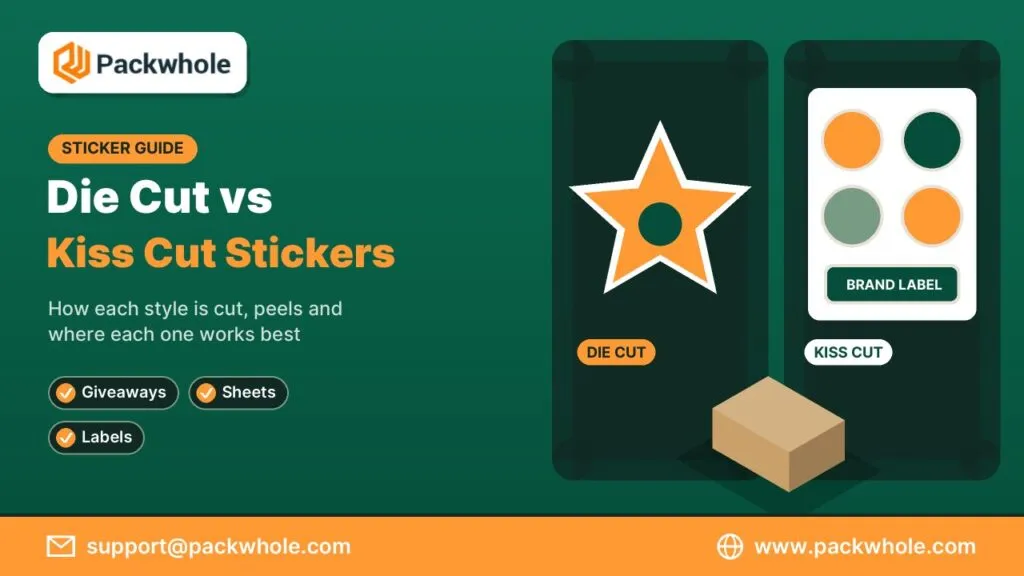
A die cut sticker is cut all the way through both the sticker material and the paper backing. The finished sticker has a backing that matches its exact shape, so it looks like a standalone object even before it is peeled. That is why die cut stickers feel premium and are popular as freebies and merch.
Because the backing follows the outline, die cut stickers can take almost any shape: a logo, a mascot, a product silhouette or lettering. A thin border, usually white, is often left around the design to keep the edges clean and make the shape stand out on laptops and water bottles. See examples on our die cut stickers page.
What Is a Kiss Cut Sticker?
With a kiss cut, the blade slices just the printed top layer and the liner underneath stays whole. The sticker sits on a larger backing, usually a square, rectangle or full sheet, and peels away easily from it. The backing gives you extra space for branding, instructions or several designs at once.
Kiss cuts are the format behind most sticker sheets and many packaging labels. They are easy to peel because the backing extends past the sticker, giving fingers something to hold. Our sticker sheets use this method to combine several designs on one page.
Die Cut vs Kiss Cut Stickers Compared Side by Side
Both styles use the same materials and print quality, so the decision comes down to presentation, use and handling. A quick comparison helps you see which one matches your goal. Many brands end up ordering both: die cuts for giveaways and kiss cuts for packaging and sheets.
| Feature | Die cut | Kiss cut |
|---|---|---|
| Cut depth | Through sticker and backing | Through sticker only |
| Backing shape | Matches the design | Square, rectangle or sheet |
| Peeling | Slightly harder to start | Very easy, backing gives a grip |
| Look before peeling | Premium, standalone shape | Sticker on a branded card |
| Space for extra info | None | Room on the backing |
| Best for | Giveaways, merch, laptops | Sheets, labels, packaging, retail |
Die Cut vs Kiss Cut Stickers: When to Choose Die Cut
Die cut stickers are the right choice when the sticker itself is the product or the gift. Their custom shape makes them feel collectible, and people are more likely to keep them and stick them somewhere visible. They are less practical for fast application on a packing line, but they excel as brand ambassadors.
- Freebies in orders: a die cut logo sticker in every box gets stuck on laptops and bottles.
- Merch and events: shaped stickers are great handouts at trade shows and pop-ups.
- Retail sale: individual stickers sold by artists and shops usually use die cuts.
- Product decoration: unusual shapes can follow the outline of a product or illustration.
Die Cut vs Kiss Cut Stickers: When Kiss Cut Makes More Sense
Kiss cut stickers are ideal when practicality and speed matter. Because they peel easily, they work well for labels and seals applied by hand during packing. The backing also turns into extra marketing space, which is useful for retail packs and sticker sheets.
- Packaging seals: quick to peel and apply when sealing boxes and tissue.
- Product labels: round or rectangular labels applied to jars, candles and bottles.
- Sticker sheets: several designs, icons or labels on one sheet.
- Retail packs: the backing carries your logo, a barcode or care instructions.
For seals specifically, box seal stickers are designed for fast application on mailer boxes.
How Die Cut vs Kiss Cut Stickers Differ in Cost and Production
Cutting style can influence price and production, although the material and size usually matter more. Die cut stickers require cutting through the backing for every piece, while kiss cuts can be arranged efficiently on sheets. Your quantity, shape complexity and finishing all play a role too.
- Shape complexity: very detailed outlines may need simplifying for clean cutting.
- Quantity: larger runs reduce the cost per sticker for both styles.
- Format: sheets combine several kiss cut designs in one print, which can be economical.
- Material: vinyl, clear and metallic materials cost more than paper, regardless of cut.
The easiest way to compare die cut vs kiss cut stickers on price is to request a quote for both styles with the same size and material.
Preparing Artwork for Die Cut vs Kiss Cut Stickers Without Cutting Problems
Good artwork makes a big difference to how clean the cut looks. Both styles need a cut line, which tells the cutter where to trim. The rules are similar, but die cuts need a little more care because the backing follows the outline. Following these steps prevents surprises.
- Send a vector file (an AI, EPS or vector PDF) so the edges stay crisp.
- Simplify very thin points or tiny gaps in the outline.
- Leave a border of about 0.0625 to 0.125 inch around die cut designs.
- Keep text and important details away from the cut line.
- For sheets, space designs evenly and leave room on the backing for branding.
Our team can create the cut line for you if your file does not include one. If you are new to the term, our article on what a dieline is explains how cut lines are used in printing.
Choosing the Right Material for Either Cut
Both die cut and kiss cut stickers can be made on the same materials, so the choice of material is separate from the cut. Think about where the sticker will be used and how long it needs to last. The right material keeps the sticker looking good whatever cut you choose.
- Vinyl: durable and water-resistant, the top choice for laptops, bottles and outdoor use.
- Matte paper: natural and writable, ideal for packaging seals and labels.
- Clear: transparent film that suits glass jars and windows.
- Metallic: gold or silver finishes for premium branding.
To compare the two most common options, read our guide to paper vs vinyl stickers, or explore vinyl stickers for long-lasting giveaways.
Real-World Examples: Die Cut vs Kiss Cut Stickers in Action
Seeing how other types of businesses use each style makes the decision easier. In practice, the choice usually follows the job the sticker has to do. These examples show how different brands split their orders between die cut vs kiss cut stickers to get the best of both.
- Coffee roaster: kiss cut round labels on every bag, plus a die cut bean-shaped sticker in each online order.
- Skincare brand: kiss cut rectangle labels for jars and a sheet of kiss cut seals for packing tissue.
- Software company: die cut logo stickers handed out at conferences and mailed to new customers.
- Bakery: kiss cut box seals with the shop name and a die cut cupcake sticker for kids.
- Outdoor gear shop: vinyl die cut stickers sold at the counter and kiss cut care labels on products.
Most of these brands keep two sticker designs in stock: a practical one for packing and a collectible one for customers. That simple setup covers branding and fulfillment without a complicated inventory. ## Common Mistakes When Choosing Between Die Cut and Kiss Cut The wrong cutting style can make stickers slower to use or less appealing to customers. Most mistakes come from choosing based on looks alone without considering how the stickers will be applied or handed out. Keep these points in mind before you order.
- Choosing die cuts for labels that staff apply quickly during packing.
- Ordering kiss cuts as giveaways when customers expect a shaped, collectible sticker.
- Using overly complex outlines that cut poorly at small sizes.
- Forgetting to use the extra backing space on kiss cut stickers.
- Picking a paper material for stickers that will face moisture.
Order Die Cut or Kiss Cut Stickers With Packwhole
Whether you want collectible shaped stickers or practical kiss cut labels and sheets, we can help you choose the right style. We set up the cut path and tidy your artwork at no extra cost, and nothing is printed until you sign off on the preview. Small minimums also make it easy to order a few of each style side by side.
Ask us anything about cutting styles at support@packwhole.com or view every sticker shape and material at www.packwhole.com.