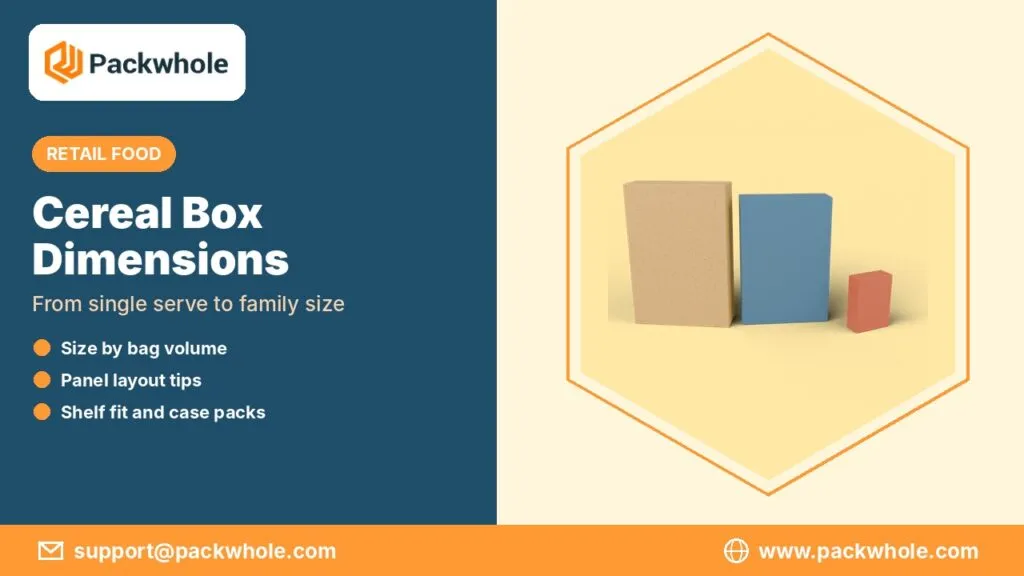
The cereal box is one of the most recognizable packages in any American kitchen: a tall, thin carton with a big front panel and a bag inside. Behind that familiar shape are some deliberate choices. Cereal box dimensions balance shelf presence, the volume of a light product and the way the box pours into a bowl. Small brands launching granola, protein cereal or kids’ cereal often borrow the classic proportions, but there is room to adjust.
This guide explains how cereal boxes are measured, gives typical dimensions for common net weights and covers inner bags, panel layout and planning a limited edition or promotional box. Sizes vary by product density, so treat the figures here as references.
How Cereal Box Dimensions Work
Cereal boxes are usually described as width by depth by height. Width is the front panel, depth is the narrow side and height is top to bottom. Because cereal is light and fills space unevenly, the box is sized around the volume of the filled inner bag, not the weight alone. A dense granola might fit 12 ounces in a much smaller box than puffed rice.
- Front width: sets how large your artwork can be.
- Depth: controls how much the box holds without becoming wide.
- Height: affects shelf fit and pouring.
Typical Cereal Box Dimensions by Size
These figures are common for many flaked and puffed cereals. Denser products like granola or muesli usually need less volume for the same weight.
| Package size | Typical dimensions (W x D x H, inches) |
|---|---|
| Single serve (about 1 oz) | 3.5 x 1.5 x 5 |
| Small (about 8 to 10 oz) | 7.5 x 2.25 x 10.5 |
| Standard (about 12 oz) | 7.75 x 2.5 x 11.75 |
| Large (about 18 oz) | 8.5 x 2.75 x 12.5 |
| Family size (about 24 to 30 oz) | 9.5 x 3 x 13.5 |
These are typical figures from common retail formats rather than fixed rules. Always test with a filled bag of your own product before finalizing.
Inner Bags and Settling
Most cereal is packed in a sealed inner bag that protects it from air and moisture. The bag is filled by weight, and the contents settle during shipping, which is why boxes can look partly empty when opened. Many cartons include a statement that contents may settle. Leaving appropriate headspace prevents the bag from bursting when the box is closed, while keeping the box from looking too empty.
- Fill a bag with your product at the target weight.
- Gently shake it to simulate settling.
- Measure the bag’s height and width when standing.
- Add a small allowance for the flaps and seams.
Panel Layout and Artwork
A cereal box has six panels, and each has a job. The front sells the product, the back often tells a story or offers an activity, and the sides carry nutrition and ingredient details. The top and bottom flaps are usually plain. Planning these zones early helps designers fit the required information without crowding the artwork.
| Panel | Typical use |
|---|---|
| Front | Brand, product name, hero image, key flavor |
| Back | Story, puzzle, recipe or promotion |
| Side 1 | Nutrition facts panel |
| Side 2 | Ingredients, allergens, contact details |
| Top | Opening instructions, lot code |
Our article about the top part of a cereal box explains the closure area in more detail.
Cereal Box Dimensions for Small Batches and Promotions
Not every cereal box goes to a grocery store. Small granola brands, bakeries, event planners and marketing teams order custom printed cereal boxes for promotions, gift baskets and limited editions. Some fill them with snacks or treats rather than cereal. For these uses, a smaller box often works better than a family size carton. Mini cereal boxes around single-serve size make playful party favors and sample packs.
Explore custom cereal boxes for retail and promotional sizes, and custom cereal bar boxes if your range includes bars.
Board, Strength and Shelf Fit
Cereal boxes are usually made from paperboard rather than corrugated board, because the inner bag carries the weight and the carton mainly protects and promotes. Thicker board gives a firmer feel for heavier granola. Shelf height matters too: grocery shelves have limited clearance, so very tall boxes can be hard to place. Checking where your product will be sold helps decide whether a taller, slimmer box or a shorter, wider one is better.
Labeling Requirements to Keep in Mind
Packaged food sold in the United States generally needs a statement of identity, net quantity, ingredient list, allergen information, nutrition facts, plus the business name and location of whoever makes or distributes the product. Small businesses and certain products may qualify for exemptions, and rules are updated from time to time. Treat this section as a general overview rather than legal counsel, and check current FDA labeling guidance or consult a food labeling specialist before printing.
Mistakes to Avoid When Sizing Cereal Boxes
Cereal packaging mistakes usually show up during filling or on the shelf. Avoiding them saves reprints:
- Sizing the box from weight alone instead of filled bag volume.
- Leaving too little room for the nutrition panel on the side.
- Ignoring shelf height in the stores you plan to sell in.
- Forgetting to plan space for a barcode and lot code.
Cereal Box Dimensions for Granola and Muesli
Granola, muesli and oat clusters are denser than puffed cereals, so they often use smaller cartons for the same weight. Some brands choose a shorter, wider box with a window to show the clusters, while others prefer the classic tall carton. Testing your exact product is the only reliable way to settle cereal box dimensions for denser mixes.
| Product | Density | Box approach |
|---|---|---|
| Puffed rice or corn | Very light | Tall, deep box |
| Flakes | Light | Classic proportions |
| Granola clusters | Dense | Shorter box or pouch-in-carton |
| Muesli | Dense and loose | Smaller carton with inner bag |
Shelf Placement and Visibility
Store shelves are measured in inches, and every brand competes for space. A box that is too tall may be placed on a top shelf or laid on its side. A box that is too narrow may be hidden between larger competitors. When choosing cereal box dimensions, look at the shelves where your product is likely to sit and compare similar products. Matching common heights helps your box line up neatly beside competitors while your design does the work of standing out.
- Check typical shelf heights at your target stores.
- Keep the front panel wide enough for a bold logo.
- Use the side panel facing out if boxes are shelved sideways.
- Plan for case packs that fit standard shipping cartons.
Planning Case Packs and Shipping
Retail cereal ships to stores in corrugated case packs. The number of boxes per case and their arrangement affect the case size and how many cases fit on a pallet. Choosing cereal box dimensions that pack efficiently can lower freight costs. Discuss case counts with your distributor early, because they may have preferred case sizes for shelving and storage.
Launch Your Cereal Box With Packwhole
Share your product weight, filled bag size and where the box will be sold, and we will help you settle on dimensions and a panel layout. We create the dieline at no cost, provide a proof to review on screen, accept modest first runs for new brands and keep turnaround short. Email support@packwhole.com with your cereal details, or start a cereal box request on www.packwhole.com.