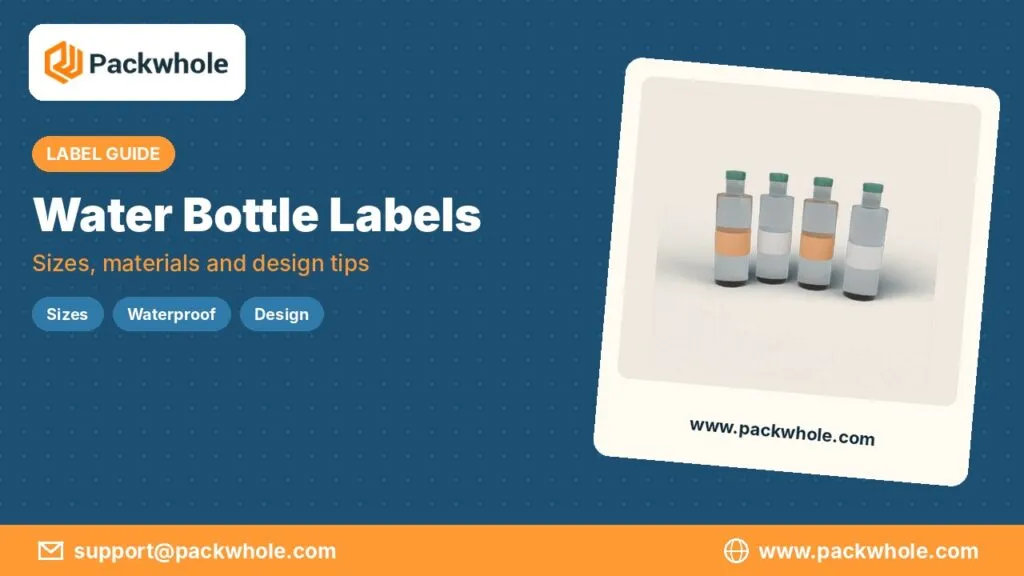
A bottle of water is one of the simplest things you can hand someone, and a printed label turns it into a branded moment. Businesses use water bottle labels at trade shows, hotels, gyms and real estate open houses, while families use them at weddings, birthdays and reunions. Because bottles get cold, wet and handled constantly, the label has to fit well and stand up to moisture.
This guide covers common sizes, material and adhesive choices, design tips and practical advice for applying labels so they look neat and stay put.
Common Water Bottle Label Sizes
Most single-serve plastic bottles have a smooth band where the original label sits. The best way to size a label is to measure that band on the exact bottle you plan to use. Wrap a strip of paper around the bottle, mark the overlap and measure the height of the flat area. The sizes below are commonly used starting points, not fixed standards.
| Bottle size | Common label size (inches) |
|---|---|
| 8 oz | About 6.5 x 1.5 to 2 |
| 12 oz | About 7 x 2 |
| 16.9 oz (half liter) | About 8 x 2 |
| 20 oz | About 8.5 x 2.5 to 3 |
Leave a small overlap of about a quarter inch where the ends meet, so the label closes cleanly.
Choosing a Waterproof Material
Paper labels soak through quickly when bottles come out of a cooler. For most uses, a synthetic material such as vinyl, polypropylene or polyester holds up much better. A gloss or matte laminate adds extra protection against scuffs. Our guide to waterproof stickers explains how these materials compare.
| Material | Water resistance | Look |
|---|---|---|
| Uncoated paper | Low | Natural, matte |
| Coated paper | Moderate | Smooth, printable |
| Vinyl | High | Durable, flexible |
| Polypropylene (BOPP) | High | Clean, glossy or clear |
| Clear film | High | “No label” look |
Adhesive Matters for Cold Bottles
Standard adhesives can lose grip on cold, wet surfaces. If bottles will sit in ice, choose a label with an adhesive designed for moisture or refrigeration, and apply labels to dry, room-temperature bottles before chilling them. Peel the original label off first, and wipe away any leftover glue so the new label sits flat.
- Remove the original label and leftover glue.
- Clean and dry the bottle surface.
- Apply labels at room temperature.
- Let them set before chilling.
Design Tips for Small Labels
Water bottle labels are long and narrow, so layout needs care. Place the main message or logo in the center panel, which faces outward most often. Keep text large enough to read at arm’s length, and use high contrast between text and background. Avoid placing important details right at the overlap, where they may be hidden.
- Center the logo or main message.
- Use two or three colors for a clean look.
- Keep small print to a minimum.
- Add a QR code if you want to link to a website or menu.
Labels for Events and Celebrations
For weddings, showers and parties, labels can match the invitation colors, include names and a date, or carry a short message. Clear labels on clear bottles give a minimal, elegant look. For kids’ birthdays, playful illustrations and bright colors work well. Order a few extra labels to allow for mistakes during application.
Labels for Businesses and Promotions
Hotels, gyms, real estate agents and conference organizers use branded water as a small gift that keeps the logo in hand. Include your logo, website and a short tagline. Keep the design consistent with your other printed materials so the brand feels cohesive. Matching custom rectangle stickers and seal labels can tie the look together across packaging.
Labeling Rules for Bottled Products
If you are selling bottled water or another beverage, the label must meet federal and state food labeling requirements, which can include a product identity, net quantity, manufacturer details and more. These rules are more detailed than promotional labels on store-bought water. Please check FDA guidance and your state requirements before selling; this article covers decorative and promotional labels and is not legal advice. Our post on cottage food labeling requirements shares general background on food labels.
Printing at Home vs. Ordering Custom
You can print water bottle labels at home using waterproof label sheets and an inkjet or laser printer, which works for small events. For larger quantities or a polished, durable result, professionally printed roll or sheet labels hold color better and resist moisture more reliably. Compare cost, quantity and the look you need.
| Option | Best for |
|---|---|
| Home printing | Small batches, quick events |
| Printed sheet labels | Medium quantities, easy hand application |
| Printed roll labels | Large quantities or machine application |
Applying Labels Neatly
Applying labels by hand is easy once you develop a rhythm. Line the label up with the bottle’s seam, press the center first and wrap around while smoothing out air bubbles. Overlap the ends on the back of the bottle. If you are labeling many bottles, set up a simple assembly line with one person peeling and another applying.
Finishes That Make Labels Stand Out
Finishes change how water bottle labels look and feel. Gloss lamination makes colors pop and wipes clean easily, while matte lamination feels softer and reduces glare under bright event lights. Clear labels with white ink underneath let the bottle show through for a modern look. Metallic or foil accents can highlight a name or logo for weddings and luxury events.
| Finish | Effect |
|---|---|
| Gloss laminate | Bright colors, easy to wipe |
| Matte laminate | Soft look, less glare |
| Clear with white ink | Minimal, “printed on bottle” look |
| Foil accents | Premium highlight for names and logos |
How Many Labels to Order
Count the bottles you expect to serve, then add extra for spares and mistakes. For events, plan roughly one to two bottles per guest depending on length and weather. For promotions, think about how many bottles you hand out each week and order enough water bottle labels for a few months to lower the cost per label.
Pairing Labels With Packaging
Labels often appear alongside other packaging, such as gift boxes or welcome bags. For events, bottles can sit in printed carriers or boxes that share the same design. Our custom jar labels guide covers labeling other containers, which helps if you are building a full set of branded packaging.
Matching Labels to Your Brand Style
Your labels should look like they belong to the same family as your other printed materials. Use the same logo version, color palette and fonts that appear on your business cards, packaging and signage. Consistency helps people remember your brand after the event ends, when the bottle might still be sitting on a desk.
For seasonal promotions, keep the core design the same and change one element, such as a background color or a short message. This approach lets you run several campaigns without redesigning everything, and it keeps your water bottle labels recognizable over time.
Mistakes to Avoid
Several small mistakes can spoil a batch of labels. Ordering before measuring the actual bottle is the most common, since bottle shapes vary between brands. Using paper labels for chilled bottles is another. Placing text too close to the top or bottom edge can also cause problems if the label sits on a curve.
Proofread names, dates and spellings carefully before printing, especially for weddings and events where details matter. Finally, apply labels a day or two ahead of the event so you are not rushing on the day, and store finished bottles in a cool, dry place until they go into the cooler.
Custom Labels That Stay On
Planning branded water bottles for an event or promotion? Tell us your bottle size and quantity, and we will help you choose a material that survives the ice bucket. Our designers set up the label layout free, send you a proof to approve, print short runs and dispatch fast. Reach out at support@packwhole.com, or explore label and sticker options at www.packwhole.com.