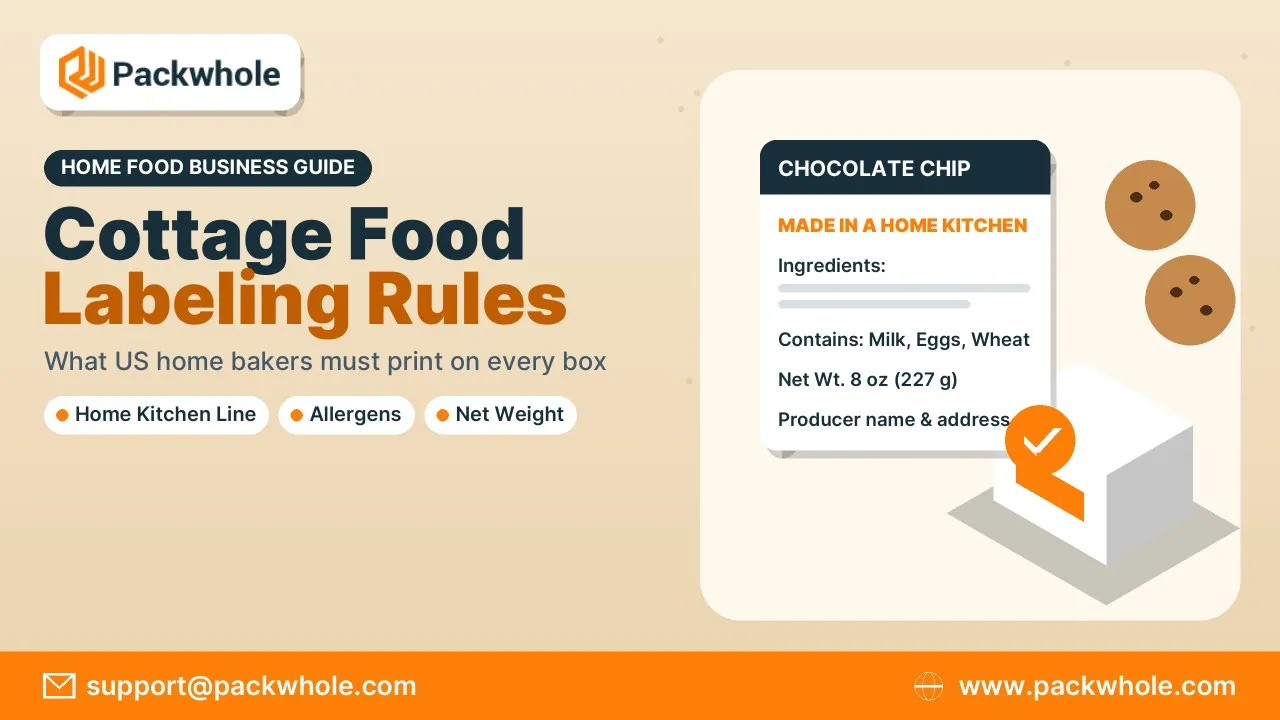
Selling cookies, jams or granola from your home kitchen is one of the easiest ways to start a food brand in the United States, but the label is where many new sellers slip up. Cottage food labeling requirements are set by each state, and inspectors, farmers market managers and even customers check them. Get the label right and your packaging looks professional and trustworthy. Get it wrong and you may be asked to pull products from the table.
This guide explains the label elements most states share, how they differ, and how to design custom boxes, sleeves and stickers that keep every required detail readable.
What Cottage Food Laws Cover and Why Labels Matter So Much
Cottage food laws let individuals make certain low-risk foods at home and sell them directly to consumers without a commercial kitchen. Typical approved items include baked goods without cream fillings, candy, dried herbs, fruit jams and jellies, granola, popcorn and roasted nuts. Because these foods are not made in an inspected facility, the label becomes the main way a buyer learns who made the product and what is inside it. That is why almost every state ties its cottage food permission to a specific set of label rules.
Labels also protect you. A clear ingredient list and allergen statement reduce the risk of a customer reaction, and a correct business name and address make it easy for happy buyers to reorder.
Core Cottage Food Labeling Requirements Shared by Most States
While wording and type sizes vary, most states ask for the same basic building blocks on every package. Think of the list below as a starting checklist, then confirm the exact rules with your state health or agriculture department before printing.
- Product name: the common name of the food, such as “Chocolate Chip Cookies” or “Strawberry Jam.”
- Producer name and address: the business or personal name and the physical address of the home kitchen, or a registration number in states that allow it.
- Home kitchen statement: a required sentence telling buyers the food was made in a home kitchen that is not inspected by the health department.
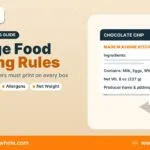
- Ingredient list: every ingredient in descending order by weight, including sub-ingredients such as the parts of chocolate chips.
- Allergen declaration: the major food allergens present in the product.
- Net quantity: weight, volume or count, often in both US and metric units.
- Registration or permit number: required in some states, such as California, which issues numbers to registered cottage food operations.
Some states also ask for a “best by” date, a lot code or a specific font size. Others ban certain claims, such as “organic,” unless you are certified.
The Home Kitchen Statement: Wording, Size and Placement
The home kitchen statement is the element that most often trips up new sellers because each state writes its own version. In some states the wording is short; in others it is a full sentence that must appear exactly as written. Many states also set a minimum type size or require the statement to be on the principal display panel, which is the side customers see first.
Examples of how states approach it:
- California: labels must state “Made in a Home Kitchen” in a minimum 12-point type, along with the registration or permit number.
- Texas: labels must include a full sentence explaining the food is made in a home kitchen and is not inspected by the state or local health department.
- Other states: many use similar wording, but some require it on the front panel and others accept it on any panel.
Because the text is long in some states, plan space for it before designing your box artwork rather than squeezing it in at the end.
This section is a general overview, not legal advice; always confirm current wording with your state’s cottage food program.
Allergens and Ingredient Lists on Home-Made Food Labels
Ingredient and allergen information is where state cottage food rules usually borrow from federal food labeling practice. The United States recognizes nine major food allergens: milk, eggs, fish, crustacean shellfish, tree nuts, peanuts, wheat, soybeans and sesame. Sesame was added in 2023, so older templates may be out of date. Listing these clearly matters even when your state’s cottage law is short on detail.
| Label Element | What to Include | Common Mistake |
|---|---|---|
| Ingredient list | All ingredients by weight, largest first | Leaving out sub-ingredients in chips, sprinkles or flour blends |
| Allergen statement | “Contains: Milk, Eggs, Wheat” or allergens in bold in the list | Forgetting sesame or tree nuts used as toppings |
| Net quantity | “Net Wt. 8 oz (227 g)” or “12 cookies” | Using only grams or only a count when weight is required |
| Cross-contact note | Optional “made in a kitchen that also processes peanuts” | Implying a nut-free kitchen when it is not |
Write ingredients in plain words customers recognize, and keep the allergen line in a type size that is easy to read on a small sticker.
Cottage Food Labeling Requirements for Online and Mail-Order Sales
More states now allow some cottage foods to be sold online or shipped within the state, and a few allow interstate sales of specific products. When food is sold online, the buyer cannot read the package before paying, so some states require the same label information on the product web page. Shipping also raises new packaging questions, because the label must stay readable after a trip through the mail.
Practical steps for shipped cottage foods:
- Print labels on water-resistant stock or use a matte laminate so ink does not smudge.
- Place the full label on the primary package, not only on the outer shipping box.
- Add a “best by” date even if your state does not require it, since transit time shortens freshness.
- Check whether your state limits shipping to in-state customers before advertising nationwide delivery.
Federal rules can apply when food crosses state lines, so sellers planning interstate sales should review FDA labeling requirements as well.
Designing Custom Boxes That Hold Every Required Detail
Cottage food labeling requirements become much easier to meet when the packaging is designed around them. A plain box with a small handwritten sticker can look unprofessional and may not have room for the full statement. Custom printed boxes and sleeves let you build the required text into the artwork while keeping the front panel focused on your brand.
Design tips for home bakers and makers:
- Reserve the back or side panel for ingredients, allergens, net weight and the producer address.
- Put the home kitchen statement where your state requires it, often the front, in the minimum type size.
- Use one variable label area for flavor and date so the same printed box works for many products.
- Choose high-contrast colors, such as dark text on white or kraft, for legal text.
- Keep at least 1/8 inch of space between legal text and folds or glue flaps.
Custom bakery boxes, cookie boxes and window boxes work well for cottage food products because they combine display space with protection.
Labels, Stickers and Sleeves: Choosing the Right Format
Not every cottage business needs fully printed boxes on day one. Many sellers start with stock boxes and a printed label, then move to custom boxes as sales grow. The right format depends on how many flavors you make, how often recipes change and how large your batches are. Comparing the main options helps you decide where to start.
| Format | Best For | Pros | Watch Out For |
|---|---|---|---|
| Printed sticker label | Small batches, many flavors | Low cost, easy to update | Limited space for long statements |
| Belly band or sleeve | Jars, cookie stacks, bars | Wraps around for more space | Must stay attached during handling |
| Fully printed box | Best-sellers, gift sets | Most professional look | Recipe changes require new artwork |
| Hang tag | Bags of granola, popcorn | Extra panel for story and legal text | Can tear off if poorly attached |
A common approach is a printed box for branding plus a small variable sticker for ingredients and dates.
Mistakes to Avoid With Cottage Food Labeling Requirements
Most labeling problems come from copying another seller’s label or using a template from a different state. Rules differ, and what is acceptable in one state may be missing a required element in another. Small details, such as the order of ingredients, also matter more than many new sellers expect.
- Copying a home kitchen statement from another state’s template.
- Leaving out the producer address or using only a social media handle.
- Forgetting sub-ingredients and hidden allergens.
- Making health claims like “sugar-free” or “gluten-free” without meeting the definitions.
- Printing legal text too small or on dark, busy backgrounds.
Get Professional Packaging That Meets Cottage Food Labeling Requirements
PackWhole helps home bakers, candy makers and small food brands design packaging with room for every required detail. Our designers lay out your front panel, legal text and allergen area on the dieline for free, and minimum orders stay low so you can test new flavors. We can also print matching stickers and hang tags for products that change often.
Share your state, product list and logo with our team at support@packwhole.com, or explore food packaging options at www.packwhole.com.
Cottage Food Labeling Requirements FAQs
Labels raise a lot of questions for first-time food sellers. These answers cover the most common ones. Because every state writes its own law, use them as a starting point and confirm details locally.
Do cottage food products need a Nutrition Facts panel?
Usually not, unless you make a nutrient or health claim, but check your state’s rules.
Can I use a P.O. box instead of my home address?
Some states allow a registration number or business address; others require the physical kitchen address.
Do I need to list sesame as an allergen?
Yes. Sesame became the ninth major US food allergen in 2023.
Can I print the label directly on the box?
Yes. Printing legal text on the box is common, as long as it meets type size and placement rules.
What size should the home kitchen statement be?
It depends on the state. California, for example, sets a 12-point minimum.