Shipping chocolate in summer, meal kits, seafood or cold beverages means fighting time and temperature. Insulated shipping boxes slow the transfer of heat, so cold items stay cold and frozen items stay frozen long enough to arrive safely. For small food businesses, getting this right protects product quality, food safety and customer trust.
This guide explains how insulated packaging works, the main liner options, how to choose coolants, how to pack and how to plan transit times. It offers general guidance; food safety and carrier rules vary, so check current requirements before shipping.
How Insulated Shipping Works
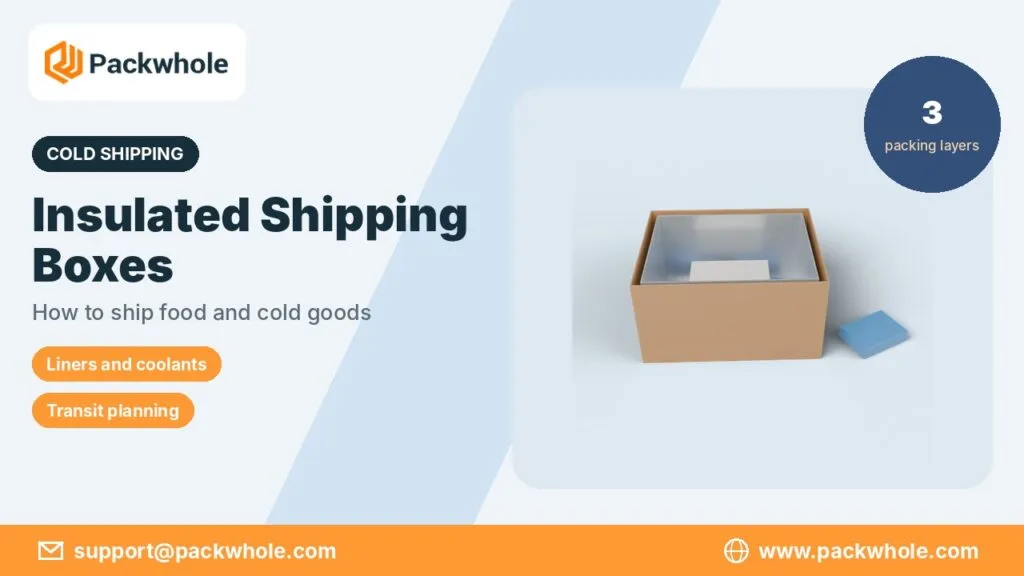
Heat moves from warm areas to cold ones. Insulation slows that movement, and coolants absorb heat that gets through. A typical insulated shipment has three layers: a sturdy outer corrugated box, an insulating liner and a coolant such as gel packs or dry ice. The longer the expected transit time, the more insulation and coolant you need.
| Layer | Job |
|---|---|
| Outer corrugated box | Structural protection and labeling |
| Insulated liner | Slows heat transfer |
| Coolant | Absorbs heat and keeps temperature low |
| Inner packaging | Holds and protects the food itself |
Types of Insulated Liners
Several liner materials are common, each with different performance, cost and disposal options.
- Expanded polystyrene (EPS) coolers: strong insulation, rigid walls, bulky to store.
- Foil bubble liners: light, flexible and compact for short transit.
- Paper-based or fiber liners: curbside recyclable in many areas, popular with eco-minded brands.
- Cotton, wool or plant-fiber batting: good insulation with a natural story.
Each option has trade-offs. Test liners in real conditions before committing to large orders.
Gel Packs vs. Dry Ice
Coolant choice depends on whether you need cold or frozen contents. Gel packs keep items chilled and are simple to use. Dry ice keeps items frozen much longer but requires special handling, venting and hazardous materials labeling for air shipments. Carriers set specific limits and rules for dry ice, so read their current guidance before using it.
| Coolant | Keeps items | Notes |
|---|---|---|
| Gel packs | Chilled | Easy to handle, reusable |
| Frozen gel packs | Cold to partly frozen | Freeze fully before packing |
| Dry ice | Frozen | Needs venting, labeling and carrier approval |
How to Pack an Insulated Box
Packing order matters. Cold air sinks, so placing coolants on top and around the product helps keep temperatures even. Fill empty spaces, because air pockets warm up faster than packed space.
- Pre-chill or freeze products and coolants.
- Assemble the outer box and insert the liner.
- Place a coolant layer at the bottom if needed.
- Add products in sealed, leak-proof inner packaging.
- Place coolants on top and along the sides.
- Fill gaps, close the liner and seal the outer box.
Planning Transit Times
Most perishable shipping problems come from delays. Sending on Monday or Tuesday reduces the chance that a parcel waits in a depot until the following week. Choose a service fast enough for your packaging, and check weather forecasts during heat waves. Many food businesses ship Monday through Wednesday only. Our comparison of Ground Advantage vs. Priority Mail explains typical USPS delivery windows.
- Ship early in the week.
- Avoid shipping right before holidays.
- Upgrade to faster service during hot weather.
- Email tracking so customers can bring parcels inside quickly.
When Insulated Shipping Boxes Make Sense
Not every food product needs insulation. Shelf-stable snacks, sealed coffee and many baked goods travel fine in regular cartons. Insulated shipping boxes are worth the extra cost when products can melt, spoil or lose quality at room temperature, or when customers expect them to arrive cold.
| Product | Insulation needed? |
|---|---|
| Chocolate in warm months | Usually yes |
| Fresh meat and seafood | Yes, with strict temperature control |
| Cheese and dairy | Usually yes |
| Cookies and dry baked goods | Usually no |
| Ice cream and frozen desserts | Yes, often with dry ice |
Costs to Plan For
Insulated shipping boxes add several costs: the liner, coolants, a larger outer carton and often a faster shipping service. Build these into product pricing or a perishable shipping fee. Buying liners and gel packs in bulk lowers unit costs, and right-sizing the outer box keeps shipping charges in check. Many brands also set minimum order values for perishables so each shipment covers its packaging.
Choosing Box Size
An insulated box should fit the liner snugly, and the liner should fit the products and coolants with little extra space. Oversized boxes need more coolant and cost more to ship due to dimensional weight. Measure your products with coolants included, then size the liner and outer box together. Our guide to shipping box sizes and the post on corrugated flute types help with structural choices.
Labeling Perishable Shipments
Clear labels help handlers and recipients. Mark boxes “Perishable” and “Keep Refrigerated” or “Keep Frozen” where relevant. Dry ice shipments need specific labels showing the amount used and other details required by the carrier. Include an insert card with handling instructions, such as refrigerating contents on arrival.
Food Safety and Regulations
Shipping food can involve state and federal food safety rules, especially for meat, seafood and dairy. Requirements depend on the product and where it is sold. Check FDA and USDA guidance and your state rules, and keep temperature records if needed. Home bakers should review cottage food rules; our post on cottage food labeling requirements covers general background. This article is not legal or food safety advice.
Testing Before You Scale
Run test shipments before launching. Pack a box exactly as you would for a customer, include a simple temperature logger or thermometer and send it to a friend or to yourself in a distant zone. Record how long products stay within the safe range. Testing in both hot and cool weather helps you set seasonal packing rules for insulated shipping boxes.
- Pack a test box with a temperature logger.
- Ship it through your normal service.
- Check product temperature and condition on arrival.
- Adjust liner thickness or coolant amount.
Branding Without Compromising Protection
Perishable shipments can still feel premium. A printed outer box with your logo, a welcome card and clear handling instructions make the experience memorable. Many brands use custom shipping boxes as the outer carton and pair them with a liner from a specialist supplier. Even with a liner inside, the presentation can still feel special; see our unboxing experience ideas for inspiration.
Communicating With Customers
Customers play a part in keeping food safe. Tell them when the parcel will ship, share tracking automatically and ask them to bring the box inside as soon as it arrives. A short card inside the box can explain how to store the product and what to do with the liner and coolants afterward.
If a parcel is delayed, contact the customer quickly and explain what to check on arrival. Clear communication builds trust, even when transit does not go perfectly. Many food brands publish a simple shipping policy page that explains their perishable shipping schedule and replacement rules.
Reducing Waste in Cold Chain Packaging
Insulated packaging can create a lot of waste, so many brands look for ways to reduce it. Paper-based liners and curbside-recyclable outer boxes make disposal easier. Gel packs with non-toxic contents can often be reused or drained according to the manufacturer’s directions. Some companies run take-back programs for coolers in local delivery areas.
Explain disposal clearly on an insert card. When customers know what to do with each component, they are more likely to recycle what they can and less likely to feel frustrated by the packaging. Accurate, specific guidance is better than broad environmental claims.
Branded Outer Cartons for Your Cold Chain
If you ship perishables, we can print the outer corrugated box that holds your liner and coolants. Send us your liner dimensions and order volume; we prepare the dieline for free, provide a proof before printing, work with smaller batches and deliver on short timelines. Write to support@packwhole.com, or request outer carton pricing at www.packwhole.com.