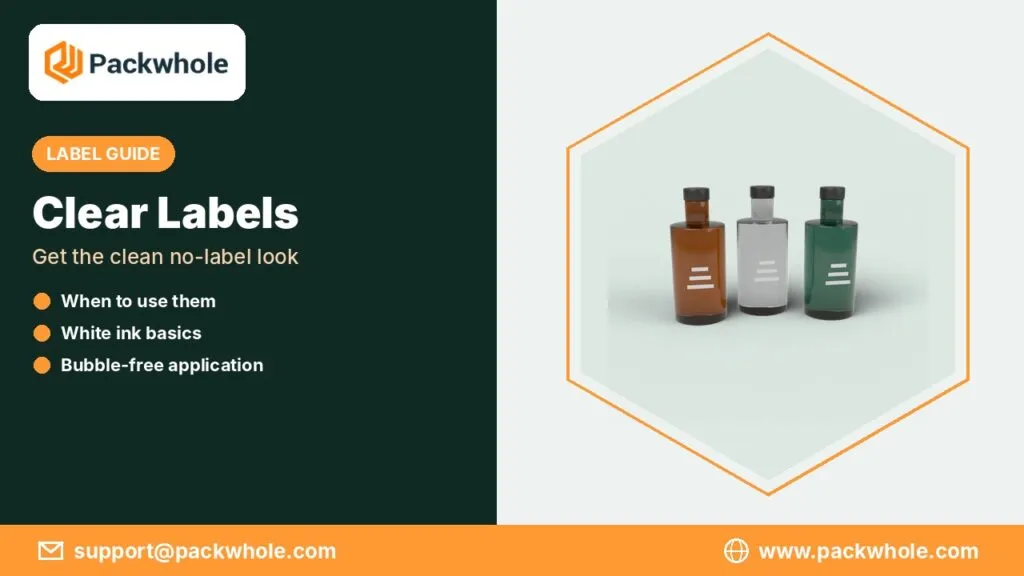
Some of the most elegant packaging looks as if the design was printed straight onto the container. Often, that effect comes from clear labels. A transparent label lets the bottle, jar or box show through, so the product itself becomes part of the design. Brands in beauty, beverages, candles and food use this approach to create a premium, minimal look without the cost of direct printing.
This guide explains when clear labels work best, how printing on transparent material differs from regular labels, which surfaces suit them and how to apply them without bubbles.
What Clear Labels Are
Clear labels are made from transparent film, usually polypropylene or polyester, with a clear adhesive. When applied, only the printed areas are visible. The background disappears, revealing the container underneath. This creates a sleek, modern look that is especially striking on glass and colored packaging.
When Clear Labels Work Best
Transparent labels shine when the container is attractive on its own. A glass bottle, a colored jar or a frosted container becomes part of the branding. They also work well when you want to show the product inside, such as colorful candies, oils or bath salts.
| Container | Why transparent labels help |
|---|---|
| Glass bottles | Creates a printed-on-glass look |
| Colored jars | Lets the container color show |
| Product with visible contents | Shows the product through the label |
| Kraft or colored boxes | Adds text without hiding the material |
| Windows and storefronts | Decals that let light through |
Printing on Clear Material
Printing on clear film is different from printing on white paper. Ink colors are translucent, so they can look lighter or shift in color depending on the surface underneath. To keep colors bright, printers often add a layer of white ink behind certain parts of the design. Without white ink, light colors may almost disappear on dark containers.
- No white ink: subtle, tinted look; good on light surfaces.
- White ink behind graphics: bright, solid colors on any surface.
- Dark text only: simple and readable on light containers.
When ordering printed clear labels, tell the printer what color the container is so they can recommend whether white ink is needed.
Design Tips for Clear Labels
Design with the container in mind. Text should contrast strongly with whatever is behind it. Dark text works on light or clear containers, while white or metallic text works on dark bottles. Avoid placing small text over busy patterns or contents that might change, such as liquids with sediment. Keep the design simple, because one of the main reasons to use transparent labels is a clean, minimal look.
- Check the color of the container and contents.
- Use high contrast between text and background.
- Add white ink behind colored areas if needed.
- Keep layouts minimal for a premium feel.
Surfaces and Adhesives
Clear labels stick best to smooth, clean, dry surfaces such as glass, plastic and coated boxes. Textured or uneven surfaces can trap air and show bubbles more than opaque labels do. For products that will be refrigerated or exposed to moisture, choose an adhesive designed for those conditions. Our guide to water bottle labels explains why adhesive choice matters on cold, wet containers.
How to Apply Clear Labels Without Bubbles
Bubbles are more visible under transparent labels, so careful application is important. Clean the surface with a lint-free cloth and a little rubbing alcohol, then let it dry. Peel only part of the backing, line up the label and press it on from one side to the other, smoothing as you go. A plastic squeegee or a credit card helps push air out.
- Clean and dry the surface first.
- Apply at room temperature.
- Smooth from the center or one edge outward.
- Use a squeegee for larger labels.
Clear Labels vs. White Labels
White labels are opaque and give bright, consistent colors on any surface, but they hide the container. Clear labels reveal the container and feel more premium, but they require careful design and application.
| Factor | Clear labels | White labels |
|---|---|---|
| Look | Minimal, printed-on effect | Bold, solid background |
| Color brightness | Depends on surface and white ink | Consistent |
| Bubbles | More visible | Less visible |
| Best surfaces | Glass, smooth plastic | Almost any surface |
Popular Uses by Industry
Cosmetics brands use transparent labels on serum bottles and jars for a clean, clinical style. Craft beverage makers use them on bottles and cans. Candle makers often apply transparent labels to glass vessels so the wax color shows through. Food brands use them on jars of honey, sauces and spices. Event planners use clear labels on wine bottles and favors for weddings.
Clear Stickers for Packaging
Clear labels are not only for containers. Transparent stickers can seal tissue paper, close bags or add a logo to kraft boxes without covering the natural material. Our custom clear stickers are a popular choice for packaging seals, and custom jar labels covers labeling options for jars more broadly.
Durability and Finishes
Most transparent labels are made from durable plastic film that resists water and oil. A laminate or varnish adds protection against scuffs. Gloss finishes look shiny and almost invisible on glass, while matte finishes add a frosted effect. For bathroom products, kitchen items or outdoor use, ask for a waterproof material and adhesive. Our guide to waterproof stickers compares materials for wet conditions.
Choosing the Right Approach
Clear labels are a great choice when your container is part of the brand story and you want a clean, premium look. If you need bright colors on any surface or quick application on textured packaging, white labels may be easier. Many brands use both: clear labels for front panels and white labels for ingredient and barcode information on the back.
Common Mistakes With Transparent Labels
The most common mistake is designing on a white screen and forgetting the container behind the label. Colors that look bright on a monitor can almost vanish on a dark bottle. Another mistake is using clear labels on rough or textured surfaces, where they wrinkle and trap air. Some brands also forget that product contents can change color, such as oils that darken over time, which affects how readable the text remains.
Ordering a small sample run and testing on real containers prevents most of these problems. Look at the samples in different lighting, from shop shelves to kitchen counters, before ordering a large batch.
Combining Clear and Opaque Elements
Many designs mix transparent and opaque areas. A label might use a clear background with white-backed logo and text, or a clear front label paired with a white back label for ingredients and barcodes. This combination keeps the premium look on the front while ensuring the required information is easy to read. Talk to your printer about how to set up artwork layers so white ink prints exactly where you need it.
Cost Considerations
Transparent labels can cost slightly more than white paper labels, especially when white ink is needed. The added cost often pays off in a more premium look that supports higher retail prices. Ordering larger quantities lowers the cost per label, and choosing standard shapes such as rectangles or circles keeps cutting costs down. Balance the visual impact against your budget, and use clear labels where they make the biggest difference, such as front panels on premium products.
Transparent Stickers With Your Branding
Want a no-label look for your bottles, jars or packaging seals? Tell us the container color and size, and we will advise whether white ink is needed. Our team handles artwork setup without a separate fee, sends a proof for approval, prints modest quantities and turns orders around promptly. Reach out at support@packwhole.com, or browse sticker and label styles on www.packwhole.com.