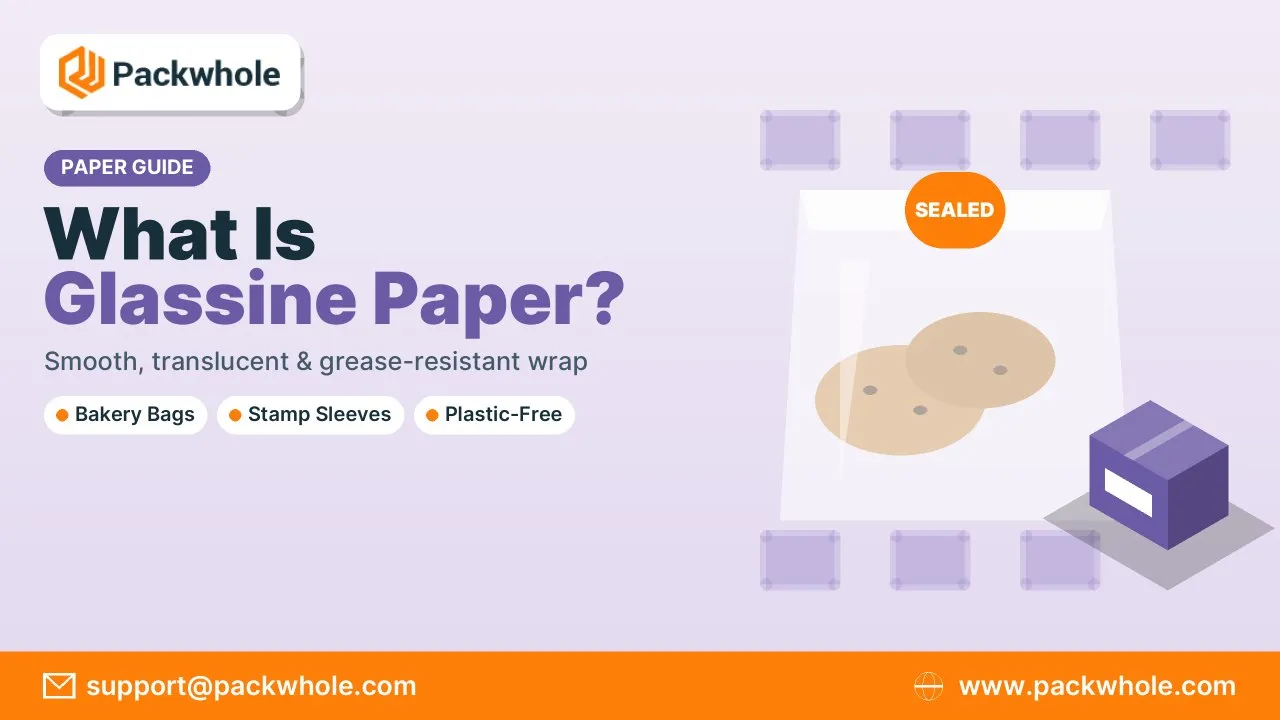
If you have bought a croissant in a small translucent bag, stored stamps in a little sleeve or seen artwork protected between sheets of shiny paper, you have handled glassine. So, what is glassine paper? It is a smooth, dense, glossy paper that resists air, grease and moisture far better than ordinary paper, without a plastic or wax coating.
This guide explains how glassine is made, where it is used, how it compares to similar papers, and how brands pair it with custom boxes for a clean, low-plastic look.
How Glassine Is Made and Why It Looks Glassy
Glassine starts as wood pulp that is beaten, or refined, much longer than pulp for regular paper. This long refining process breaks fibers down and makes them bond very tightly. The paper is then passed through a supercalender, a stack of heavy polished rollers that press and polish the sheet until it becomes dense, smooth and slightly see-through.
The result is a paper with very few air gaps between fibers. That density is what gives glassine its glassy surface and its resistance to grease and air. Because the protection comes from the structure of the paper rather than a coating, uncoated glassine is often accepted for recycling and can be compostable.
Key Properties That Answer What Is Glassine Paper Good At
Glassine combines several features that are hard to find together in one material. It is thin but strong, smooth but not sticky, and translucent without being plastic. These qualities make it practical for both food and non-food packaging.
Main properties:
- Grease resistance: keeps butter and oil from staining through quickly.
- Air and moisture resistance: slows exposure, helping baked goods and dry products.
- Smooth, lint-free surface: will not scratch or leave fibers on delicate items.
- Translucency: shows the shape and color of what is inside.
- Acid-free options: available for archival storage of art, stamps and photos.
- Plastic-free: a good alternative to small plastic bags and sleeves.
What Is Glassine Paper Used For?
Because of its unusual mix of properties, glassine shows up in many industries, from bakeries to museums. Its most familiar role is in small food bags, but it also protects valuable collectibles and art. Here are the most common applications in the US market.
| Use | Why Glassine Works | Example Products |
|---|---|---|
| Bakery bags and liners | Grease resistance, translucent look | Cookies, croissants, donuts |
| Candy and confectionery | Smooth, food-friendly wrap | Chocolates, fudge, toffee |
| Stamp and coin collecting | Acid-free, smooth, see-through | Stamp sleeves, envelopes |
| Art and framing | Lint-free interleaving | Prints, paintings, photos |
| Release liners | Smooth, dense base | Label and sticker backing |
| Small goods and samples | Plastic-free pouch | Seeds, tea samples, jewelry |
| Box windows and liners | Translucent and paper-based | Bakery boxes, gift boxes |
Many label and sticker rolls also use siliconized glassine as the backing sheet, which is why you may have handled it without noticing.
Glassine vs Wax Paper vs Parchment Paper
People often confuse glassine with wax paper and parchment because all three are thin and used around food. They are made differently and behave differently, especially with heat and grease. Knowing the differences helps you choose the right wrap for each product.
| Feature | Glassine | Wax Paper | Parchment Paper |
|---|---|---|---|
| How it resists grease | Dense, polished fibers | Wax coating | Silicone coating or acid treatment |
| Oven safe | No | No; wax melts | Yes, to common baking temperatures |
| Translucent | Yes | Yes | Partly |
| Plastic or wax-free | Yes (uncoated) | No | Silicone-coated |
| Common recycling acceptance | Often accepted when uncoated | Usually not | Usually not |
| Best use | Bags, sleeves, liners, interleaving | Wrapping sandwiches, counter use | Baking and roasting |
If you also wrap or bake food, our guide comparing parchment vs butcher paper covers two more papers you may need.
What Is Glassine Paper Doing in Bakery and Food Packaging?
Bakeries use glassine for small treat bags, box liners and individual wraps because it looks clean and lets customers see the product. It slows grease from soaking through to the outer box, which keeps printed packaging looking fresh. It also feels more natural than plastic, which suits artisan and eco-minded brands.
Ways to use glassine with food boxes:
- Line the base of a cookie or pastry box so butter does not stain the board.
- Wrap individual cookies before placing them in a printed gift box.
- Use small glassine bags inside a larger branded box for assortments.
- Choose a glassine-style window instead of plastic film on bakery boxes.
For food-contact use, ask your supplier to confirm the glassine is suitable for direct food contact under FDA rules. This is general information rather than regulatory advice; requirements depend on your specific food and use.
Is Glassine Eco-Friendly?
Glassine appeals to brands trying to reduce plastic. Uncoated glassine is made from wood pulp and is accepted by many paper recycling programs, and it can break down in composting conditions. However, some glassine is coated or laminated for extra barrier performance, and those versions may not be recyclable.
To keep sustainability claims accurate:
- Confirm whether the glassine you buy is coated or uncoated.
- Avoid saying “recyclable everywhere”; acceptance varies by local program.
- Follow the FTC Green Guides when printing environmental claims.
- Consider printing a simple disposal instruction on the outer box.
Creative Packaging Ideas Using Glassine
Glassine is more than a functional material; its soft translucency can add a refined touch to presentation. Brands use it to create layers, reveal products slowly and give a handmade feel. Combined with a printed box, it can make even simple products feel special.
Ideas to try:
- Wrap jewelry or small accessories in glassine before placing them in a rigid box.
- Use glassine envelopes for seed packets, tea samples or stickers inside subscription boxes.
- Seal glassine bags with a branded sticker for a clean, minimal look.
- Layer glassine over printed tissue inside a gift box for a soft reveal.
Buying Glassine: Weights, Formats and Sizes
Once you know what glassine paper can do, the next step is choosing the right format. Glassine is sold as rolls, flat sheets, flat bags, gusseted bags and envelopes, and each format suits a different workflow. Bakeries usually buy pre-made bags, while artists and framers prefer large sheets or rolls they can cut to size.
Things to compare when ordering:
- Basis weight: lighter grades are more translucent; heavier grades are stronger and more opaque.
- Format: flat bags for cookies, gusseted bags for bulkier pastries, envelopes for stamps and seeds.
- Acid-free rating: essential for archival art and stamp storage.
- Food-contact suitability: required for anything touching food directly.
- Size: measure your product and allow room to fold or seal the opening.
Ordering a small sample pack first is the easiest way to confirm the right weight and size before buying in bulk.
Mistakes to Avoid When Using Glassine
Glassine is versatile, but it is not right for every job. Using it in the wrong situation can lead to grease marks, torn sleeves or unhappy customers. These are the errors brands make most often.
- Using glassine for very oily or wet foods that need a stronger barrier.
- Putting glassine in the oven like parchment.
- Assuming every glassine sheet is acid-free for archival storage.
- Claiming compostability without confirming coatings.
- Relying on thin glassine bags to protect heavy items in shipping.
Pair Glassine With Custom Boxes From PackWhole
PackWhole does not make glassine paper itself, but we design the boxes, sleeves, labels and inserts that work alongside it. Bakeries, candy makers and gift brands line our window boxes, cookie boxes and cake boxes with glassine sheets for a clean, low-plastic presentation. Free design support and low minimums make it easy to get started.
Email support@packwhole.com with your product and packaging idea, or browse food packaging at www.packwhole.com.
What Is Glassine Paper? FAQs
Here are clear answers to the questions people ask most about glassine. If you plan to use it for food or archival storage, check the specifications with your supplier first.
What is glassine paper made from?
It is made from wood pulp that is heavily refined and then polished between rollers.
Is glassine waterproof?
No. It resists moisture and grease but is not fully waterproof.
Can glassine go in the oven?
No. Use parchment paper for baking.
Is glassine the same as wax paper?
No. Glassine gets its resistance from dense fibers, while wax paper uses a wax coating.
Is glassine recyclable?
Uncoated glassine is accepted by many paper recycling programs; check local rules.
Why is glassine used for stamps?
It is smooth, translucent and available acid-free, so it protects stamps without damaging them.