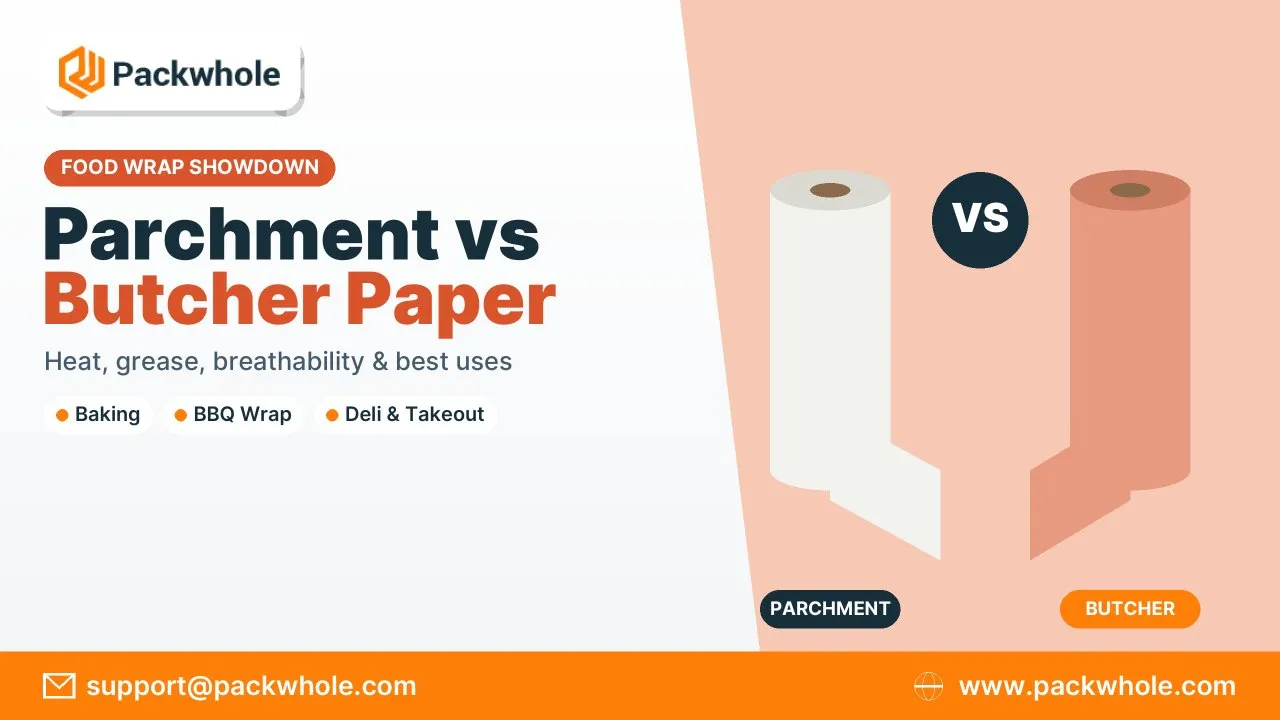
Walk into a barbecue joint and brisket arrives on pink paper. Visit a bakery and cookies come out of the oven on a silvery sheet. Both look like simple paper, but they are designed for very different jobs. The parchment vs butcher paper question matters to food businesses because the wrong choice can mean stuck food, soggy wraps or smoke that cannot escape.
This guide compares the two side by side, explains where each shines, and shows how they fit into branded food packaging.
What Parchment Paper Is
Parchment paper is paper treated to become non-stick and heat resistant. Most baking parchment today is coated with a thin layer of silicone, which keeps dough, cheese and sugar from sticking and lets the paper handle oven temperatures. It is common in bakeries, restaurant kitchens and home baking.
Key traits of parchment:
- Heat resistant: most sheets are rated for oven use up to about 420 to 450°F; check the manufacturer’s rating.
- Non-stick: baked goods and roasted foods release easily.
- Grease and moisture resistant: keeps oil from soaking through.
- Available bleached or unbleached: white or natural brown.
Parchment is not designed for open flames, broilers or grill grates, where it can scorch.
What Butcher Paper Is
Butcher paper is a strong, uncoated kraft paper made for wrapping meat, fish and deli items. It is thicker and tougher than parchment and resists tearing even when wet. The best-known version in American barbecue is pink or peach butcher paper, used to wrap brisket and ribs during long smoking because it lets some moisture and smoke pass through.
Key traits of butcher paper:
- Strong and tear resistant: handles heavy, bony or wet cuts.
- Breathable: lets steam escape, protecting bark on smoked meat.
- Food grade options: look for paper made for direct food contact.
- Colors: white for delis and markets, pink or peach for barbecue, natural kraft for rustic presentation.
Butcher paper is not non-stick and is not intended for baking sheets.
Parchment vs Butcher Paper: Side-by-Side Comparison
Seeing the two materials compared feature by feature makes the choice easier. Each has strengths that suit specific foods and cooking methods. The table below summarizes the differences most food businesses care about.
| Feature | Parchment Paper | Butcher Paper |
|---|---|---|
| Coating | Silicone (most baking parchment) | Uncoated (some have sizing) |
| Non-stick | Yes | No |
| Oven use | Yes, within rated temperature | Low-heat smoking and resting, not baking sheets |
| Breathability | Low | Moderate to high |
| Strength when wet | Moderate | High |
| Grease resistance | High | Moderate |
| Common uses | Baking, roasting, lining pans, en papillote | Wrapping meat, smoking BBQ, deli and sandwich wrap |
| Typical colors | White, natural brown | White, pink/peach, kraft brown |
| Recycling | Usually not accepted (coating) | Clean, uncoated paper often accepted |
In short, parchment protects food from sticking, while butcher paper protects and wraps food while letting it breathe.
Parchment vs Butcher Paper in the Kitchen: When to Choose Parchment
Parchment is the right pick when food will be baked, roasted or heated and needs to release cleanly. It is also useful as a barrier inside packaging for sticky or greasy items. Bakeries rely on it for both production and presentation.
Best uses:
- Lining baking sheets and cake pans.
- Separating layers of brownies, fudge or bars in a box.
- Cooking fish or vegetables in paper packets.
- Wrapping sticky treats like caramels or nougat.
- Lining takeout containers for oily foods.
When to Choose Butcher Paper
Butcher paper is the better choice for wrapping and holding heavier, moist foods, and for barbecue where bark matters. It is also popular in casual restaurants as a sandwich wrap or table liner. Its rustic look fits many burger, taco and barbecue brands.
Best uses:
- Wrapping brisket, ribs and pork shoulder during smoking.
- Packaging fresh meat and fish at markets and delis.
- Wrapping sandwiches, burgers and subs to go.
- Lining trays and baskets for fried foods.
- Covering tables or serving boards at barbecue restaurants.
Cost, Storage and Buying Tips for Food Businesses
Price is part of the parchment vs butcher paper decision for busy kitchens. Butcher paper is usually sold in large rolls and costs less per foot, which makes it practical for high-volume wrapping. Parchment costs more but is often bought as pre-cut sheets that fit standard half-sheet and full-sheet pans, saving prep time.
Buying tips:
- Buy butcher paper rolls in widths that match your wrapping station, such as 18 or 24 inches.
- Choose pre-cut parchment sheets for bakeries that line many pans each day.
- Store both in a dry area, since humidity can make paper limp and harder to handle.
- Order samples before switching brands, because thickness and coating vary.
- Track how much paper each menu item uses to spot waste.
Many restaurants keep both on hand, using parchment for baking and prep and butcher paper for wrapping and serving.
Food Safety and Labeling Considerations
Both papers come in versions made for food contact, but not every roll on the market is. Restaurants and food brands in the United States should buy paper intended for direct food contact under FDA regulations and keep supplier documentation on file. When a product is sold packaged, other rules, such as ingredient labeling, apply to the package rather than the wrap itself.
Practical tips:
- Choose unwaxed, food-grade butcher paper for smoking; waxed or plastic-coated freezer paper should not go in a smoker.
- Keep parchment within its rated oven temperature.
- Store rolls off the floor and away from chemicals.
- Ask suppliers for food-contact compliance statements.
Treat this as general food-service guidance rather than legal advice; local health departments may set additional rules.
Parchment vs Butcher Paper for Branded Food Packaging
Wraps and liners are part of the customer experience. A sandwich wrapped in branded butcher paper or a cookie tin lined with printed parchment-style paper feels thoughtful and memorable. Many food businesses combine plain or printed wraps with custom boxes, sleeves and stickers that carry the brand.
Branding ideas:
- Seal butcher-paper wraps with a custom round sticker showing your logo.
- Use a printed sleeve around wrapped sandwiches or burgers.
- Line a branded bakery box with parchment to keep it clean.
- Pair kraft butcher paper with custom kraft boxes for a consistent rustic look.
Mistakes Food Businesses Make With These Papers
Many kitchen mishaps come from swapping one paper for the other. Each material has clear limits, and ignoring them leads to stuck food, scorched wraps or ruined bark. These are the most common errors.
- Baking cookies directly on butcher paper and finding them stuck.
- Wrapping smoked brisket in parchment, which traps steam and softens bark.
- Using waxed freezer paper in a hot smoker.
- Exceeding parchment’s temperature rating under a broiler.
- Buying non-food-grade craft paper for food contact.
Complete Your Food Packaging With PackWhole
PackWhole does not manufacture parchment or butcher paper, but we produce the custom packaging that goes with them, including custom food boxes, burger boxes, sleeves, labels and stickers. Restaurants, barbecue brands and bakeries use our packaging with their wraps to create a consistent, branded look. Design help is free, and minimum orders are low.
Reach our food packaging team at support@packwhole.com, or see takeout and bakery options at www.packwhole.com.
Parchment vs Butcher Paper FAQs
These answers cover the questions food businesses and home cooks ask most often. Always check the product rating on the box before using any paper with heat.
Can I use butcher paper instead of parchment for baking?
It is not recommended. Butcher paper is not non-stick and food may stick.
Why is barbecue wrapped in pink butcher paper?
It lets steam escape while holding heat, which helps protect the bark on smoked meat.
Is parchment paper the same as wax paper?
No. Parchment is usually silicone-coated and oven safe; wax paper is not oven safe.
Can butcher paper be recycled?
Clean, uncoated butcher paper is often accepted, but greasy paper usually is not.
Which is better for wrapping sandwiches?
Butcher paper is stronger and more breathable, so it is the more common choice.