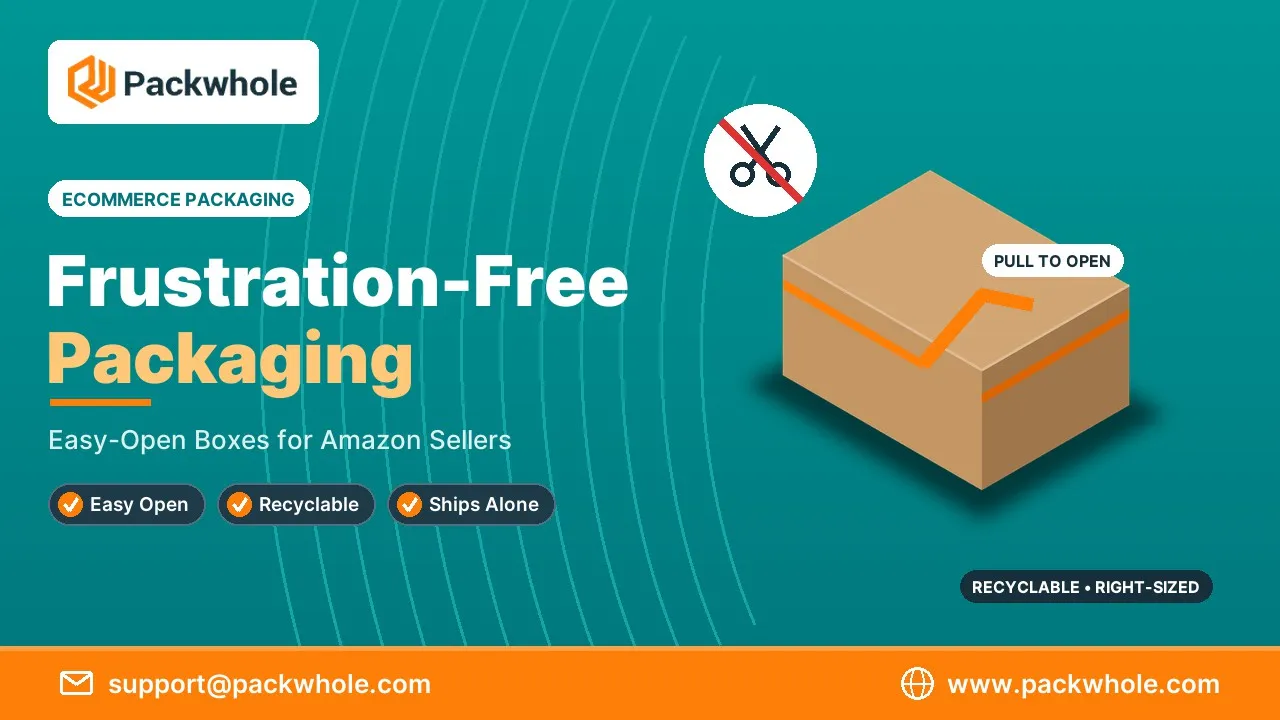
Most shoppers remember at least one fight with packaging: a plastic clamshell that needed scissors, twist ties wrapped around a toy, or a giant box holding one tiny item. Frustration-free packaging is the answer to those moments. The idea, made popular by Amazon, is simple: packaging should be easy to open, made of recyclable materials, right-sized, and strong enough to ship safely in its own box.
For brands selling on Amazon and other ecommerce channels, it is also practical. Packaging designed this way can reduce damage, shipping waste, and extra handling. This guide explains the concept, Amazon’s program tiers, testing basics, and how to design boxes that meet the standard.
What Frustration-Free Packaging Means
The phrase describes packaging built for direct shipping to customers rather than for hanging on a store peg. Retail packaging is often designed to prevent theft and to stand out on a shelf, which leads to clamshells, wire ties, and extra plastic. Ecommerce packaging has different goals: protect the product in transit, open quickly, and create as little waste as possible.
Core principles:
- Easy to open: no knives or scissors needed; tear strips or simple tuck flaps.
- Recyclable materials: mainly corrugated and paperboard, with minimal plastic.
- Right-sized: little empty space, which lowers dimensional weight.
- Ships in its own container: sturdy enough to go out without an overbox.
Amazon’s Packaging Tiers at a Glance
Amazon groups certified packaging into three tiers. Requirements, incentives, and fees change over time and differ for sellers and vendors, so always check the latest guidance in Seller Central or Vendor Central. The table summarizes the general structure.
| Tier | Name | What It Generally Requires |
|---|---|---|
| Tier 1 | Frustration-Free Packaging (FFP) | Ships in own container, easy to open, 100% curbside recyclable, passes required testing |
| Tier 2 | Ships in Own Container (SIOC) | Ships without an extra Amazon box, passes testing; may include some non-recyclable parts |
| Tier 3 | Prep-Free Packaging (PFP) | Needs no extra prep (bagging, bubble wrap) by Amazon, but may still ship in an Amazon box |
Testing is commonly based on the ISTA 6-Amazon.com-SIOC procedure, which simulates the drops, vibration, and compression a package faces in Amazon’s network. Some brands self-test with approved methods; others use an Amazon-recognized lab.
General information, not legal or program advice; Amazon’s rules and fees change, so confirm current requirements before redesigning.
Design Principles for Frustration-Free Packaging
Meeting the standard starts with structure. A box that ships on its own needs to protect the product from all sides, stay closed in transit, and still open in seconds. Corrugated mailers with tear strips are a common starting point because they combine strength with easy opening.
Practical design choices:
- Use corrugated board strong enough for the product weight and Amazon’s drop tests.
- Add a tear strip or easy-open tab so customers don’t need a knife.
- Replace plastic clamshells and twist ties with paperboard inserts.
- Right-size the box so the product can’t move inside.
- Keep artwork on the outside discreet for valuable or private products.
- Use paper tape or self-seal adhesive strips.
See our single wall vs double wall boxes guide for help choosing board strength.
Materials That Fit the Standard
Material choice decides whether packaging can reach the highest tier. Fully recyclable designs usually rely on paper-based components. Small amounts of plastic may be acceptable in lower tiers, but they make recycling harder and can disqualify a package from Tier 1.
| Component | Frustration-Free Friendly Option | Avoid Where Possible |
|---|---|---|
| Outer box | Corrugated mailer or carton | Thin paperboard alone for heavy items |
| Inserts | Die-cut paperboard or molded pulp | Expanded polystyrene foam |
| Closures | Tear strip, tuck flaps, paper tape | Plastic straps, heavy glue |
| Product restraint | Paperboard locks, tabs | Wire twist ties, plastic clamshells |
| Void fill | Kraft paper | Plastic air pillows, packing peanuts |
PackWhole’s custom box inserts guide explains paperboard insert styles.
Benefits Beyond Amazon Compliance
Even if you sell mostly on your own website, the same easy-open principles pay off. Customers appreciate easy-open, recyclable boxes, and right-sized packaging lowers shipping costs with every carrier. Fewer damaged products also mean fewer returns and better reviews.
- Lower dimensional weight charges
- Less waste for customers to deal with
- Faster packing with simpler structures
- Fewer damage claims and returns
- A cleaner, more modern brand impression
Moving From Retail Packaging to Ecommerce-Ready Boxes
Many brands start with retail packaging designed for store shelves, then expand to Amazon and direct-to-consumer sales. Converting that packaging is a step-by-step process. Start with your best-selling products, where improvements have the biggest impact.
- Review current packaging and list every plastic or hard-to-open component.
- Measure the product and design a right-sized corrugated box with inserts.
- Run basic drop tests in-house before formal testing.
- Arrange formal testing if you need Amazon certification.
- Update listings and inbound shipments according to Amazon’s process.
- Monitor damage rates and customer feedback after launch.
Budgeting and Timeline for a Packaging Redesign
A packaging redesign for Amazon takes planning, but it doesn’t need to be slow or expensive. Most of the time goes into sizing, sampling, and testing rather than printing. Breaking the project into stages helps you see costs early and avoid surprises. A typical small-brand project for one product can move from brief to production in a few weeks when decisions are made quickly.
Typical stages and what to budget for:
| Stage | What Happens | Typical Time |
|---|---|---|
| Brief and measurements | Product size, weight, fragility, branding goals | 1 to 3 days |
| Structural design | Box style, insert, tear strip, dieline | 3 to 5 days |
| Samples | Plain or printed prototypes for testing | 1 to 2 weeks |
| Testing | In-house drop tests, then formal testing if needed | 1 to 2 weeks |
| Production | Printing, cutting, gluing | 2 to 3 weeks |
Keep the dieline, test results, and approved samples together in one folder, because Amazon or a retailer may ask for proof later. Brands with several products often redesign their two or three best sellers first, learn from the results, and then roll the same box family out across the catalog.
Common Mistakes With Frustration-Free Packaging
Brands often underestimate how much a box must withstand to ship on its own. Others make the box strong but forget the easy-open part. Avoid these issues during a redesign.
- Using retail cartons that crush without an overbox.
- Adding plastic straps or ties that defeat the easy-open goal.
- Oversizing boxes, which wastes material and raises costs.
- Making recyclability claims without checking each component.
- Skipping drop tests before submitting for certification.
Create Frustration-Free Packaging With PackWhole
PackWhole designs right-sized, easy-open custom mailer boxes and corrugated boxes with tear strips, paperboard inserts, and recyclable materials. We help you build frustration-free packaging that protects products and pleases customers, and our designers help at no charge while short test runs stay affordable.
Describe your Amazon product to support@packwhole.com, or explore easy-open box styles on www.packwhole.com.
FAQs About Frustration-Free Packaging
These short answers cover common questions from Amazon sellers and ecommerce brands. Program details change, so verify current requirements in your Amazon account before final decisions.
Is frustration-free packaging mandatory on Amazon?
Not for every product, but Amazon encourages it and has used incentives and fees for some programs and product sizes.
What is SIOC?
Ships in Own Container: packaging strong enough to ship without an extra Amazon box.
Can easy-open Amazon boxes still be branded?
Yes. Corrugated mailers can be printed inside and out while staying easy to open and recyclable.
What test does Amazon use?
Commonly the ISTA 6-Amazon.com-SIOC test, which simulates drops, vibration, and compression.
Does an easy-open redesign cost more?
Not necessarily. Right-sizing and removing plastic often lower overall costs.