Nothing disappoints like opening a box of homemade cookies and finding crumbs. Whether you run a bakery that ships across the country or you send holiday cookies to family, knowing how to pack cookies for shipping makes all the difference. This guide explains which cookies travel best, how to wrap and layer them, which boxes to use and how to time shipments so every cookie arrives fresh and intact.
Choose Cookies That Travel Well
Some cookies are naturally better travelers than others. Sturdy, dry cookies such as shortbread, biscotti, snickerdoodles, oatmeal and chocolate chip hold their shape and stay fresh for days. Soft bar cookies like brownies and blondies also ship well when wrapped tightly. Delicate cookies with thin edges, cream fillings or fresh fruit are harder to ship and may break or spoil. If you sell online, consider building a dedicated shipping menu around the most durable recipes.
| Cookie type | Shipping difficulty | Why |
|---|---|---|
| Shortbread and biscotti | Easy | Firm and dry |
| Chocolate chip and oatmeal | Easy | Sturdy, chewy texture |
| Brownies and bar cookies | Easy | Dense, wrap well |
| Decorated sugar cookies | Medium | Icing can scuff |
| Macarons | Hard | Fragile shells |
| Cream-filled cookies | Hard | Fillings soften and spoil |
Step One in How to Pack Cookies for Shipping: Cool Them Fully
Fresh-baked cookies give off steam, and that trapped moisture makes them soggy or causes them to stick together. Let cookies cool fully on a rack, then rest decorated cookies until icing is completely set, which can take several hours or overnight for royal icing. Packing too early is one of the most common reasons cookies arrive soft or smudged. Patience at this stage pays off when the box is opened.
How to Pack Cookies for Shipping: Wrap in Pairs or Singles
Wrapping protects cookies from breaking and keeps flavors from mixing. Place two cookies back to back, flat sides together, and wrap them in plastic wrap or a clear bag. Decorated cookies are best sealed individually in heat-sealed bags, which keep them fresh and show off the design. Strong-flavored cookies such as peppermint or ginger should be wrapped separately so they do not overpower milder flavors.
- Pair plain cookies back to back before wrapping.
- Heat-seal decorated cookies individually.
- Separate strong flavors from delicate ones.
- Wrap bar cookies whole or in small stacks.
Choose the Right Inner Container
Wrapped cookies need a firm container to stop crushing. Tins, sturdy paperboard boxes and cookie boxes with inserts all work well. Stack wrapped cookies upright like books, or lay them flat in layers separated by parchment or wax paper. Fill any gaps so the cookies cannot move when the container is shaken gently.
Our custom cookie boxes can include inserts that hold cookies upright, and custom bakery boxes suit mixed assortments.
Cushion the Inner Box Inside a Shipping Box
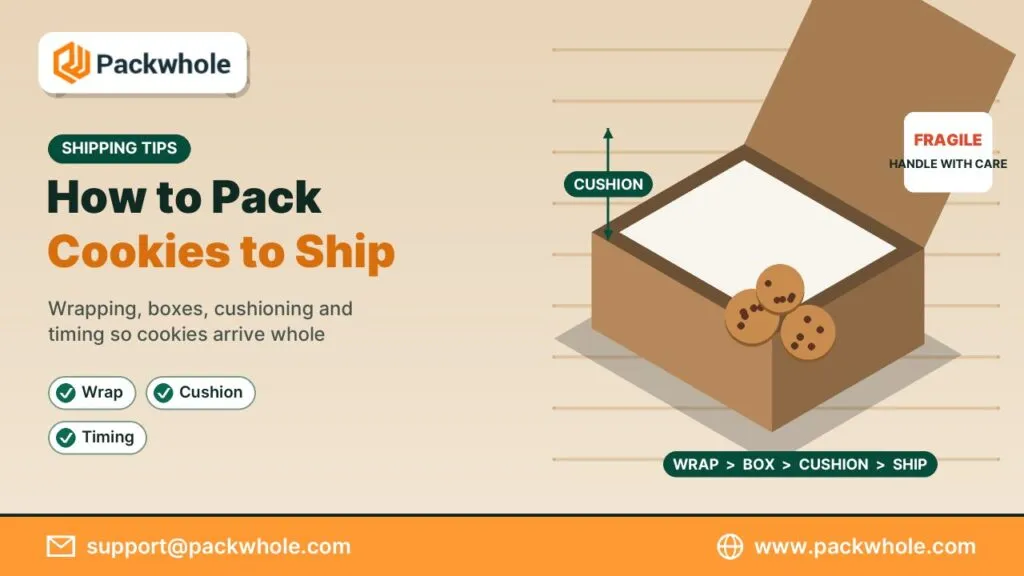
The inner container should never be the only layer. Place it inside a larger corrugated shipping box with cushioning on all sides. Crumpled paper, paper fill or air pillows absorb bumps during transit. The goal is a snug fit where the inner box does not shift when the outer box is moved. A simple test is to close the box and shake it gently; if you hear movement, add more cushioning.
- Line the bottom of the shipping box with cushioning.
- Place the cookie container in the center.
- Fill the sides and top with more cushioning.
- Close and gently shake to check for movement.
- Seal with strong packing tape.
For branded shipments, custom mailer boxes combine strength with a gift-ready look.
How to Pack Cookies for Shipping as a Business
Bakeries that ship regularly need a repeatable process for how to pack cookies for shipping. Standardizing box sizes, inserts and cushioning saves time and reduces breakage. Printed boxes turn a delivery into a branded experience, and a thank-you card or reheating tip encourages repeat orders. Tracking damage reports helps you spot weak points, such as a cookie type that crumbles or a box that needs more padding.
Businesses selling baked goods should also review ingredient and allergen labeling. Food labeling requirements vary by product and state, and please read this as an overview, not legal advice.
Timing Your Cookie Shipments
Timing affects freshness. Ship early in the week so packages do not sit in a warehouse over the weekend. Choose a delivery speed that matches the shelf life of your cookies, and avoid shipping chocolate-heavy cookies during hot spells without extra protection. During the holiday season, carriers are busy, so ship well before key dates and check each carrier’s posted holiday deadlines.
- Bake as close to shipping day as possible.
- Ship Monday to Wednesday when you can.
- Use faster services for soft or delicate cookies.
- Plan ahead for holiday carrier delays.
Protecting Cookies From Heat and Moisture
Heat melts chocolate and softens frosting, while humidity makes crisp cookies limp. In warm months, insulated liners and cold packs help, although chocolate-dipped cookies may still be risky in extreme heat. Desiccant packets designed for food can help in humid climates. Sealing cookies in airtight bags is the simplest way to lock out moisture.
Presentation Tips That Make Shipped Cookies Special
A box of cookies is often a gift, so the unboxing matters. Tissue paper, a printed card, ribbon and a branded sticker turn a practical package into a memorable moment. Arranging cookies by flavor with a small menu card helps recipients choose. Holiday prints, seasonal stickers and personalized notes add warmth without much extra effort.
For festive gifting, see our Christmas treat boxes and browse more ideas in cookie box packaging ideas.
How to Pack Cookies for Shipping Across the Country
Long-distance shipments face more handling, more temperature changes and more time in transit. For cross-country orders, choose your sturdiest recipes and seal every cookie airtight. A double-box method works well: a filled cookie box inside a slightly larger shipping box with cushioning on all sides. Label the outer box clearly so the recipient knows to open it promptly, and include a card with storage tips so the cookies stay fresh after arrival.
If you ship often, compare delivery speeds and costs for different zones. Faster services cost more, but they protect freshness and reduce complaints, which often makes them worth it for premium cookie gifts.
Packing Cookie Gift Boxes for Holidays
The holiday season is the busiest time for shipped cookies, and many orders are gifts sent directly to recipients. A printed gift box inside the shipper makes the package feel special the moment it is opened. Including a gift message card, arranging cookies by flavor and adding tissue paper creates a festive look. Because carriers are busiest in December, build extra time into your schedule and communicate realistic delivery windows to customers.
Knowing how to pack cookies for shipping during peak season also means preparing supplies early. Stock boxes, inserts, bags and cushioning before orders surge so you are not scrambling when demand peaks.
Mistakes to Avoid When Shipping Cookies
Most shipping failures come from skipping a step. Cookies packed warm, loose containers and thin outer boxes are the usual culprits. Keep these mistakes in mind before you send your next batch.
- Packing cookies before they cool or icing sets.
- Mixing soft and crisp cookies in one container.
- Leaving empty space that lets cookies slide.
- Using a single thin box with no cushioning.
- Shipping late in the week or too close to holidays.
Get Custom Cookie Packaging for Shipping
Packwhole makes cookie boxes, inserts and printed mailer boxes that help your treats arrive safely and look great on arrival. Bakeries get free help designing boxes and inserts, approve a digital proof before printing, and can start with small quantities that are produced quickly ahead of busy seasons. Reach us at support@packwhole.com, or explore cookie packaging on www.packwhole.com, and let us help you ship cookies that arrive in one piece.