A hang tag is often the first thing a shopper touches. They flip it over to read the price, the size, the fabric, and the story behind the brand. If the tag is too small, the text becomes unreadable. If it is too big, it overwhelms a delicate necklace or a pair of socks. Choosing the right hang tag sizes helps every product look finished and professionally branded.
Below is a size chart that matches common sizes to product types, plus guidance on paper thickness, hole placement, folded tags, and the details US apparel brands should include.
Why Tag Size Matters More Than It Seems
Size affects readability, cost, and how the tag hangs on the product. A tag must be large enough for your logo and key information, but proportionate to the item. Bigger tags also use more paper and may cost slightly more, while tiny tags can look cheap or get lost. Many brands use two sizes: a main tag and a smaller secondary tag for sizing or care details.
Think about where the tag hangs, too. A tag on a sleeve, a waistband, a candle lid, or a gift bag handle each faces different space limits.
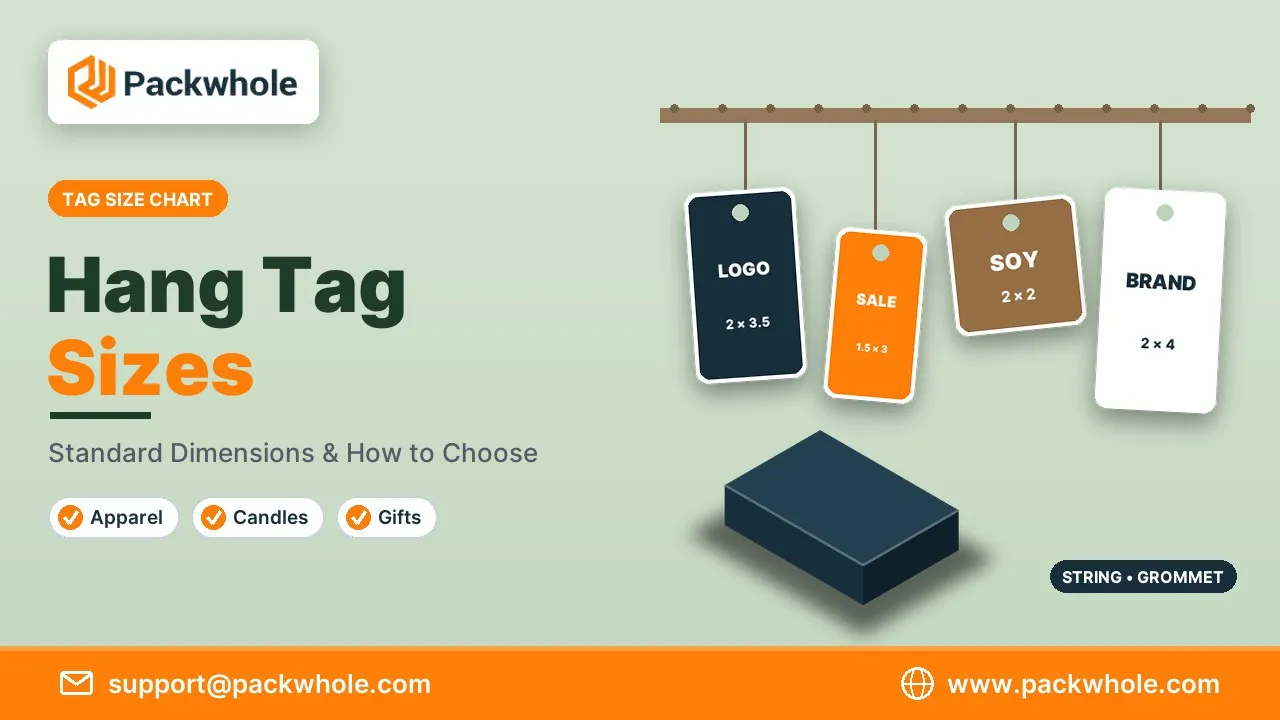
Standard Hang Tag Sizes Chart
Most printers offer a set of popular sizes that cut efficiently from press sheets, which keeps prices low. The chart lists widely used dimensions in the US market. Custom sizes and shapes are possible, but standard sizes are faster and more affordable.
| Size (inches) | Shape | Common Uses |
|---|---|---|
| 1.5 × 3 | Slim rectangle | Socks, accessories, small gifts |
| 1.75 × 3.5 | Slim rectangle | Jewelry, sunglasses, cosmetics |
| 2 × 2 | Square | Candles, jars, small home goods |
| 2 × 3 | Rectangle | T-shirts, kids’ clothing, gift bags |
| 2 × 3.5 | Business card size | Apparel, bags, general retail |
| 2 × 4 | Tall rectangle | Jeans, jackets, outdoor gear |
| 2.5 × 4 | Large rectangle | Premium apparel, home textiles |
| 3 × 3 | Large square | Blankets, baskets, gift sets |
| 2 in diameter | Circle | Candles, bakery bags, jars |
| 2 × 3.5 folded | Folded (opens to 4 × 3.5) | Brand stories, care info, multiple languages |
Matching Hang Tag Sizes to Your Products
The best size depends on the product and the information you need to share. Clothing tags often carry a logo, size, price, barcode, and a short brand message, so they need more space. Candle and jar tags usually only need a logo and scent name. Jewelry tags must stay small and light so they don’t pull on delicate chains.
- T-shirts and hoodies: 2 × 3 or 2 × 3.5 inches.
- Denim and outerwear: 2 × 4 or 2.5 × 4 inches, often on heavier stock.
- Socks and accessories: 1.5 × 3 inches, sometimes as a header card instead.
- Jewelry: 1.75 × 3.5 inches or a small round tag.
- Candles and jars: 2 × 2 inches or a 2-inch circle.
- Gift bags: 2 × 3 inches with a to/from space.
- Home textiles: 3 × 3 inches or a folded tag with care details.
Folded Tags: More Room Without a Bigger Footprint
A folded hang tag gives you twice the space while keeping a compact look. The outside can carry your logo and product name, while the inside holds your brand story, care instructions, sizing, or text in several languages. Folded tags feel more premium and work well for higher-priced items and gift products.
Folded tag tips:
- Score the fold so it bends cleanly without cracking.
- Keep important text at least 1/8 inch away from the fold.
- Use thicker stock so the tag holds its shape.
- Place the hole through both layers so the tag hangs closed.
PackWhole offers custom folded hang tags in standard and custom sizes.
Paper Thickness, Finishes, and Hole Placement
The feel of a tag says as much as its design. Thin paper feels flimsy, while thick board feels premium. Most retail hang tags use 14 pt to 32 pt board; heavier tags can be made by laminating two sheets together. Finishes like matte, gloss, soft-touch, foil, and embossing add character.
| Detail | Common Options |
|---|---|
| Thickness | 14 pt, 16 pt, 18 pt standard; 24 to 32 pt premium |
| Stock | Coated white, uncoated, kraft, black, recycled |
| Finishes | Matte, gloss, soft-touch, foil, spot UV, emboss |
| Hole size | 1/8 in or 3/16 in, with optional metal grommet |
| Hole position | About 1/4 in from the top edge, centered or in a corner |
| Attachments | Cotton string, ribbon, safety pin, plastic loop, barbed fastener |
Keep artwork, text, and barcodes clear of the hole area to avoid punching through key information.
What US Apparel Brands Should Put on a Hang Tag
A hang tag is marketing, but it can also carry useful product information. In the US, clothing generally needs a permanent label showing fiber content, country of origin, and the manufacturer or RN number under FTC textile rules, plus care instructions under the FTC Care Labeling Rule. A hang tag doesn’t replace that sewn-in label, but it can repeat key details and add selling points.
Typical hang tag content:
- Logo and brand name
- Product name, size, and color
- Price and barcode (UPC) or SKU
- Short brand story or tagline
- Website, social handle, or QR code
- Sustainability or materials highlights, stated accurately
General information, not legal advice; check FTC textile labeling guidance for your products.
Hang Tag Sizes for Gifts, Food, and Home Goods
Hang tags are not only for clothing. Bakeries, candle makers, gift shops, and home décor brands use them to add a personal, handmade feel. In these categories the tag often carries a short message, a scent or flavor name, or a “to and from” space rather than a price and barcode, so the best hang tag sizes tend to be smaller and simpler.
Ideas by category:
- Bakery bags and treat boxes: 2-inch circles or 2 × 2 squares with the flavor name.
- Candles and diffusers: 2 × 3 rectangles tied around the jar neck.
- Wine and gift bottles: 2 × 3.5 tags with a short note or pairing tip.
- Plants and flowers: 2 × 3 tags with care instructions.
- Holiday gifts: printed gift tags with a festive design and blank fields.
Using the same tag shape across your seasonal products keeps your brand recognizable while the colors and messages change.
Common Hang Tag Mistakes to Avoid
Hang tags are small, so small errors stand out. Many problems come from designing on screen without testing a printed sample on the product. A quick physical check catches most issues. Watch for these.
- Text smaller than 6 pt, which most shoppers cannot read.
- Barcodes placed too close to the hole or the edge.
- Tags too heavy for delicate products.
- Forgetting bleed, which leaves white edges after cutting.
- Using a different logo or color than on your boxes and labels.
Order Custom Hang Tag Sizes From PackWhole
PackWhole prints custom hang tags in all popular hang tag sizes, plus custom shapes, folded tags, and seasonal gift tags. Choose your stock, finish, hole style, and string, and our designers will check your layout for free. Small minimums let you trial a few sizes before a full collection launch.
Send your product photos to support@packwhole.com, or pick tag options on www.packwhole.com.
FAQs About Hang Tag Sizes
These short answers cover the most common questions about tag sizing and printing. If you are unsure which size fits your product, order a small set of two or three sizes and test them on real items.
What is the most common hang tag size?
2 × 3.5 inches, the same as a business card, is the most popular all-purpose size.
How thick should a hang tag be?
16 pt to 18 pt is standard. Premium brands often choose 24 pt or thicker.
Can hang tags be printed on both sides?
Yes. Most tags are printed front and back, with the logo on the front and details on the back.
Do I need a grommet?
Not always. Grommets reinforce the hole and add a premium touch, especially on heavier tags.
Are kraft hang tags durable?
Yes. Kraft board is strong and suits natural, handmade, and eco-focused brands.