Ask a supplier for a “tin” and there is a good chance you will be offered aluminum too. The two metals look alike on a shelf, but they behave very differently in production, shipping, and everyday use. The tin vs aluminum packaging decision affects your unit price, your freight bill, how your product holds up in a humid bathroom, and even how your brand talks about sustainability.
Here is the short answer before we dig in. Tinplate is usually the better pick for rigid, decorative containers that need strength and sharp lithographic printing. Aluminum wins when weight, corrosion resistance, and a sleek modern look matter most. The rest of this article explains why, product by product.
The Quick Verdict: How Tin and Aluminum Differ at a Glance
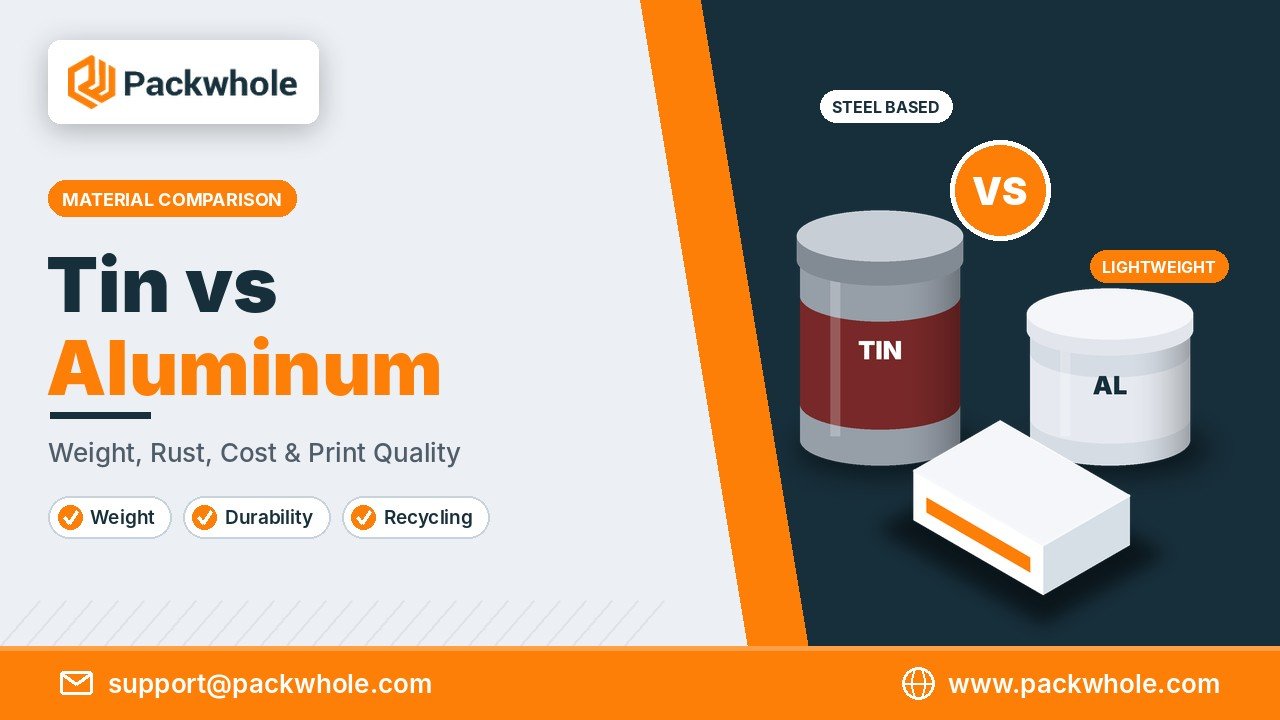
Before comparing details, it helps to know what each material really is. “Tin” containers are almost always tinplate: thin sheet steel with a microscopic coating of tin on both sides. Aluminum containers are made from aluminum alloy sheet, often drawn into a seamless shape. Because one is steel based and the other is a light metal, their strengths and weaknesses line up in predictable ways.
| Factor | Tinplate (Tin) | Aluminum |
|---|---|---|
| Base metal | Steel coated with tin | Aluminum alloy |
| Weight | Heavier | Roughly one-third the weight of steel by volume |
| Rigidity | Very stiff, holds shape | Softer, dents more easily |
| Rust | Can rust if coating is scratched | Does not rust; forms a protective oxide |
| Magnetic | Yes | No |
| Print finish | Excellent lithography, embossing | Good printing, popular brushed look |
| Typical cost | Often lower for larger formats | Often lower for small, seamless jars |
| Common products | Cookies, tea, mints, gift sets | Balms, candles, spices, cosmetics |
Weight and Shipping Cost: Why Aluminum Usually Wins Online
For ecommerce brands, every ounce matters. Carriers such as USPS, UPS, and FedEx price packages by actual or dimensional weight, whichever is higher. A steel-based tin adds noticeable weight to each order, especially in multi-packs. Aluminum is much lighter, so a set of six aluminum balm jars can ship in a lower weight tier than the same set in tinplate.
That does not mean tin is a poor choice for shipping. It means the outer packaging should be right-sized to avoid paying for empty space. Our article on reducing shipping costs with right-sized mailer boxes shows how box size and weight interact.
Strength, Dents, and Rust in Real-World Use
Durability goes beyond the factory test. Think about where your product will live: a kitchen cabinet, a gym bag, a steamy bathroom shelf, or a gift drawer. Tinplate is stiff and keeps crisp corners, so it suits tall canisters and rectangular hinged boxes. However, if the coating is scratched and moisture gets in, steel can rust at the seam or rim.
Aluminum never rusts in the traditional sense, which makes it a favorite for skin care, bath products, and anything used near water. Its weakness is softness. Thin aluminum jars can dent if dropped or squeezed in a crowded shipping carton. Protective inserts and a snug outer box solve most of that risk. Ideas are in the article on custom box inserts for shipping.
Printing and Branding Differences in Tin vs Aluminum Packaging
Both metals can carry striking artwork, but the methods and results differ. Tinplate sheets are usually printed flat with offset lithography and then formed, which gives rich, full-coverage graphics and allows detailed embossing. Aluminum is often left with a natural or brushed silver finish and decorated with a single-color print, a laser-etched logo, or a label. Many brands love that clean industrial look, especially in minimalist cosmetics.
Points to consider:
- Full-color art: tinplate generally gives the most vivid, edge-to-edge graphics.
- Minimal branding: aluminum with a one-color logo looks premium and costs less to decorate.
- Embossing: both can be embossed, but tinplate holds deeper, sharper detail.
- Labels: stock containers of either metal can be branded quickly with printed labels.
Sustainability and Recycling Facts US Shoppers Care About
Shoppers increasingly ask whether packaging is recyclable, and metals have a strong story here, so recycling is one area where the tin vs aluminum packaging debate has no real loser. Steel and aluminum are both accepted in most US curbside programs and can be recycled repeatedly without losing quality. Aluminum carries a particularly high scrap value, which helps keep recycling rates strong for cans. Steel cans are also highly recycled and easy to separate at facilities with magnets.
When you make claims, be careful with wording. The FTC Green Guides (16 CFR Part 260) say recyclable claims should be qualified if recycling facilities are not available to a substantial majority of consumers. Simple phrases such as “Recyclable steel tin” are safer than broad words like “eco-friendly.”
General information only, not legal advice; review the current FTC Green Guides before printing environmental claims.
Which Metal Suits Which Product: A Practical Matching Guide
Comparing specs is helpful, but most brands simply want to know which option fits their product. The list below matches common categories with the metal that usually works best. Treat it as a starting point and always sample both if your product sits in a gray area. Remember too that the outer box matters as much as the container for retail presentation.
- Cookies, biscuits, and holiday gift sets: tinplate for its rigidity and decorative printing.
- Loose-leaf tea and coffee: tinplate canisters with inner lids, or aluminum with a screw top.
- Lip balm, salves, solid perfume: aluminum for light weight and rust resistance.
- Candles: both work; aluminum is lighter, tin gives a vintage feel.
- Mints and gum: hinged tinplate boxes.
- Spices and dry rubs: aluminum screw-top jars with shaker inserts.
- Pet treats: larger tinplate canisters with tight lids.
Testing Both Metals Before You Commit
Specification sheets only tell part of the story, so a short real-world test is worth the small cost. Order a few samples of each container in the size you need and treat them the way your customers will. Fill them with the actual product, ship a handful across the country to friends or team members, and leave a few in a warm, humid room for two weeks. The results often settle the debate faster than any spreadsheet can.
Things to record during the test:
- Any dents, scratches, or rust spots after shipping.
- Whether lids stay closed and seal properly.
- Changes in the product, such as softening balm or stale tea.
- How the label or print holds up to handling.
- Total packed weight for your most common order size.
Share the results with your packaging supplier. With real data, they can recommend the right outer carton thickness, insert style, and finish for whichever metal wins.
Mistakes to Avoid When Choosing Between Tin and Aluminum
In the tin vs aluminum packaging choice, picking the wrong metal is rarely a disaster, but it can lead to returns, dented stock, or a cost overrun that eats into margins. Most mistakes come from choosing on looks alone or from forgetting how the container will be shipped and stored. A little testing goes a long way. Keep these pitfalls in mind before you commit to a large order.
- Choosing tinplate for a wet product without a proper interior coating.
- Ordering thin aluminum jars for heavy, multi-unit mail orders without inserts.
- Assuming both metals cost the same; get quotes for each size you need.
- Making unqualified “100% recyclable” claims.
- Forgetting the outer carton, which carries barcodes, claims, and protection.
Build the Box Around Your Tin vs Aluminum Packaging With PackWhole
Whichever metal you choose, it still needs a carton, sleeve, insert, or mailer that protects it and sells it. PackWhole designs printed outer packaging for tin vs aluminum packaging lines of every size, from single balm jars to multi-tin holiday sets. We offer free design help, low minimum orders, digital proofs, and finishes such as foil, embossing, and soft-touch lamination.
Share your container sizes with support@packwhole.com or begin online at www.packwhole.com, and we will suggest a matching box and insert.
Tin vs Aluminum Packaging FAQs
These are the questions product developers ask most often when they weigh the two metals. They focus on safety, price, and practical use. Your supplier should be able to provide coating specifications and test results for your exact product, so ask for those documents before approving a production run.
Is tin or aluminum safer for food?
Both are safe when they have the correct interior coating for the food type. Ask suppliers to confirm the coating complies with FDA food-contact rules.
Which is cheaper, tin or aluminum?
It depends on size and decoration. Small seamless aluminum jars are often very affordable, while large decorated containers are commonly cheaper in tinplate.
Can a magnet tell them apart?
Yes. Tinplate is steel-based and magnetic. Aluminum is not.
Which looks more premium?
Both can look premium. Tinplate excels at bold, full-color art, while brushed aluminum delivers a clean, modern, minimalist look.
Will aluminum containers rust in a bathroom?
No. Aluminum does not rust, which is why many bath and skin care brands prefer it.