Two boxes can share the same structure, the same artwork, and the same colors, yet feel completely different in the hand. The difference is often the finish. Among all the options available for custom packaging, spot UV and soft-touch lamination are two of the most popular, and they are frequently used together.
This guide explains what each finish is, how they compare, and how to choose the right box finish for your product and brand.
What Is Spot UV?
Spot UV is a clear, glossy coating applied to specific areas of a printed box, rather than the whole surface. The coating is cured instantly with ultraviolet light, which is where the name comes from. The result is a shiny, slightly raised effect that catches the light and draws attention to selected details.
Brands commonly use spot UV on logos, product names, patterns, or images. It looks especially striking on a matte background, where the contrast between dull and glossy surfaces is most visible.
Benefits of Spot UV
- Highlights key details: Directs the eye to your logo or a design element.
- Adds texture: The slight raise creates a subtle tactile effect.
- Looks premium: The gloss and matte contrast suggests quality without heavy cost.
- Flexible: Can be applied as small accents or large patterns.
What Is Soft-Touch Lamination?
Soft-touch lamination is a thin film applied over the entire printed surface of a box. It gives the packaging a smooth, velvety, almost suede-like feel. The finish is matte, with very low shine, and it softens colors slightly for a refined, muted look.
Soft-touch is a favourite for cosmetics, skincare, fragrance, jewelry, and tech accessories, because it instantly makes a box feel more luxurious.
Benefits of Soft-Touch Lamination
- Luxurious feel: Customers notice the texture the moment they pick up the box.
- Elegant matte look: Reduces glare and gives a sophisticated appearance.
- Protection: The laminate film helps resist moisture and minor scuffs.
- Perfect base for accents: Works beautifully with spot UV, foil, and embossing.
Spot UV vs Soft-Touch Lamination: Comparison
| Feature | Spot UV | Soft-Touch Lamination |
|---|---|---|
| Coverage | Selected areas only | Entire surface |
| Look | Glossy, reflective | Matte, low shine |
| Feel | Smooth, slightly raised | Velvety, soft |
| Main purpose | Highlight details | Overall luxury feel and protection |
| Effect on colors | Makes colors pop where applied | Slightly mutes and deepens colors |
| Fingerprints | Minimal | Can show marks on dark colors |
| Cost | Moderate, needs a separate plate or screen | Moderate, applied as a film |
Using Spot UV and Soft-Touch Together
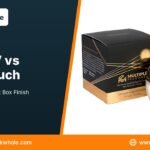
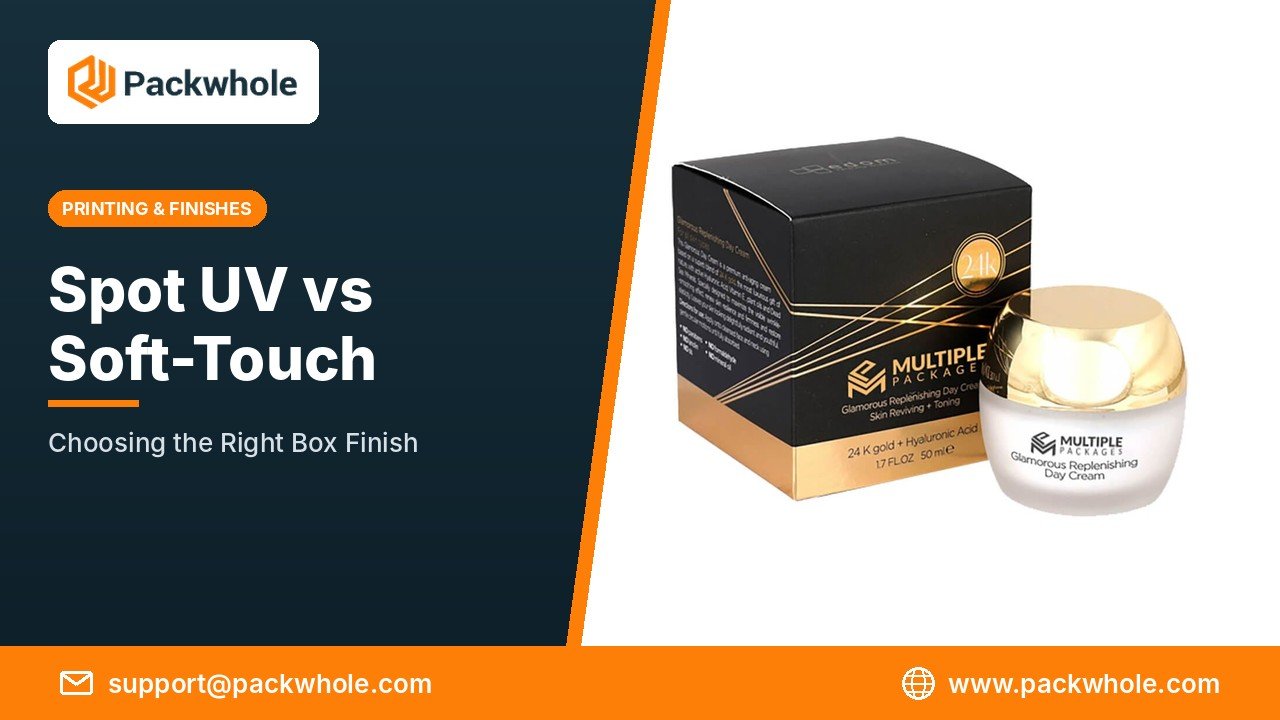
You don’t always have to choose. One of the most popular premium combinations in packaging is a soft-touch base with spot UV accents. The velvety matte surface makes the glossy areas stand out even more, creating a striking contrast you can both see and feel.
This combination works very well on dark colors like black, navy, deep green, and burgundy. A black soft-touch rigid box with a glossy spot UV logo is a classic luxury look.
How to Choose the Right Finish
Choose Spot UV When
- You want to draw attention to a logo, product name, or pattern.
- Your box has a matte or uncoated base.
- You want a premium effect while keeping the rest of the box simple.
- Your design includes images that would benefit from extra shine.
Choose Soft-Touch When
- Your brand is luxury, beauty, wellness, or tech focused.
- You want customers to feel the quality as soon as they pick up the box.
- You prefer a muted, elegant color palette.
- Your packaging will be handled a lot, such as gift boxes kept by customers.
Choose Both When
- You want maximum shelf impact and a high-end unboxing experience.
- Your box is dark or richly colored.
- Your budget allows a premium finish on a hero product or gift set.
Design Tips for Best Results
- Create a separate spot UV layer: Your designer should supply a vector file showing exactly where the spot UV goes, usually in 100% black on its own layer.
- Avoid very fine details: Extremely thin lines and tiny text may not reproduce cleanly with spot UV.
- Consider color shift: Soft-touch slightly darkens and mutes colors. Ask for a printed proof if exact color matching is critical.
- Think about fingerprints: Soft-touch on very dark colors can show marks. Medium tones or patterns hide them better.
- Combine thoughtfully: Add foil stamping or embossing only where it supports the design. Too many effects can look busy.
Other Finishes to Know
- Gloss lamination: High shine across the whole box, makes colors vibrant and bright.
- Matte lamination: Smooth, low-glare finish, less velvety than soft-touch.
- Aqueous coating: A water-based coating that adds light protection at a lower cost.
- Foil stamping: Metallic gold, silver, or colored foil for logos and borders.
- Embossing and debossing: Raised or recessed areas that add a 3D texture.
Sustainability Considerations
Both lamination films and UV coatings add materials to paperboard. If recyclability is a priority, ask about recyclable or biodegradable laminate films, or consider an aqueous coating instead. Using spot UV only on small areas also keeps added materials to a minimum.
Premium Box Finishes at PackWhole
At PackWhole, we offer spot UV, soft-touch lamination, gloss and matte lamination, foil stamping, embossing, and debossing on all our custom printed boxes. Our team can recommend the right combination for your product, budget, and brand, and send samples so you can feel the difference before you order. Contact support@packwhole.com to get started.
Frequently Asked Questions
What is the difference between spot UV and soft-touch?
Spot UV is a glossy coating applied to selected areas to highlight details. Soft-touch is a matte, velvety film that covers the entire box.
Can I use spot UV on a soft-touch box?
Yes. It is one of the most popular premium combinations, creating a strong contrast between matte and gloss.
Does soft-touch lamination change colors?
It slightly mutes and darkens colors. Request a printed proof if precise color matching matters.
Which finish is more expensive?
Costs depend on box size, quantity, and design. Both are mid-range finishes, and using them together costs more than using either alone.