Choosing the right pizza box sizes sounds simple until a 14-inch pie slides around in a 16-inch box or a thick crust presses against the lid. The box decides whether a pizza reaches the customer hot, round and intact, or cold and squashed. This guide walks through standard pizza box sizes, depths, board types and printing choices so pizzerias, food trucks, caterers and frozen pizza brands across the USA can order with confidence.
Standard Pizza Box Sizes Every Pizzeria Should Know
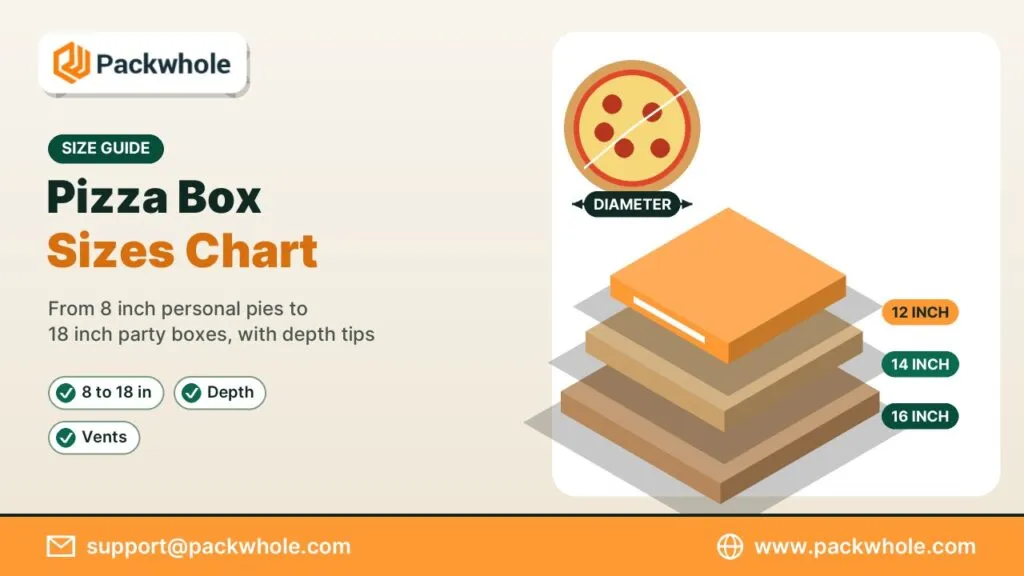
Most American pizzerias sell pies in a handful of familiar diameters, and boxes follow those numbers. A pizza box is usually labeled by the inside width, which matches the pizza diameter, with a little extra room so the crust does not touch the walls. Square boxes remain the most common shape because they fold from a single flat sheet and stack neatly on a counter. Knowing the standard sizes helps you stock the right quantities and keeps your menu and packaging aligned.
| Pizza size | Typical servings | Common box size (inside) | Typical depth |
|---|---|---|---|
| 8 inch personal | 1 | 8 x 8 in | 1.5 to 1.75 in |
| 10 inch small | 1 to 2 | 10 x 10 in | 1.75 in |
| 12 inch medium | 2 to 3 | 12 x 12 in | 1.75 to 2 in |
| 14 inch large | 3 to 4 | 14 x 14 in | 2 in |
| 16 inch extra large | 4 to 5 | 16 x 16 in | 2 in |
| 18 inch party | 5 to 6 | 18 x 18 in | 2 to 2.5 in |
These figures are common starting points rather than strict rules. Always check your own dough weight and topping height before you finalize a size.
How Box Depth Changes With Crust Style
Diameter gets most of the attention, but depth is just as important. A thin New York slice needs very little height, while a deep-dish or stuffed crust pizza needs a much taller box so the cheese does not stick to the lid. When depth is wrong, customers often open a box to find toppings smeared across the cardboard. Think about the tallest pizza on your menu when you choose a depth for each diameter.
- Thin crust: about 1.5 inches deep is usually enough.
- Hand-tossed and pan: around 1.75 to 2 inches gives toppings room.
- Deep-dish and Detroit-style: often 2.5 to 3 inches deep, sometimes in a rectangular box.
- Stuffed crust: add a little extra depth to protect the raised edge.
Square, Round and Slice Pizza Box Shapes Compared
Shape affects cost, storage and presentation. Square corrugated boxes are the workhorse of delivery because they are strong, cheap to fold and easy to stack. Round boxes hug the pizza and use less material in the corners, which reduces sliding and gives a premium look for artisan or wood-fired brands. Slice boxes and triangle sleeves serve stadiums, food courts and by-the-slice shops where speed matters most.
| Shape | Best for | Advantage | Consideration |
|---|---|---|---|
| Square | Delivery and takeout | Strong, stackable, affordable | Corner space lets small pizzas slide |
| Round or octagonal | Artisan and premium pies | Snug fit, distinctive look | Needs more storage planning |
| Rectangular | Detroit-style, flatbreads | Fits long or square pies | Fewer stock sizes |
| Slice box | Single slices on the go | Fast service | Only for one or two slices |
If you want a box that stands out on the counter, our custom round pizza boxes give artisan pies a shape that matches the food. For classic delivery, custom pizza boxes in square formats remain the dependable choice, and pizza slice boxes suit single-serve sales.
Choosing Corrugated Board for Heat and Grease
Pizza arrives hot, steamy and oily, so the board has to handle all three. Most pizza boxes use E-flute or B-flute corrugated board, which traps air between layers and helps keep heat in. E-flute is thinner and prints sharper graphics, while B-flute is thicker and stiffer for larger, heavier pies. Many pizzerias choose kraft board for its natural look and strength, while white-top board makes printed artwork brighter.
Grease is the second challenge. A grease-resistant liner or coating helps keep oil from soaking through the base and marking the customer’s table. Vent holes on the sides or lid let steam escape so the crust stays crisp instead of soggy, which is one of the simplest upgrades you can make to any pizza box.
Measuring Your Pizza Before You Order Boxes
A few minutes with a tape measure can save a costly mistake. Bake your largest pizza of each size and measure the widest point of the crust, because dough often spreads a little beyond the pan or peel size. Then measure the tallest point, usually the center or the raised edge. Leave a modest gap around the edge so the pizza sits flat without touching the walls.
- Measure the baked diameter at its widest point.
- Measure the height from the base to the tallest topping.
- Add a little extra room for easy removal.
- Compare the result with the box sizes above.
- Order a sample size if your pies vary between bakers.
Our guide on how to measure box dimensions correctly explains inside and outside measurements in more detail.
Printing Ideas That Turn Pizza Boxes Into Advertising
A pizza box travels through neighborhoods, sits on kitchen counters and appears in family photos. That makes the lid one of the best advertising spaces a restaurant owns. Bold logos, a phone number, a QR code for online ordering and a short tagline turn every delivery into a reminder to order again. Inside-lid printing can share a loyalty offer, a fun message or reheating tips that customers actually read.
- One or two strong brand colors on kraft board for a rustic look.
- Full-color artwork on white board for vivid photos.
- Seasonal designs for holidays, game days and local events.
- QR codes linking to your menu or reviews page.
- Matching slice boxes and side containers for a consistent brand.
Pizza Box Sizes for Food Trucks, Caterers and Frozen Brands
Different businesses use pizza boxes in different ways. Food trucks often focus on one or two sizes to save storage space in a tight kitchen. Caterers need larger party sizes and boxes that stack safely in vans. Frozen and take-and-bake brands use folding cartons sized to the pizza with retail printing, nutrition panels and barcodes instead of delivery-style corrugated boxes.
For retail frozen pizzas, labeling rules from the FDA apply to nutrition facts and ingredient lists, so plan panel space early. This is general packaging guidance, not legal advice; confirm labeling requirements for your own products.
Matching Pizza Box Sizes to Your Delivery Workflow
The best pizza box sizes also fit the way your kitchen and drivers work. Delivery bags, heated cabinets and car seats all have limits, and a stack of 18-inch boxes may not fit the insulated bag your drivers already own. Measure your delivery bags and shelving before you add a new size to the menu. It is also worth checking how many boxes fit in a stack without crushing the bottom pizza.
Pre-folding boxes before the dinner rush is another time saver. Choose a style that folds quickly, and keep the most popular size closest to the oven. Many shops find that three core pizza box sizes cover nearly every order, with a fourth size reserved for parties and catering.
How Pizza Box Sizes Affect Cost and Storage
Larger boxes use more board, so each step up in size adds a little to the cost per box. Storage is the hidden expense: flat-packed boxes still take up shelf space, and stocking six sizes in large quantities can crowd a small kitchen. Reviewing sales data shows which pizza box sizes move fastest, so you can order those in bulk and keep slower sizes in smaller runs. Low minimum orders make it easier to test a new size before committing.
Common Pizza Box Sizing Mistakes to Avoid
Even experienced pizzerias make sizing errors when switching suppliers or adding new menu items. Most mistakes come from guessing rather than measuring, or from ordering one depth for every crust style. A little planning prevents complaints, remakes and wasted boxes. Watch for these common issues before your next order.
- Ordering boxes that match the pan size instead of the baked pizza.
- Using thin-crust depth for deep-dish or stuffed crust pies.
- Skipping vent holes, which leads to soggy crusts.
- Choosing very thin board for large, heavy pizzas.
- Forgetting storage space when ordering many sizes at once.
Order Custom Pizza Boxes in the Right Sizes
Packwhole makes printed pizza boxes in square, round, rectangular and slice formats, sized to your menu. Design help and dielines cost nothing extra, every order gets a digital proof to approve, and small minimums with quick production let you trial a new size or a seasonal print without overstocking. Send your pizza sizes, crust styles and quantities to support@packwhole.com, or browse www.packwhole.com for a quote so our team can match every pie to the right box.