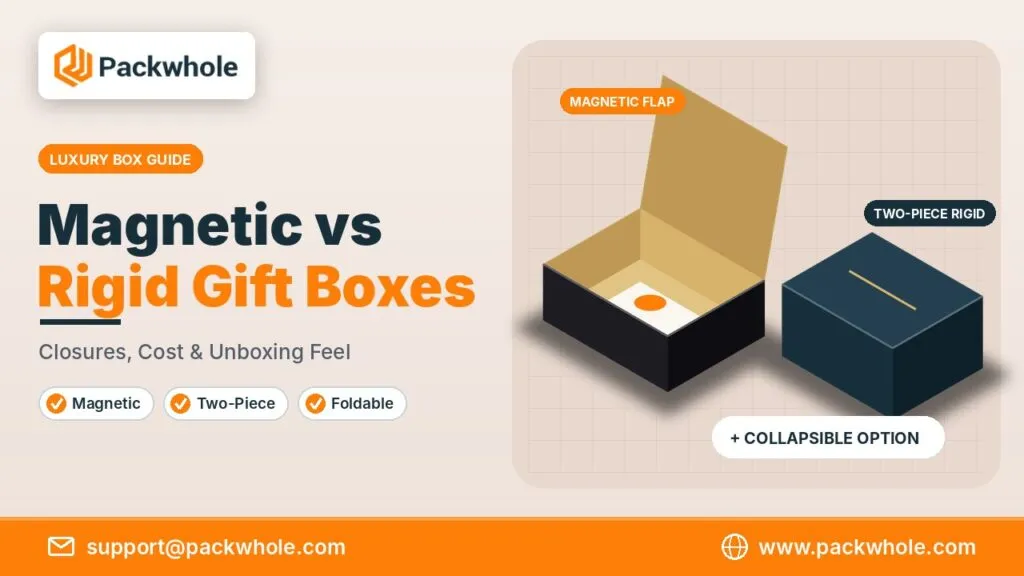
Here is a secret many first-time buyers never hear: a magnetic box is a rigid box. The real question in the magnetic vs rigid gift boxes debate is not “which material,” but “which closure and construction.” Both use thick chipboard wrapped in printed or specialty paper. What changes is how the lid opens, how the box ships, and how the customer feels when they lift the cover.
This guide compares the three luxury formats brands ask about most: magnetic flap boxes, classic two-piece rigid boxes, and collapsible (foldable) magnetic boxes. By the end you will know which one suits your product, budget, and fulfillment setup.
Clearing Up the Confusion Between Magnetic and Rigid Boxes
The words get mixed up because suppliers and marketplaces use them loosely. “Rigid box” describes construction: a non-folding box built from dense chipboard (commonly 2 mm or so) covered with a paper wrap. “Magnetic box” describes a closure: a hinged flap with thin magnets hidden under the wrap. So a magnetic box is one type of rigid box, just as a sedan is one type of car. Once you see it this way, comparing options becomes much simpler.
Read our detailed explainer on what custom rigid packaging boxes are if you are new to the category.
The Three Formats Side by Side
Each format has a distinct personality, and each suits a different stage of a brand’s growth. A two-piece box feels timeless and classic. A magnetic flap box feels modern and interactive. A collapsible box feels just as premium but ships flat, which matters a lot for storage costs. The table below summarizes the trade-offs.
| Feature | Two-Piece Rigid (Lid and Base) | Magnetic Flap Rigid | Collapsible Magnetic |
|---|---|---|---|
| Opening feel | Slow lift, gentle suction | Satisfying snap | Snap, slightly lighter |
| Ships and stores | Assembled, takes space | Assembled, takes space | Flat, about 80% less space |
| Assembly at packing | None | None | A few seconds per box |
| Relative unit cost | Medium to high | High | Medium to high |
| Reuse value | High | Very high | High |
| Best for | Apparel, candles, sets | Jewelry, tech, skincare kits | Ecommerce brands, large runs |
How Magnetic vs Rigid Gift Boxes Change the Unboxing Moment
Unboxing is a sensory experience, and small mechanical details make a big emotional difference. With a two-piece box, air pressure slows the lid as it lifts, which builds anticipation. With a magnetic flap, the customer hears a soft click and the box swings open like a book, which feels interactive and confident. Neither is “better”; they simply send different signals about your brand.
- Choose a two-piece box for heritage, calm, or classic brands.
- Choose a magnetic flap for modern, tech, or beauty brands that want a bold reveal.
- Add a ribbon pull or a printed inner flap message to either style for extra delight.
Storage, Freight, and Fulfillment: The Hidden Cost Factor
Most comparisons stop at unit price, but warehouse space and inbound freight can cost as much as the boxes themselves. Fully assembled rigid boxes ship from the factory as they are, so a pallet may hold only a few hundred units. Collapsible magnetic boxes arrive flat and are folded up in seconds at the packing station. For brands shipping thousands of orders a month, that difference can save a lot in storage and freight costs.
Ask yourself three questions:
- How many boxes will you store at once?
- Do you pay for warehouse space by the pallet?
- Can your packing team spare a few seconds per order to fold a box?
If the answers point to limited space and high volume, collapsible magnetic boxes are often the smartest of the magnetic vs rigid gift boxes options.
Cost Drivers You Should Understand Before Ordering
Rigid boxes are hand-finished to a large degree, so pricing depends on more than size alone. The paper wrap, the number of magnets, inserts, and special finishes all add up. Understanding these drivers helps you decide where to spend and where to save. Our article on how much custom boxes cost breaks down pricing in more depth.
- Board thickness: thicker chipboard feels more solid but costs more.
- Wrap paper: printed art paper costs less than textured, linen, or specialty stocks.
- Finishes: foil, embossing, and spot UV each add a step.
- Inserts: foam, EVA, or paperboard inserts are priced separately.
- Closure hardware: magnetic boxes need magnets and precise alignment.
Matching Each Box Style to Real Products
A practical way to decide is to look at what similar brands already use. These pairings come from common category choices in the US market. They are not strict rules, but they show which format usually supports the product best. Always test with a physical sample before ordering a full run.
- Fine jewelry and watches: magnetic flap with a velvet or foam insert.
- Premium apparel and scarves: two-piece rigid with tissue paper.
- Skincare sets: magnetic flap with a die-cut insert for bottles.
- Candles: two-piece rigid, or a tray and sleeve box for a lighter option.
- Subscription and influencer kits: collapsible magnetic for flat storage.
- Corporate gifts: magnetic flap with an inside-lid message.
Finishes and Wrap Papers That Change the Whole Feel
The wrap paper is the skin of a rigid box, and it shapes first impressions as much as the closure does. Two boxes with identical structures can feel completely different depending on the paper, texture, and finish. Choosing the wrap is often the moment where the magnetic vs rigid gift boxes decision becomes clear, because certain finishes suit a dramatic flap opening while others suit a calm lift-off lid. Ask for physical swatches before deciding, since screens rarely show texture accurately.
Popular wrap options include:
- Printed art paper: full-color designs at a reasonable cost.
- Soft-touch laminated paper: a velvety feel that suits beauty and tech brands. Compare it with gloss in our spot UV vs soft-touch lamination article.
- Linen or textured paper: a classic, tactile look for apparel and stationery.
- Kraft or natural paper: an earthy option for eco-focused brands.
- Specialty colored stock with foil: rich color plus a single metallic logo for maximum impact.
Common Mistakes When Choosing a Luxury Gift Box
Luxury boxes are an investment, so mistakes sting more than with standard cartons. Most problems come from ordering before testing, or from treating a gift box like a shipping box. A rigid box is a presentation piece, and it usually needs a protective outer mailer in transit. Watch for these issues before approving production.
- Shipping rigid boxes without an outer carton, which scuffs the wrap.
- Choosing magnets that are too weak for a heavy flap.
- Forgetting insert space, so the product sits loose.
- Picking a light-colored matte wrap that shows fingerprints easily.
- Ignoring storage space for fully assembled boxes.
Order Magnetic vs Rigid Gift Boxes Made to Fit From PackWhole
Not sure which closure is right? PackWhole can sample both styles so you can feel the difference before committing. We make two-piece, magnetic flap, and collapsible rigid boxes, plus custom inserts and outer mailer boxes for safe shipping. Our design team offers free artwork support, and our low minimum orders help new brands test magnetic vs rigid gift boxes without overcommitting.
Ask for samples at support@packwhole.com or browse box styles on www.packwhole.com.
Frequently Asked Questions About Magnetic vs Rigid Gift Boxes
Brands comparing luxury box formats tend to ask about durability, shipping, and customization. Here are clear answers to the most common questions. If you have a specific product with unusual dimensions or weight, send us the details and we will suggest the best construction.
Are magnetic boxes stronger than two-piece boxes?
Both use the same thick chipboard, so strength is similar. The difference is the closure, not the wall strength.
Can magnetic boxes be shipped by mail?
They can, but it is best to place them inside an outer mailer or corrugated carton to protect the finish.
Do collapsible boxes look cheaper?
No. When assembled, a well-made collapsible magnetic box looks almost identical to a fixed one.
Can I print inside a rigid box?
Yes. Inside printing on the lid or flap is a popular way to add a thank-you message or brand story.