Chocolate is a gift people judge with their eyes before they taste it. The box sets expectations, protects delicate shells and keeps each piece in its place. Knowing the common chocolate box sizes helps chocolatiers, candy shops, bakeries, hotels and corporate gift buyers plan assortments that look generous and travel well. This guide explains piece counts, cavity layouts, depths, inserts and design ideas for every kind of chocolate packaging.
How Chocolate Box Sizes Are Usually Described
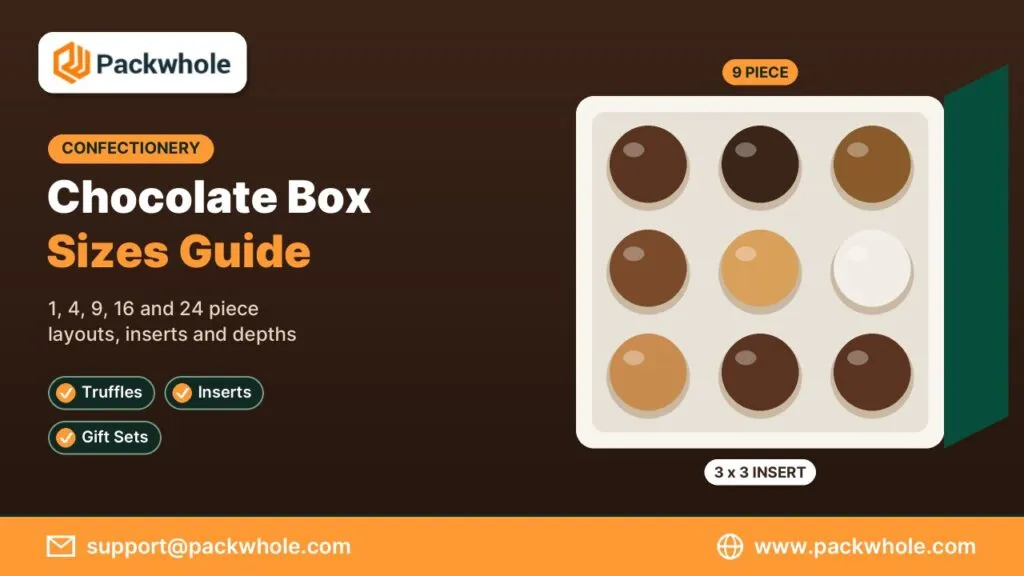
Chocolatiers rarely talk about boxes only in inches. Most describe them by piece count, such as a 4-piece, 9-piece or 16-piece box, because the insert layout defines the size. A 9-piece box, for example, often uses a three-by-three grid of cavities. The outer size then depends on the diameter of each chocolate, the spacing between cavities and the thickness of the walls. Bars and barks follow a different logic, with long flat boxes or sleeves sized to the slab.
When comparing chocolate box sizes from suppliers, ask for both the piece count and the inside dimensions. Two 16-piece boxes can differ noticeably if one is designed for small pralines and the other for large truffles.
Chocolate Box Sizes Chart by Piece Count
The table below shows typical layouts and approximate inside sizes for standard bonbons and truffles around one inch across. Larger pieces or extra spacing will increase the size. Use the chart to estimate, then confirm with a sample of your own chocolates.
| Piece count | Common layout | Approx. inside size | Typical use |
|---|---|---|---|
| 1 piece | Single cavity | 2 x 2 x 1.25 in | Favors, hotel turndown |
| 2 piece | 1 x 2 | 2 x 3.5 x 1.25 in | Wedding favors, samples |
| 4 piece | 2 x 2 | 3.5 x 3.5 x 1.25 in | Small gifts, add-ons |
| 9 piece | 3 x 3 | 5 x 5 x 1.25 in | Classic gift box |
| 16 piece | 4 x 4 | 6.5 x 6.5 x 1.25 in | Holiday and corporate gifts |
| 24 piece | 4 x 6 or two layers | 6.5 x 9.5 x 1.25 in | Premium assortments |
Single-Layer vs Two-Layer Chocolate Boxes
Single-layer boxes show every piece at once, creating a strong first impression when the lid lifts. They are easy to pack and work well for up to about sixteen pieces. Two-layer boxes stack trays with a separator sheet, which keeps the footprint compact for larger assortments. The second layer adds a moment of surprise, but it also needs a deeper box and a sturdy divider so the top tray does not press on the pieces below.
- Choose single-layer boxes for showpiece assortments and smaller counts.
- Choose two-layer boxes for large counts and compact shipping.
- Add a printed flavor guide under the lid for either style.
Inserts and Cavities for Truffles and Bonbons
The insert is the heart of any chocolate box. Each cavity holds a piece upright and stops it from rubbing against its neighbors, which protects glossy shells and delicate decorations. Paperboard inserts with paper cups are classic and recyclable, while molded trays offer a precise fit for uniform pieces. Mixed assortments with different shapes may need custom cavities or individual paper cups in a grid.
Our custom truffle boxes are built around cavity inserts, and custom chocolate boxes cover everything from small favors to large gift sets.
Box Styles for Chocolate Packaging
Style sets the tone. A rigid two-piece box with a soft-touch lid feels luxurious and is often kept after the chocolates are gone. Drawer boxes create a slow, elegant reveal, while window boxes let shoppers see the assortment on a shelf. Folding cartons and sleeves keep costs low for bars, everyday assortments and large retail runs.
| Style | Feel | Best for |
|---|---|---|
| Rigid lift-off lid | Luxury, keepsake | Premium assortments |
| Drawer box | Elegant reveal | Gifts and limited editions |
| Window carton | Shows product | Retail shelves |
| Sleeve and tray | Modern | Bars and small boxes |
| Heart or round box | Romantic, festive | Valentine’s Day, holidays |
Chocolate Box Sizes for Holidays and Events
Chocolate sales climb sharply for Valentine’s Day, the spring holidays and the end-of-year gifting season. Many chocolatiers keep the same core chocolate box sizes all year and change the print or sleeve for each season. Weddings and corporate events often call for small one or two piece favor boxes in large quantities, printed with names, dates or logos. Planning sizes early lets you order seasonal designs in time without changing your inserts.
For a festive treat assortment, our Christmas treat boxes add holiday style to the same practical shapes.
Keeping Chocolate Fresh and Protected
Chocolate is sensitive to heat, humidity and strong odors. A well-fitted box with a snug lid helps protect pieces from handling and air exposure, and an inner liner or glassine sheet adds another layer between chocolate and board. For shipping in warm months, many brands use insulated shippers and cold packs, placing the gift box inside. Avoid storing finished boxes near spices or perfumes, because chocolate can absorb their aromas.
Chocolate packaging should use materials suitable for food contact, and retail boxes may need ingredient and allergen labeling under FDA rules; this is general guidance, not legal advice.
Designing a Chocolate Box That Feels Special
Great chocolate packaging balances indulgence with clarity. Rich colors such as deep brown, burgundy, navy or emerald signal luxury, while pastels suit spring and baby showers. Foil stamping, embossing and ribbons add a tactile finish. A flavor map printed inside the lid helps customers find their favorites and makes the box feel thoughtful.
- Foil logos and borders on dark matte lids.
- Embossed patterns inspired by your chocolate designs.
- Ribbon pulls on drawer boxes.
- Flavor guides or tasting notes inside the lid.
- Seasonal sleeves over a standard box.
Chocolate Box Sizes for Bars, Barks and Bites
Not every chocolate product is a round bonbon. Bars need flat, rectangular boxes or sleeves that match the slab, often with a foil or paper inner wrap. Chocolate bark and brittle are irregular, so a deeper box with a liner works better than a cavity insert. Bite-size pieces and coated nuts suit small tins, pouches inside boxes or pillow-style favor boxes. Measuring each product format separately ensures every item has a box that fits.
Choosing Sizes for Corporate and Hotel Programs
Hotels, banks, real estate agents and corporate teams often order chocolate gifts in volume. A small two to four piece box with a printed logo works as a welcome amenity or client thank-you, while a nine or sixteen piece box suits holiday gifting. Consistent chocolate box sizes across a program make assembly faster and keep costs predictable. Inside-lid printing is a simple way to add a personal message without extra inserts.
Measuring Chocolates Before You Choose a Box
The most reliable way to choose chocolate box sizes is to measure a real batch. Hand-made chocolates vary slightly in size, so measure several pieces of each flavor and note the largest diameter and tallest height. Add the thickness of any paper cup, then allow a little breathing room so pieces can be lifted out without breaking. If your assortment mixes shapes, such as domes, squares and hearts, plan the cavity grid around the largest piece.
Once you have your numbers, build a quick mock-up with a sample insert. Seeing the chocolates in place shows whether the spacing looks generous or crowded, and it helps you decide between a single or double layer before you commit to a print run.
Pricing Your Assortments Around Box Sizes
Box size and piece count shape how customers perceive value. A well-filled nine-piece box often feels more generous than a half-empty twelve-piece box, even with fewer chocolates. Many shops build a ladder of chocolate box sizes, such as four, nine and sixteen pieces, so shoppers can choose a gift that fits their budget. Keeping the same outer design across the ladder strengthens your brand and makes the display look organized.
Mistakes to Avoid With Chocolate Box Sizes
Chocolate packaging problems usually come from loose fits or the wrong depth. A cavity that is too large lets pieces roll and scuff, while a lid that sits too low can crush decorations. Keep these common mistakes in mind before ordering.
- Choosing cavity sizes without measuring your actual pieces.
- Forgetting the height of piped tops or decorations.
- Skipping a liner or separator in two-layer boxes.
- Using one insert for very different shapes.
- Ordering seasonal boxes too close to the holiday.
Create Custom Chocolate Boxes With Packwhole
Packwhole designs chocolate boxes with custom inserts, windows, drawers and rigid lids, sized to your pieces and piece counts. We set up your insert layout and artwork at no cost, send a digital proof for approval, and keep minimums low with fast production so seasonal collections launch on time. Send your piece sizes and counts to support@packwhole.com or use www.packwhole.com to request pricing, and our team will plan an insert that keeps every truffle in place.