A cake can take hours to bake and decorate, but it only takes one bump in the wrong box to ruin the frosting. Choosing the right cake box sizes protects piped borders, keeps toppers upright and makes the handoff to customers feel professional. This guide covers standard sizes for round, square, sheet and tiered cakes, along with height, board and window options for bakeries, cafes, caterers and home bakers across the USA.
Why Cake Box Sizes Need More Room Than Most Boxes
Cakes are delicate in a way most products are not. Buttercream smudges at a touch, fondant scuffs easily and tall decorations can snap off. A cake box needs a bit of clearance on every side and above the tallest decoration so nothing touches the walls or lid. The cake also sits on a cake board, which is usually larger than the cake itself, so the box must fit the board rather than the sponge.
That is why a 10-inch cake typically goes into a box that is a little wider than 10 inches. Measuring the board and the finished height is the most reliable way to choose a size.
Round Cake Box Sizes Chart
Round cakes are the most popular choice for birthdays and celebrations. Bakeries usually box them in square boxes because squares are easier to fold, stack and store. The chart below pairs common round cake diameters with typical box sizes and the number of servings each cake usually provides. Servings vary with slice size, so treat these as general guides.
| Cake diameter | Approx. servings | Typical box size (inside) | Typical box height |
|---|---|---|---|
| 6 inch | 6 to 10 | 8 x 8 in | 5 in |
| 8 inch | 10 to 20 | 10 x 10 in | 5 in |
| 10 inch | 20 to 30 | 12 x 12 in | 6 in |
| 12 inch | 30 to 45 | 14 x 14 in | 6 in |
| 14 inch | 45 to 60 | 16 x 16 in | 6 in |
Sheet Cake and Square Cake Box Sizes
Sheet cakes feed crowds at offices, graduations and parties. They are usually described as quarter, half or full sheets, and their boxes are long and shallow. Square layer cakes follow a similar logic to round cakes, with the box a couple of inches wider than the cake board. Because sheet cakes are large and heavy, sturdier board and full-depth lids help them travel safely.
| Cake type | Typical cake size | Typical box size |
|---|---|---|
| Quarter sheet | 9 x 13 in | 10 x 14 x 4 in |
| Half sheet | 12 x 18 in | 14 x 19 x 4 in |
| Full sheet | 18 x 24 in | 19 x 26 x 4 in |
| 8 inch square layer | 8 x 8 in | 10 x 10 x 5 in |
Tiered Cake Box Sizes and Height Planning
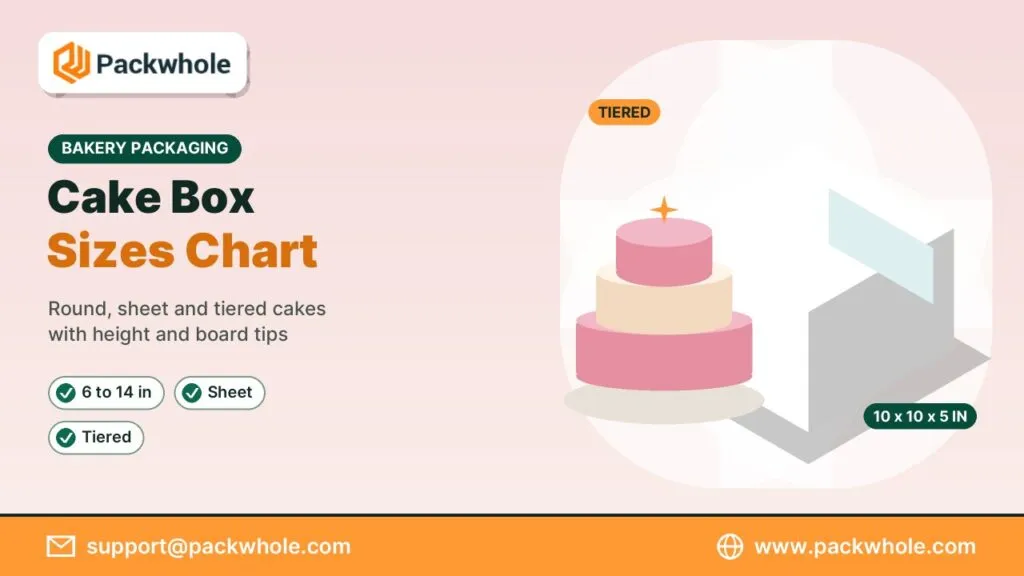
Tiered cakes for weddings and milestones need the most care. Many bakers transport tiers separately and assemble them on site, which means each tier goes into its own box. When a tiered cake must travel assembled, a tall box or a box with a removable front panel makes loading easier and reduces the risk of damage. Measure the full height including toppers, flowers or figurines, then add clearance.
- Measure the base board of the largest tier.
- Measure the total height with decorations.
- Add space around and above the cake.
- Choose a sturdy board for heavy, multi-tier cakes.
- Use non-slip mats or dowels for added stability.
Window Cake Boxes and Presentation
A window lid lets customers see the cake without opening the box, which reduces handling and keeps the decoration safe. Bakeries also use window boxes in display cases so shoppers can browse finished cakes. A clean white box with a window looks fresh and professional, while kraft boxes with a window suit rustic and artisan bakeries.
Our custom cake boxes are available with windows, and the four corner cake box style folds quickly for busy counters. For smaller treats, custom cupcake boxes include inserts that hold each cupcake in place.
Cake Boards, Inserts and Stability
The board under the cake is the foundation of safe transport. A board that is too thin can bend, cracking the frosting, while a board that is too small lets the cake edge touch the box walls. Many bakers choose a board one or two inches larger than the cake. Non-slip pads under the board stop sliding inside the box during the drive home.
Cupcake inserts, macaron trays and dividers serve the same purpose for smaller items, keeping each piece separate and upright. For a broader view of bakery packaging, our bakery box sizes guide covers cookies, pastries and donuts.
Materials for Cake Boxes
Most cake boxes are made from food-friendly paperboard, often with a white surface that looks clean and bright. Thicker paperboard or corrugated board supports heavy sheet cakes and tiered cakes. A grease-resistant coating helps with buttery frostings and fruit fillings. Kraft board is popular with bakeries that want a natural, eco-minded look.
Food packaging should use materials suitable for direct or indirect food contact; please treat this as an overview, not legal advice, and check what applies to your bakery.
Branding Ideas for Cake Boxes
A cake box is often carried into a party and placed on a table where every guest sees it. That makes it valuable branding space. A simple logo on the lid, a pattern on the sides and your website or social handle help guests find your bakery for their next celebration. Seasonal stickers or sleeves let you refresh the look for holidays without changing the box itself.
- One-color logos on white or kraft for a clean look.
- Pastel patterns for birthdays and baby showers.
- Gold foil for weddings and anniversaries.
- Holiday sleeves for Christmas and Valentine’s Day.
Cake Box Sizes for Home Bakers and Cottage Businesses
Home bakers and cottage food businesses often start with a few cakes a week, so they need flexible sizes in small quantities. Choosing two or three cake box sizes that match your most common cakes keeps costs down and storage simple. As orders grow, branded boxes help a home business look established and encourage referrals. Low minimum orders make it possible to start with printed boxes from the first batch.
Delivering Cakes Safely in Your Chosen Box
Even the best cake box sizes cannot protect a cake if it slides around a car. Place boxed cakes on a flat surface such as the floor of the vehicle or the trunk, never on a sloped seat. A non-slip mat under the box keeps it from shifting during turns and stops. Keep the car cool, especially in summer, because buttercream softens quickly in heat. For tiered cakes, a helper who holds nothing but the cake makes the trip far less stressful.
Bakeries that deliver often keep a small kit in the van with extra boards, spare boxes and a piping bag for quick touch-ups. These small habits protect your reputation as much as the box itself.
Choosing Cake Box Sizes for Your Menu
The smartest way to order is to start from your menu, not from a catalog. List every cake size you sell, note how many of each you make in a typical week, and match each one to a box. Most bakeries discover that three or four cake box sizes handle the majority of orders, with a tall box reserved for special occasions. Grouping sizes this way keeps storage tidy and makes reordering quick, especially when your boxes are printed with your logo.
Seasonal planning helps too. Holiday orders for yule logs, pies and festive cakes may call for different heights or shapes, so review your box mix before November.
Common Cake Box Mistakes to Avoid
Most cake box problems come from underestimating size or height. A box that fits the sponge but not the board, or a lid that touches piped rosettes, can undo hours of work. Plan ahead and keep these mistakes in mind.
- Measuring the cake instead of the cake board.
- Forgetting toppers, candles or tall decorations.
- Using thin board for heavy sheet cakes.
- Skipping a window when customers want to see the design.
- Ordering one size for every cake on the menu.
Order Printed Cake Boxes for Your Bakery Menu
Packwhole produces printed cake boxes in round-cake, square, sheet and tall tiered sizes, with or without windows. Bakers get complimentary design and dieline setup, a digital proof before anything prints, and minimums small enough for a home kitchen, all turned around quickly. Write to support@packwhole.com or request pricing through www.packwhole.com, and share your cake sizes so we can suggest the best fit.