Jewelry is small, precious, and emotional. A ring sliding around inside an oversized box feels careless; a necklace crammed into a tight one arrives tangled. The right box keeps each piece secure, displays it beautifully when the lid opens, and gives the customer something worth keeping. Choosing correct jewelry box dimensions is the foundation of that experience.
This guide lists standard sizes for each jewelry type, explains how inserts change the numbers, and helps independent jewelers and online brands choose boxes that look premium and ship safely.
Why Jewelry Packaging Needs Precise Sizes
Unlike apparel or cosmetics, jewelry relies almost entirely on its insert to look good. A ring slot, an earring card, or a necklace pad holds the piece in a specific position. If the box is too big, the insert shifts and the piece tilts. If the box is too shallow, a ring with a tall setting gets pressed against the lid. Getting the size right means planning the box and the insert together.
Box size also affects shipping. Most jewelry orders travel in padded envelopes or small mailers, so a compact box lowers postage and fits neatly inside.
Standard Jewelry Box Dimensions by Piece
The chart below lists popular inside sizes used across the US jewelry trade. Sizes are written as length × width × depth in inches with metric in brackets. Many suppliers stock these sizes, which keeps costs down; custom sizes are available when your designs fall outside them.
| Jewelry Type | Common Inside Size | Metric (approx.) | Typical Insert |
|---|---|---|---|
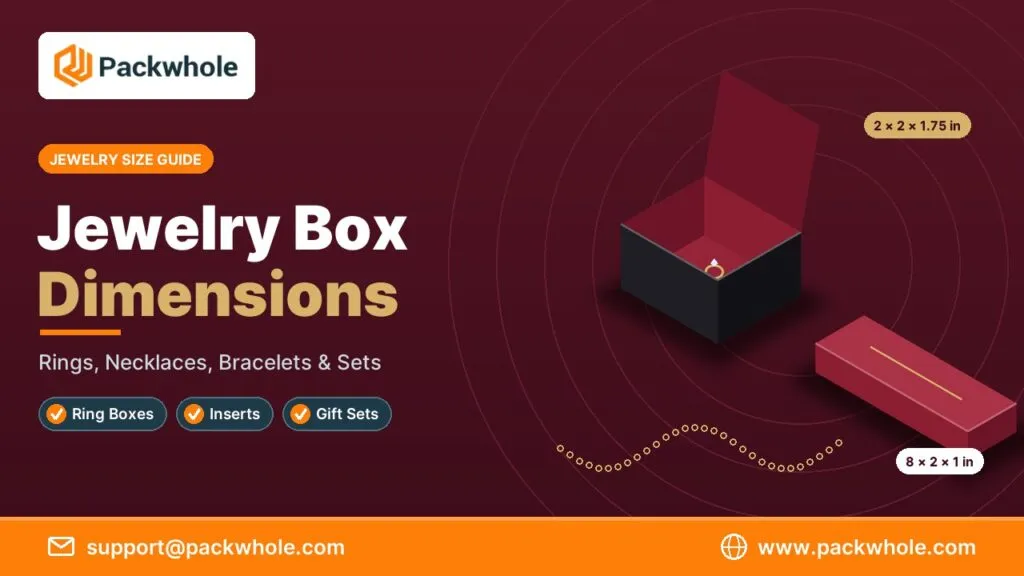
| Single ring | 2 × 2 × 1.75 in | 51 × 51 × 44 mm | Slotted foam or velvet roll |
| Engagement ring (display) | 2.25 × 2.25 × 2 in | 57 × 57 × 51 mm | Hinged clamshell with slot |
| Stud earrings | 2.5 × 2.5 × 1 in | 64 × 64 × 25 mm | Earring card or pierced pad |
| Drop earrings | 3 × 2.25 × 1 in | 76 × 57 × 25 mm | Tall card |
| Pendant / short necklace | 3.5 × 3.5 × 1 in | 89 × 89 × 25 mm | Pad with chain hook |
| Long necklace | 8 × 2 × 1 in | 203 × 51 × 25 mm | Flat pad, full length |
| Bracelet (flat) | 8 × 2 × 1 in | 203 × 51 × 25 mm | Flat pad |
| Bangle or cuff | 4 × 4 × 1.5 in | 102 × 102 × 38 mm | Raised cushion |
| Watch | 4.5 × 3.5 × 3 in | 114 × 89 × 76 mm | Pillow cushion |
| Matching set (necklace + earrings) | 6 × 6 × 1.25 in | 152 × 152 × 32 mm | Multi-slot pad |
| Charm or small gift | 2.5 × 2.5 × 1.25 in | 64 × 64 × 32 mm | Cotton fill or pad |
How Inserts Change the Numbers
An insert takes up space and determines where the jewelry sits. Foam inserts can be cut with slots for rings and earrings. Pads with elastic or a small hook hold necklaces and bracelets flat. Cotton fill is a classic, affordable option for small boxes. When you choose a box, think about the insert first and size the box around it.
Planning tips:
- Decide how the piece should face the customer when the lid opens.
- Choose the insert type: slotted foam, velvet pad, card, or cotton.
- Measure the insert thickness and add it to the depth.
- Leave a few millimeters above tall settings so the lid doesn’t press them.
- Test the full assembly with your real jewelry before ordering a full run.
Box Styles for Different Jewelry Lines
Box structure influences cost, presentation, and how easily the box ships. Rigid boxes feel luxurious and are often kept as storage. Paperboard and kraft boxes are affordable and eco-friendly. Drawer and magnetic boxes add a premium reveal for gifts and higher-priced pieces.
- Two-piece rigid boxes: classic, sturdy, great for necklaces and sets. See custom rigid boxes.
- Hinged clamshell boxes: the iconic ring box, ideal for engagement rings.
- Drawer (sleeve) boxes: stylish slide-out reveal for bracelets and pendants.
- Kraft or paperboard boxes: budget friendly for craft fairs and Etsy shops.
- Pillow boxes: simple, low-cost packaging for small pieces and favors.
- Small tuck boxes: good for earrings on cards.
PackWhole also makes dedicated anklet boxes and other custom jewelry packaging.
Materials and Finishes That Signal Value
Jewelry buyers associate certain textures with quality. Soft-touch and velvet feel luxurious, foil logos catch the light, and deep colors make metal and stones stand out. The finish should match your price point and brand voice: minimalist white for modern brands, kraft for handmade, black and gold for luxury.
| Finish or Material | Effect |
|---|---|
| Soft-touch lamination | Velvety feel, premium look |
| Gold or silver foil | Elegant logo highlight |
| Velvet or suede wrap | Classic luxury |
| Kraft board | Natural, handmade feel |
| Embossed logo | Subtle, tactile branding |
Shipping Jewelry Boxes Safely
Jewelry is small but valuable, so packaging must protect it and keep it discreet. Avoid printing “jewelry” or high-end brand names on the outside of the shipping package, as this can attract theft. Use a snug mailer or padded envelope and fill empty space so the box doesn’t move.
- Ship small boxes in padded mailers or right-sized mailer boxes.
- Wrap the jewelry box in tissue before placing it in the mailer.
- Use tracking and signature confirmation for high-value orders.
- Consider insurance for pieces above your carrier’s default coverage.
Planning Jewelry Box Dimensions for a Full Collection
Most jewelers sell more than one type of piece, so it pays to plan jewelry box dimensions for the whole collection at once. A coordinated set of sizes looks professional on a display table and makes ordering simpler. The goal is a small family of boxes that share the same color, finish, and logo placement, with only the size and insert changing.
A practical approach:
- List every piece type you sell and its largest current design.
- Group pieces that can share a box with a different insert, such as studs and small pendants.
- Pick three to five box sizes that cover the groups.
- Use the same lid style and finish across all sizes.
- Keep a spare size for gift sets and seasonal bundles.
Standardizing jewelry box dimensions this way also helps you reach better price breaks, because larger quantities of fewer sizes cost less per box than many small runs.
Mistakes to Avoid When Sizing Jewelry Boxes
Most jewelry packaging issues come from sizing the box before choosing the insert, or from using one box for very different pieces. Checking these points before ordering saves money and protects your brand image.
- Choosing a ring box too shallow for tall settings.
- Using a square box for long necklaces, which forces awkward coiling.
- Forgetting insert thickness in the depth.
- Selecting boxes so large that postage costs rise.
- Using different logos or colors across your box range.
Order Custom Jewelry Box Dimensions From PackWhole
PackWhole designs jewelry packaging in standard and custom jewelry box dimensions, with matching inserts, finishes, and shipping mailers. Tell us which pieces you sell and we will recommend sizes and styles for your full line. Independent jewelers get free design help and small minimums, so a cohesive, premium look is within reach.
Send your piece list to support@packwhole.com, or explore jewelry packaging on www.packwhole.com.
FAQs About Jewelry Box Dimensions
These answers cover what jewelers ask us most about sizing. Because jewelry designs vary, treat these as starting points and test with your actual pieces.
What is the standard ring box size?
Most ring boxes are about 2 × 2 inches with a depth of 1.5 to 2 inches.
What size box fits a necklace?
A 3.5 × 3.5 inch box suits short necklaces and pendants; long necklaces fit better in an 8 × 2 inch box.
Can one box size work for my whole line?
Sometimes, with different inserts, but dedicated sizes usually look more polished.
What insert is best for earrings?
Earring cards or pierced pads keep pairs aligned and easy to display.
Are rigid boxes worth it for jewelry?
For higher-priced pieces, yes. They feel premium and are often kept by customers.