Child-resistant packaging is no longer optional for many CBD and cannabis brands. Gummies look like candy, tinctures come in small dropper bottles, and vape cartridges fit easily in a child’s hand. Regulators, retailers, and parents all expect products like these to be packed in a way that keeps curious children out.
This guide explains what child-resistant packaging is, how it is tested, which CBD products usually need it, and how to choose a design that protects children without frustrating adult customers.
Note: Regulations differ by country, state, and product type, and they change often. This article is general information, not legal advice. Always confirm current requirements with your local regulator or a compliance specialist.
What Is Child-Resistant Packaging?
Child-resistant (CR) packaging is designed so that it is significantly difficult for children under five to open within a reasonable time, while still being easy for adults to use. It is sometimes called “special packaging.” Common examples include push-and-turn caps on medicine bottles, squeeze-and-slide boxes, and zipper pouches with locking mechanisms.
In the United States, the standard comes from the Poison Prevention Packaging Act of 1970, enforced by the Consumer Product Safety Commission (CPSC). The test procedure is set out in 16 CFR 1700.20, and many cannabis and CBD regulations refer back to it.
How Child-Resistant Packaging Is Tested
Packaging is not child-resistant just because it looks secure. It has to pass a formal protocol. In simple terms, the US test works like this:
- Child panel: Groups of children aged 42 to 51 months are given the package and a set time to try to open it. They are then shown how to open it and given more time. A high percentage of children must fail to open it for the package to pass.
- Senior adult panel: Adults aged 50 to 70 are asked to open and, where relevant, properly reclose the package. The large majority must succeed, so the design stays accessible.
Testing is carried out by independent labs, which issue a certificate for the specific package design. If you change the structure, the certificate may no longer apply, so always check with your supplier before modifying a CR design.
Which CBD Products Need Child-Resistant Packaging?
Requirements vary, but the following products are the ones most often covered by CR rules for cannabis and, in some places, hemp-derived CBD:
- Edibles and gummies: Because they resemble sweets, these are a top priority for regulators.
- Tinctures and oils: Small bottles with droppers usually need a CR closure.
- Vape cartridges and pens: Many markets require CR packaging for vape hardware and oils.
- Pre-rolls and flower: Tubes, jars, and pouches often need CR features.
- Concentrates: Small containers of high-potency products are commonly covered.
Some jurisdictions also require the package to be resealable for multi-use products, opaque so contents are not visible, and free of designs that appeal to children, such as cartoons or candy-style artwork.
Types of Child-Resistant Packaging for CBD
CR Paperboard Boxes
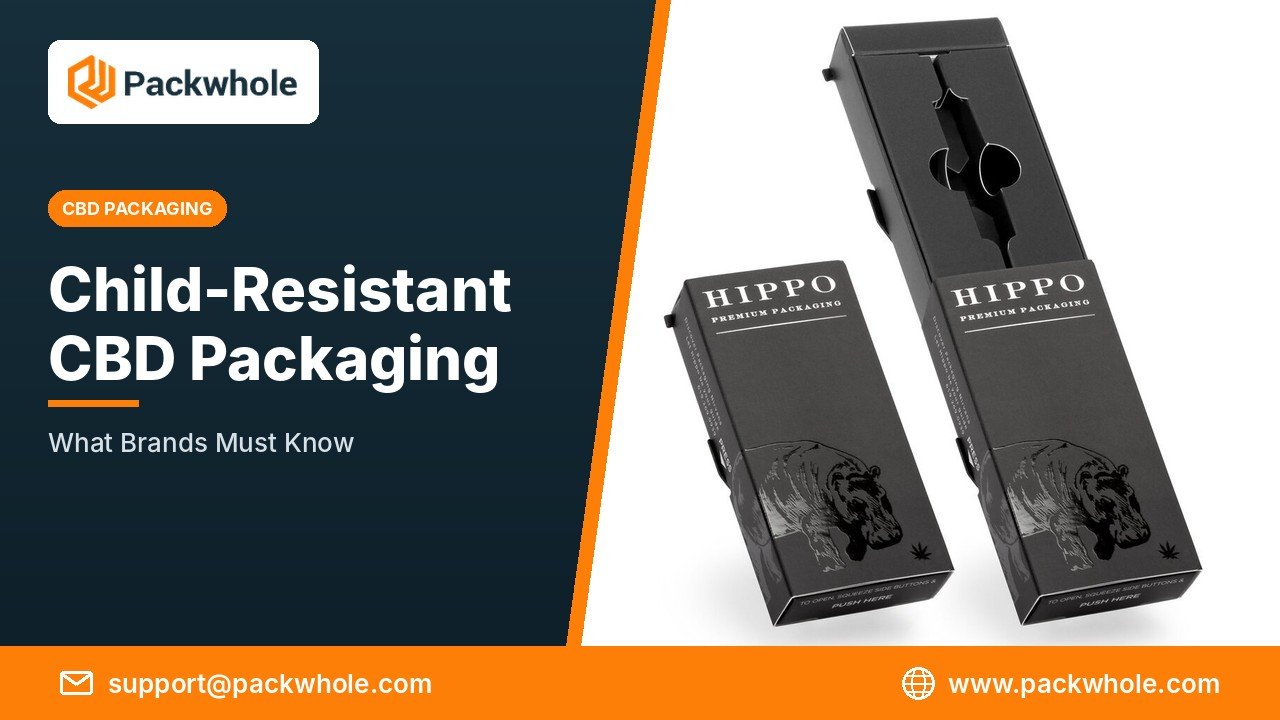
Paperboard child-resistant boxes use locking tabs, push-button releases, or slide-and-press drawers. They are popular for gummies, vape cartridges, and tincture bottles because they combine compliance with a large printable surface for branding and mandatory label information.
Child-Resistant Caps and Closures
Push-and-turn or squeeze-and-turn caps are standard for tincture bottles and jars. They are well understood by consumers and widely available. The outer box can then be a regular printed carton, depending on local rules.
Exit Bags and CR Pouches
Flexible pouches with child-resistant zippers are lightweight and cost-effective for flower, edibles, and pre-rolls. Some markets use them as an outer “exit bag” at the point of sale.
Pop-Top Tubes and Jars
Squeeze-to-open tubes are common for pre-rolls, while CR jars hold flower and concentrates. They can be paired with custom printed labels or sleeves.
Design Tips for Compliant and Attractive CR Packaging
Put Compliance First
Before you think about colors and logos, confirm which CR standard applies, what label information is required, and whether the package must be opaque or resealable. Build your design around those rules.
Avoid Child-Appealing Artwork
Bright cartoons, candy imagery, and mascots can get packaging rejected, even if the structure is child-resistant. Clean, mature design styles are safer and often look more premium.
Make Opening Instructions Clear
Adults can get frustrated with CR packaging. Simple printed icons or arrows showing how to open the package improve the customer experience and reduce complaints.
Leave Room for Mandatory Labels
Many markets require THC content, CBD content, warnings, batch numbers, and QR codes linking to lab results. Plan dedicated panels for this information so it does not clash with your branding.
Choose Durable Materials and Finishes
Locking tabs and sliding drawers are used repeatedly. Rigid paperboard and quality lamination help the mechanism keep working through the life of the product. You can still add premium finishes like foil stamping, embossing, or spot UV to stand out on the shelf.
Child-Resistant Packaging and Sustainability
CR packaging has a reputation for using lots of plastic, but paper-based options are growing fast. Paperboard CR boxes, recyclable tubes, and mono-material pouches help brands meet both safety rules and customer expectations around sustainability. Ask your supplier about recycled board and water-based inks.
Common Mistakes to Avoid
- Assuming “looks secure” equals compliant. Only certified designs count.
- Changing a certified structure. Small changes can invalidate the certificate.
- Ignoring state or local rules. A package legal in one market may not be in another.
- Using playful, candy-like graphics. These can lead to rejection or recalls.
- Forgetting the adult user. If customers cannot open it, they may leave it unlocked or switch brands.
Get Child-Resistant CBD Packaging from PackWhole
PackWhole produces custom CBD packaging and CBD boxes, including child-resistant styles for gummies, tinctures, vape cartridges, and pre-rolls. We help you choose a structure, plan space for compliance labels, and print your branding with premium finishes. Email support@packwhole.com to discuss your product and request samples.
Frequently Asked Questions
Is child-resistant packaging required for all CBD products?
Not everywhere. Rules depend on your location and product type. Cannabis products in regulated markets almost always need CR packaging, while hemp-derived CBD rules vary. Check your local regulations.
What does 16 CFR 1700.20 mean?
It is the US federal regulation that describes the testing procedure for child-resistant special packaging, including the child and adult test panels.
Can paperboard boxes be child-resistant?
Yes. Paperboard boxes with certified locking mechanisms can pass CR testing and are a popular, recyclable option.
Does child-resistant packaging have to be opaque?
Some jurisdictions require opaque packaging for cannabis products so contents are not visible. Confirm the rule for your market before designing windows or clear panels.