Shipping is one of the biggest hidden costs in ecommerce. Many brands focus on product cost and ad spend, then discover that carrier fees quietly eat into every sale. The good news is that one of the easiest ways to cut those fees has nothing to do with negotiating rates. It starts with the box.
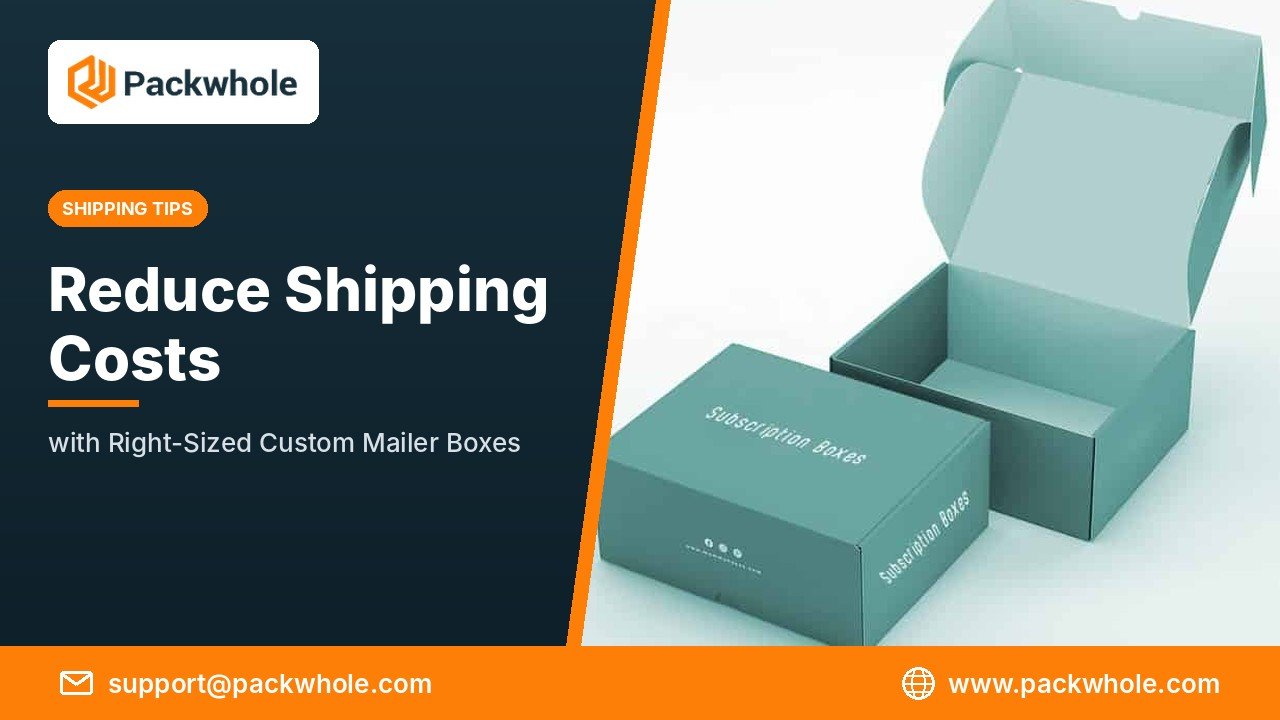
Right-sized custom mailer boxes can lower your shipping bill, reduce damage, and cut packaging waste at the same time. Here is how it works and what you can do today to start saving.
Why Box Size Affects Shipping Cost
Most major carriers charge based on whichever is greater: the actual weight of the parcel or its dimensional weight (DIM weight). DIM weight is calculated from the size of the box, not what is inside it. The basic formula is:
Length × Width × Height ÷ DIM divisor = Dimensional weight
The divisor depends on the carrier and your account. For example, UPS and FedEx commonly use 139 for daily rates in the US when measuring in inches and pounds, while USPS applies 166 to larger parcels. Always check the current figures with your carrier, but the principle is the same everywhere: a bigger box costs more to ship, even if the product is light.
A Simple Example
Imagine you sell a skincare set that weighs 1.5 lb. You ship it in a stock 14 × 10 × 6 inch box because that is what you had on hand.
- 14 × 10 × 6 = 840 cubic inches
- 840 ÷ 139 = about 6 lb dimensional weight
You pay for 6 lb, not 1.5 lb. Now move the same set into a custom 9 × 7 × 4 inch mailer box:
- 9 × 7 × 4 = 252 cubic inches
- 252 ÷ 139 = about 2 lb dimensional weight
That is a drop from 6 lb to 2 lb billable weight on every single order. Multiply that across thousands of shipments a year and the savings are significant.
7 Ways Right-Sized Mailer Boxes Reduce Costs
1. Lower Dimensional Weight Charges
As the example shows, trimming even an inch or two from each side can move a parcel into a lower billing tier. Custom mailer boxes are made to your exact dimensions, so you only pay to ship the space your product truly needs.
2. Less Void Fill
Oversized boxes need bubble wrap, air pillows, or crinkle paper to stop items from sliding around. A snug mailer box, especially one with a custom insert, holds products in place on its own. You buy less filler and spend less time packing.
3. Fewer Damaged Orders
Products that move inside a box are far more likely to break. Every damaged order costs you twice: the replacement product and a second shipment, plus the risk of a bad review. Right-sized packaging keeps items stable, which reduces returns and replacements.
4. Lighter Packaging Material
A smaller box uses less corrugated board, which reduces the actual weight of the parcel. For lightweight products, switching from a heavy C-flute carton to a well-designed E-flute mailer can also trim a few ounces without sacrificing protection.
5. Faster Packing Times
Mailer boxes fold and lock without tape. When the box fits the product exactly, there is no guesswork about filler or orientation. Faster packing means lower labor cost per order, which matters as you scale.
6. Better Storage and Freight Efficiency
Smaller flat-packed mailers take up less room in your warehouse. When you ship in bulk to a fulfillment center or retailer, more units fit on each pallet and in each truck, lowering inbound freight costs.
7. Fewer Box Sizes to Manage
Many brands carry a dozen stock box sizes “just in case.” By studying your order data, you can often cover most orders with three or four custom sizes, which simplifies purchasing and frees up storage space.
How to Find the Right Box Size
Follow these steps to size your mailer boxes for the lowest shipping cost:
- List your top-selling products and bundles. Focus on the items that make up most of your order volume.
- Measure each product precisely. Record length, width, and height at the widest points, including any retail packaging.
- Add a small allowance. Leave a few millimeters for tissue paper or an insert, but avoid large gaps.
- Group similar sizes. If several products are close in size, one box can often serve them all with a simple insert.
- Calculate DIM weight for each option. Compare a few candidate sizes and see where the billing tiers change.
- Order samples. Test-pack real products and run a drop test before committing to a large production run.
If you need help, read our step-by-step guide on how to measure box and packaging dimensions.
Choose the Right Material for the Weight
Box size is only half the story. Board grade matters too. E-flute corrugated is thin, light, and prints beautifully, making it ideal for products under a few pounds. B-flute offers more cushioning and crush resistance for heavier or fragile items. Using a heavier board than you need adds weight and cost, while using a lighter board than you need increases damage. A packaging specialist can help you find the balance.
Use Inserts Instead of Filler
Custom cardboard or paperboard inserts lock products in place, separate items in a bundle, and make the unboxing look organised. They are usually lighter and cheaper than piles of loose filler, and they are fully recyclable. For fragile goods like glass jars, candles, or electronics, an insert is often the difference between a five-star review and a damage claim.
Don’t Forget the Brand Benefit
Cutting costs does not have to mean cutting corners. A custom mailer box can be printed inside and out with your logo, colors, and a thank-you message. You get a smaller, cheaper-to-ship parcel and a better unboxing experience at the same time. That combination is why so many direct-to-consumer brands make the switch.
Common Mistakes to Avoid
- Designing for the largest product only. Building every order around your biggest item wastes space on most shipments.
- Ignoring bundles. If customers often buy two or three items together, create a size for your most common bundle.
- Skipping the test pack. Always check samples with real products before a full order.
- Forgetting carrier rules. Each carrier has its own divisors, size limits, and surcharges for large parcels. Review them once a year.
Start Saving with PackWhole
At PackWhole, we manufacture custom mailer boxes made to your exact dimensions, with inserts, printing, and finishes to match your brand. Our team can review your product sizes, suggest the most efficient box dimensions, and send samples before you place a full order. Contact us at support@packwhole.com to get a free quote.
Frequently Asked Questions
What is dimensional weight?
Dimensional weight is a pricing method that carriers use to charge for the space a parcel takes up. It is calculated by multiplying length, width, and height, then dividing by a carrier-specific number.
How much can I save by right-sizing my boxes?
Savings depend on your products and current boxes, but brands moving from oversized stock cartons to custom mailers often see a noticeable drop in billable weight per order, along with lower filler and damage costs.
Are custom mailer boxes expensive?
Unit prices drop as order quantities increase. When you factor in lower shipping fees and less filler, custom boxes often cost less per order than generic stock boxes.
Can one box size fit multiple products?
Yes. With a well-designed insert, one mailer size can often hold several products of similar dimensions, which keeps your inventory simple.