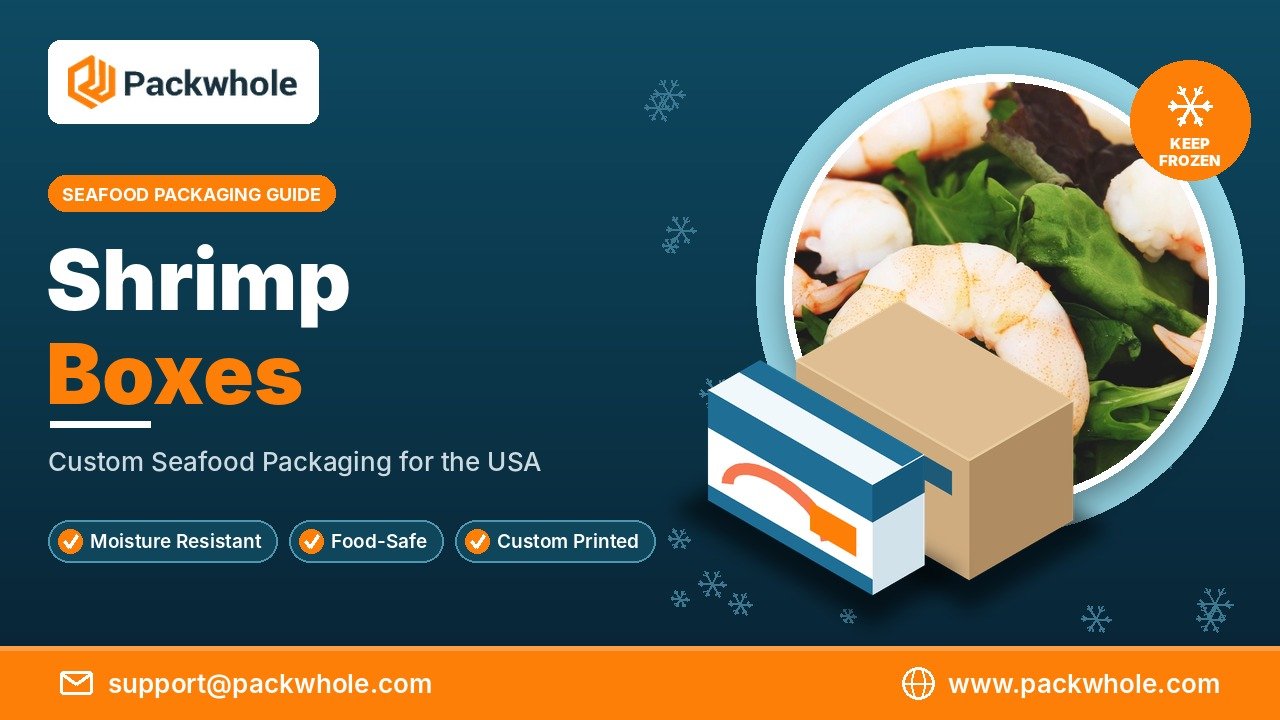
Shrimp is the most popular seafood in the United States, and it reaches American kitchens through grocery freezers, seafood counters, restaurants, and online delivery. Every one of those channels depends on strong, food-safe packaging. Shrimp boxes keep shrimp frozen or chilled, resist moisture, protect against crushing, and give seafood brands a chance to stand out in a crowded freezer aisle.
This guide covers the best types of shrimp boxes, materials and coatings, US labeling basics, and design ideas to help your seafood brand choose the right packaging.
Why Shrimp Boxes Matter for Seafood Brands
Seafood packaging faces tough conditions. Seafood boxes have to survive freezing temperatures, condensation, ice glaze, stacking in cold storage, and handling in busy distribution centers. At the same time, they must look appealing to shoppers and clearly display required information. The right box protects product quality and builds trust in your brand.
- Moisture resistance: Prevents boxes from weakening or collapsing in freezers and ice.
- Food safety: Food-grade materials protect the shrimp from contamination.
- Temperature performance: Helps maintain the cold chain from processor to customer.
- Stacking strength: Withstands heavy stacking in cold storage and shipping.
- Shelf appeal: Attractive printing helps your shrimp stand out in retail freezers.
Popular Types of Frozen and Fresh Seafood Boxes
Shrimp is sold in many formats, from bulk 5-pound blocks for restaurants to small 1-pound retail packs for home cooks. Each format calls for a different type of box. Choosing the right style depends on your customers, your supply chain, and whether the shrimp is frozen, fresh, raw, or cooked. Here are the most common options.
1. Waxed Corrugated Master Cartons
Waxed or wax-alternative corrugated cartons are the industry standard for bulk and wholesale shrimp. They resist moisture and ice, stack well in freezers, and protect inner boxes during transport.
2. Coated Paperboard Retail Boxes
Retail shrimp packaging are often made from paperboard with a moisture-resistant coating. They are printed in full color for grocery freezers and often hold a sealed bag of shrimp inside.
3. Tuck-End and Sealed-End Cartons
Folding cartons with tuck or glued ends are cost-effective for frozen retail shrimp and can run on automated packing lines.
4. Window Boxes
A moisture-resistant window lets shoppers see the size and quality of the shrimp. This works well for premium jumbo or wild-caught shrimp.
5. Insulated Shipping Boxes
For direct-to-consumer seafood delivery, an insulated liner inside a printed corrugated box helps keep shrimp frozen with dry ice or gel packs.
Seafood Box Types Compared Side by Side
Different these boxes serve different parts of the supply chain. Comparing them side by side helps you choose the right packaging for each customer type. Use this table as a quick reference.
| Box Type | Best For | Moisture Resistance | Shelf Appeal | Relative Cost |
|---|---|---|---|---|
| Waxed corrugated carton | Wholesale, restaurants, bulk | Excellent | Low | Medium |
| Coated paperboard box | Grocery retail | Very good | High | Low to medium |
| Sealed-end carton | High-volume retail lines | Very good | Medium to high | Low |
| Window box | Premium retail | Good | Very high | Medium |
| Insulated shipper | Online seafood delivery | Excellent | Medium | High |
Choosing the Right Materials and Coatings for Shrimp Boxes
Materials and coatings are the most important technical decisions for seafood packaging. Standard cardboard quickly absorbs moisture in freezers, which weakens the box and can cause it to collapse. Food-grade coatings and the right board strength keep the packaging strong and hygienic throughout cold storage and transport. Here are the main options.
Board Options
- Corrugated board: Strong and stackable, ideal for master cartons and shipping boxes.
- SBS paperboard: Smooth and bright for high-quality retail printing.
- Recycled board: A sustainable option for outer cartons that don’t touch food directly.
Coating Options
- Wax coating: Traditional moisture barrier for bulk seafood cartons.
- Wax-alternative coatings: Water-resistant coatings that are easier to recycle than wax.
- Poly-coated (PE) board: Strong moisture barrier for retail frozen boxes.
- Aqueous barrier coatings: Newer options designed to improve recyclability.
Always confirm that materials touching food directly are food-grade and suitable for frozen use. Our guide on sustainable and eco-friendly packaging covers greener options in more detail.
US Labeling Basics for Shrimp Boxes
Seafood sold in the USA must follow federal labeling rules, and seafood boxes are where that information lives. Planning label space early keeps your design clean and helps avoid costly reprints. Requirements can vary by product type and sales channel, so always confirm details with your compliance team.
Note: This is general information, not legal advice. Check current FDA and USDA guidance for your specific products.
- Product name: For example, “Raw Peeled and Deveined Shrimp.”
- Net weight: In both US customary and metric units.
- Ingredients: Including any added ingredients such as salt or preservatives.
- Allergen statement: Shrimp is a crustacean shellfish, one of the major food allergens under US law.
- Count size: Such as 16/20 or 21/25 shrimp per pound, which shoppers use to compare size.
- Country of origin and method of production: Retail shrimp is generally covered by USDA Country of Origin Labeling (COOL), which includes whether it is wild-caught or farm-raised.
- Storage instructions: “Keep frozen” and thawing or cooking directions.
- Nutrition Facts: Required for most retail packaged foods.
- Company name and address.
Design Ideas That Help Seafood Packaging Sell
In a grocery freezer, shoppers spend only a few seconds choosing between brands. Your shrimp packaging needs to communicate freshness, quality, and value at a glance. The best designs use appetizing imagery and clear information that helps customers decide quickly. Here are ideas that work well for US seafood brands.
- Appetizing photography: Show cooked shrimp in a delicious dish, such as shrimp scampi or tacos.
- Ocean-inspired colors: Blues, whites, and coral tones suggest freshness and the sea.
- Highlight the count size: Make “Jumbo 16/20” or similar sizes easy to see.
- Call out key claims: Wild-caught, farm-raised responsibly, peeled and deveined, tail-on, or easy-peel.
- Recipe ideas: Print a quick recipe or a QR code linking to cooking videos.
- Certification logos: Display sustainability or quality certifications your product holds.
Common Seafood Packaging Mistakes to Avoid
Seafood packaging mistakes can lead to collapsed boxes, damaged products, and compliance issues. Most of them are easy to avoid with the right materials and planning. Review this checklist before ordering your these boxes.
- Using uncoated board: It weakens quickly in freezers and condensation.
- Ignoring stacking strength: Weak cartons crush under the weight of pallets.
- Missing allergen information: Shellfish must be clearly declared.
- Unclear count size: Shoppers want to know shrimp size immediately.
- No room for COOL information: Country of origin labeling space must be planned.
Get Custom Shrimp Boxes from PackWhole
PackWhole manufactures custom shrimp boxes and seafood packaging for processors, distributors, seafood brands, and online delivery businesses across the USA. Choose from coated retail boxes, waxed and wax-alternative corrugated cartons, window boxes, and printed shipping boxes, all made to your exact size and printed in full color. Explore our food boxes and contact our team for samples and expert guidance.
Email support@packwhole.com or visit www.packwhole.com for a free quote.
Frequently Asked Questions About Shrimp Boxes
Seafood brands often have similar questions when choosing shrimp packaging, from materials to labeling. Below are answers to the most common ones. For your specific product, our packaging team is happy to help.
What material is best for frozen shrimp packaging?
Coated paperboard is best for retail boxes, while waxed or wax-alternative corrugated cartons are ideal for bulk and wholesale shrimp.
Is seafood packaging food-safe?
They should be. Always use food-grade materials and coatings for any surface that contacts food directly.
What does 16/20 mean on a shrimp package?
It is the count size, meaning there are 16 to 20 shrimp per pound. Lower numbers mean larger shrimp.
Does packaged shrimp need country of origin labeling?
Retail shrimp in the USA is generally covered by USDA Country of Origin Labeling, which includes origin and whether it is wild-caught or farm-raised.
Can I order custom printed seafood boxes in small quantities?
Yes. PackWhole offers low minimum orders for custom food and seafood packaging.