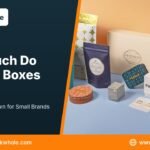
“How much do custom boxes cost?” is one of the first questions every small brand asks, and the honest answer is: it depends. The price of custom packaging can range widely depending on size, material, printing, finishes, and quantity. The good news is that once you understand what drives the price, you can make smart choices that keep costs under control without sacrificing quality.
This pricing breakdown explains each factor that affects the cost of custom boxes and shares practical ways small brands can save.
The Main Factors That Affect Custom Box Pricing
1. Order Quantity
Quantity has the biggest single effect on unit price. Every custom order has fixed setup costs, such as preparing the die-cutting tool, setting up the press, and creating proofs. On a small order, these costs are shared across only a few boxes. On a larger order, they are spread across many more, so the price per box drops significantly.
Tip: If you know you will sell through more boxes over the next few months, ordering a larger batch at once usually lowers your cost per unit. Just balance this against storage space and cash flow.
2. Box Style
Different structures need different amounts of material and labor:
- Tuck-end folding cartons: Usually the most affordable for retail products.
- Mailer boxes: Mid-range, made from corrugated board with a die-cut structure.
- Sleeve and tray boxes: Two parts, so slightly higher cost.
- Display boxes: Depend on size and complexity.
- Rigid boxes: The most expensive, because they use thick chipboard and require more hand assembly.
3. Size and Dimensions
Larger boxes use more material and may need larger press sheets, which raises the cost. Right-sizing your box to fit your product saves on both packaging and shipping. Learn more in our guide on how to measure box and packaging dimensions.
4. Material
- Paperboard (SBS, CCNB, kraft): Economical and ideal for retail cartons.
- Corrugated board: Stronger and better for shipping, with E-flute and B-flute being the most common.
- Rigid chipboard: Thick and premium, used for luxury packaging.
- Specialty papers: Metallic, textured, or recycled stocks can add cost but also add character.
5. Printing
The number of colors, the printing method, and whether you print inside and outside all affect the price. Full-color CMYK printing is standard for most custom boxes. Adding Pantone spot colors, metallic inks, or interior printing increases the cost. For smaller orders, digital printing is often more affordable, while offset becomes better value at higher volumes. Our comparison of offset vs digital printing explains this in detail.
6. Finishes and Add-Ons
Finishes make boxes look and feel premium, but each one adds a step in production:
- Gloss or matte lamination
- Soft-touch lamination
- Spot UV
- Foil stamping
- Embossing and debossing
- Windows with or without film
- Custom inserts
Choosing one or two finishes that really matter to your brand is usually more effective than adding everything.
7. Inserts
Inserts hold products securely and improve presentation. Paperboard inserts are the most affordable, while foam, velvet, or molded pulp inserts cost more. For fragile or high-value items, a good insert often pays for itself by reducing damage.
8. Turnaround Time
Standard production schedules give you the best price. Rush orders may cost more because they require overtime or priority press time. Planning ahead is one of the easiest ways to save money.
9. Shipping and Delivery
Freight costs depend on the weight and volume of your order and the delivery location. Flat-packed boxes are much cheaper to ship than rigid boxes, which are delivered assembled.
Typical Cost Ranking from Lowest to Highest
While exact prices vary, here is how common box options generally compare:
- Plain kraft tuck-end box with one-color print
- Full-color printed folding carton
- Printed corrugated mailer box
- Printed mailer box with interior printing and an insert
- Folding carton with premium finishes (foil, spot UV, soft-touch)
- Rigid box with custom insert and premium finishes
The best way to get an accurate number for your project is to request a quote with your box style, dimensions, quantity, and finishing requirements.
10 Ways Small Brands Can Save on Custom Boxes
- Right-size your box. Less material and lower shipping costs.
- Use standard structures. Common styles like tuck-end and mailer boxes are more economical than complex custom shapes.
- Limit finishes. Pick one standout finish, such as foil on the logo.
- Choose kraft board. A natural kraft look with simple printing is affordable and on trend.
- Print one side only. Skip interior printing if it is not essential.
- Standardise sizes. One box with different inserts or labels can cover several products.
- Use stickers or sleeves for variations. Keep one base box and change a label for each flavour or scent.
- Order the right quantity. Balance a lower unit price against storage and cash flow.
- Plan ahead. Avoid rush fees by ordering well before you run out.
- Ask for advice. A good supplier will suggest cost-saving alternatives that keep the look you want.
Is Custom Packaging Worth It for Small Brands?
For most small brands, yes. Custom boxes protect your products, reduce damage and returns, and make your brand look professional. They also create a memorable unboxing experience that encourages repeat purchases and social sharing. When you compare the cost of a custom box to the value of a loyal customer, the investment usually makes sense.
The key is to start with a design and specification that fits your budget, then upgrade as your brand grows.
Get a Custom Box Quote from PackWhole
PackWhole helps small brands create custom boxes with low minimum orders, free design support, and transparent pricing. Whether you need mailer boxes, retail boxes, or rigid gift boxes, we will help you find the right balance between cost and quality. Email support@packwhole.com with your box size, quantity, and design ideas for a free quote.
Frequently Asked Questions
Why are custom boxes more expensive in small quantities?
Every order has setup costs for tooling and printing. With fewer boxes, those costs are shared across fewer units, which raises the price per box.
What is the cheapest type of custom box?
A simple tuck-end folding carton made from paperboard or kraft, with minimal printing, is usually the most affordable option.
Do finishes like foil and spot UV add a lot to the price?
Each finish adds a production step and some cost. Choosing one or two key finishes keeps your boxes premium without overspending.
How can I get an accurate price for custom boxes?
Request a quote with your box style, dimensions, material, quantity, printing, and finishes. PackWhole provides free quotes and design support.