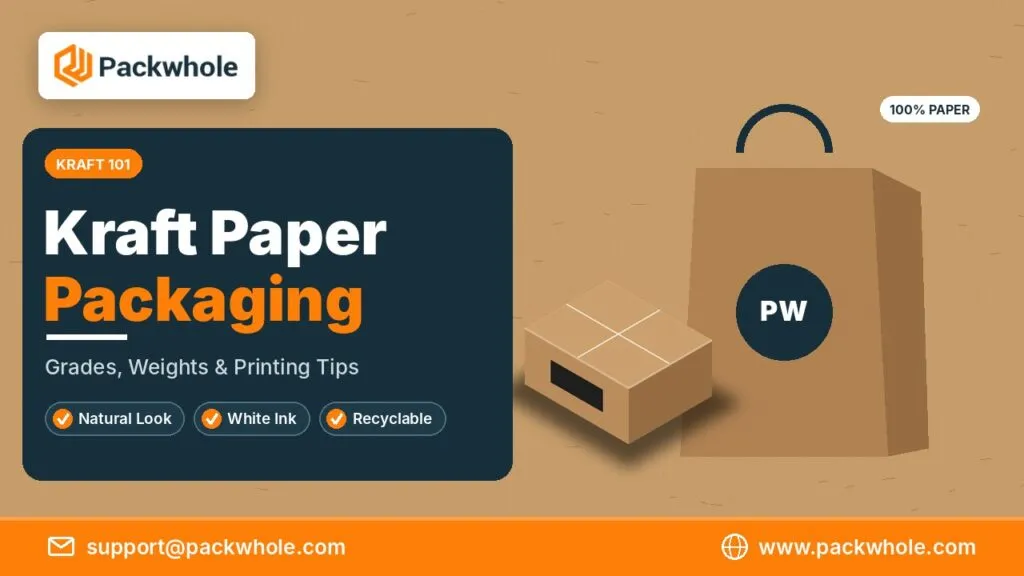
That warm, brown, slightly textured look has become shorthand for “natural,” “handmade,” and “honest.” Coffee roasters, soap makers, bakeries, and clothing labels all reach for it. Yet many brand owners order kraft paper packaging without knowing what kraft actually is, how its color affects printing, or which grade fits their product.
This guide covers the essentials in plain language: where kraft comes from, the main types and weights, how to design artwork that looks good on brown stock, and which box and bag styles make the most of it.
What Makes Paper “Kraft” in the First Place
Kraft is not a color; it is a papermaking process. The name comes from the German word for “strength.” In the kraft (or sulfate) process, wood chips are cooked in a chemical solution that breaks down lignin while keeping long, strong cellulose fibers intact. Because less of the fiber is damaged, kraft paper is tougher and more tear resistant than many other papers of the same weight.
Unbleached kraft keeps its natural brown color. Bleached kraft is white but still benefits from the strong fibers. Many kraft products also contain recycled fiber, which can make the color slightly darker or more speckled.
The Main Types of Kraft Used in Packaging
Kraft appears in many forms across the packaging world, from thin wrapping paper to thick box board. Knowing the differences helps you ask suppliers for the right material. Each type has its own feel, strength, and printing behavior, so match it to your product’s weight and shelf life.
| Kraft Type | Description | Common Packaging Uses |
|---|---|---|
| Natural (unbleached) kraft paper | Brown, strong, slightly rough | Shopping bags, wrapping, void fill |
| Bleached kraft paper | White, strong, smooth | Food bags, premium wraps |
| Kraft paperboard | Thicker brown board | Folding cartons, soap and tea boxes |
| Kraft corrugated liner | Brown outer liner on corrugated | Mailer boxes, shipping cartons |
| Recycled kraft | Brown with flecks, varied tone | Eco-focused retail packaging |
| Coated or lined kraft | Kraft with a barrier layer | Coffee, snacks, greasy foods |
Understanding Weights and Thickness
Kraft is sold by weight or thickness, and the numbers can be confusing because different products use different units. Paper for bags and wrapping is often given as basis weight in pounds, such as 40 lb or 60 lb. Paperboard for boxes is usually given in points (pt), where 1 pt is 0.001 inch. Corrugated kraft boxes are described by flute and edge crush strength instead.
Quick guide:
– 30 to 50 lb kraft paper: wrapping, tissue alternatives, light bags.
– 60 to 80 lb kraft paper: sturdier shopping bags and mailer bags.
– 18 to 24 pt kraft board: folding cartons for soap, tea, cosmetics.
– E or B flute kraft corrugated: mailer and shipping boxes.
Printing on Kraft Paper Packaging: What Designers Should Know
Brown stock changes how ink looks. Most printing inks are slightly transparent, so the brown base shows through and darkens every color. Light colors can almost disappear, while dark colors stay strong. Smart designers embrace the natural tone instead of fighting it. With the right approach, kraft paper packaging can look bold and premium.
Design tips:
- Use dark, saturated colors like black, navy, deep green, or burgundy.
- Add white ink as an underlayer when you need bright colors to pop.
- Keep artwork simple: one or two colors often look best.
- Use the brown as a “color” in your design rather than covering it.
- Consider foil stamping in gold, copper, or black for contrast. See what is foil stamping.
- Always request a printed proof on actual kraft stock.
Best Box and Bag Styles for a Kraft Look
Almost any packaging structure can be made from kraft, but some styles show it off especially well. Simple, clean structures let the natural texture shine. Window cut-outs, twine, and stamped logos all suit the handmade aesthetic. Here are popular choices for small US brands.
- Custom kraft boxes: tuck-end cartons for soap, tea, candles, and cosmetics.
- Kraft mailer boxes: ecommerce orders with a rustic, eco feel.
- Kraft paper shopping bags: boutiques, bakeries, and farmers’ markets.
- Pillow boxes: small gifts, jewelry, and favors.
- Gable boxes: bakery treats and snack kits.
Food Safety and Barrier Needs
Plain kraft paper is porous. It lets air and moisture through and can absorb oils, which leaves greasy marks. For food, you may need a lined or coated kraft that acts as a barrier. Coffee bags, for example, often use kraft on the outside and a foil or plastic layer inside with a one-way valve. Materials that touch food must be suitable for food contact under FDA rules.
General information, not legal advice; confirm food-contact compliance with your supplier.
Being Honest About Kraft and Sustainability
Kraft looks eco-friendly, but appearance is not the same as proof. A kraft box with plastic lamination or a heavy plastic window is harder to recycle. On the other hand, a plain kraft carton printed with water-based or soy-based inks is widely recyclable. The FTC Green Guides ask brands to make specific, supportable claims. Phrases like “Made with recycled content” or “Please recycle” are safer than general terms like “eco-friendly.” For more ideas, read our guide to sustainable packaging.
Pairing Kraft With Other Materials for a Finished Look
Kraft rarely works alone in a complete package. It is often paired with other papers, inks, and accessories that add contrast and polish. The right combinations make kraft feel deliberate and premium instead of plain. Think of kraft as a neutral base, much like a wooden table, that you can style in many different directions.
Combinations that work well:
- Kraft box + white tissue: a clean contrast inside the box.
- Kraft box + black foil logo: bold and minimal.
- Kraft mailer + colorful inside print: a surprise burst of color when opened.
- Kraft bag + printed hang tag: a boutique feel for gifts and apparel.
- Kraft carton + clear window: shows the product while keeping a natural look.
- Kraft sleeve + white box: a two-tone layered effect.
Test combinations with physical samples, since kraft color varies slightly between batches and suppliers.
Mistakes Brands Make With Kraft Paper Packaging
Kraft is forgiving in many ways, but a few common errors can make packaging look dull or unprofessional. Most of them involve color expectations and finishing choices. Understanding them before you design will help your kraft paper packaging look intentional rather than accidental.
- Designing artwork on a white screen and expecting the same colors on brown.
- Using thin fonts or fine lines that get lost in the texture.
- Choosing pastel colors without white underprint.
- Laminating kraft and then calling it fully recyclable.
- Forgetting a barrier layer for greasy or moist foods.
Order Kraft Paper Packaging From PackWhole
PackWhole prints kraft paper packaging for US brands of every size, including kraft boxes, mailers, bags, sleeves, and stickers. Our designers provide free artwork support and will show you how your colors will look on brown stock before printing. Low minimum orders let you test a kraft look without a big commitment.
Ask for a kraft swatch kit at support@packwhole.com or view kraft styles on www.packwhole.com.
Kraft Paper Packaging: Frequently Asked Questions
These are the most common questions brands ask before switching to kraft. They focus on strength, printing, and sustainability. If you have a specific product in mind, send us details and we will recommend the right weight and style.
Is kraft paper recyclable?
Yes. Plain kraft paper and board are widely recycled. Plastic coatings or windows can make recycling harder.
Can I print white on kraft?
Yes, with white ink. It is often used as a base under bright colors or on its own for a striking look.
Is kraft stronger than regular paper?
Generally yes. The kraft process keeps longer fibers, which improves tear and burst strength.
Does kraft come in other colors?
Kraft can be bleached white or dyed, but the classic brown is the most popular for packaging.